AI Workflow Automation for Marketing Teams 2026
{
  "@context": "https://schema.org",
  "@graph": [
    {
      "@type": "BlogPosting",
      "headline": "AI Workflow Automation for Marketing Teams: A Practical Starter Guide",
      "url": "https://mattkundodigitalmarketing.com/blog/ai-workflow-automation-marketing-teams-starter-guide/",
      "mainEntityOfPage": {
        "@type": "WebPage",
        "@id": "https://mattkundodigitalmarketing.com/blog/ai-workflow-automation-marketing-teams-starter-guide/"
      },
      "author": {
        "@type": "Person",
        "name": "Matt Kundo"
      },
      "description": "I have automated 30% of my marketing workflow with AI. Here is the 5-rung MKDM ladder for teams, the tools that work, and the traps that kill pilots.",
      "publisher": {
        "@type": "Organization",
        "name": "Matt Kundo Digital Marketing",
        "url": "https://mattkundodigitalmarketing.com/"
      },
      "datePublished": "2026-07-08",
      "dateModified": "2026-07-08",
      "image": "https://mattkundodigitalmarketing.com/assets/blog/ai-workflow-automation-marketing-teams-starter-guide/hero.jpg"
    },
    {
      "@type": "FAQPage",
      "mainEntity": [
        {
          "@type": "Question",
          "name": "What is AI workflow automation for a marketing team?",
          "acceptedAnswer": {
            "@type": "Answer",
            "text": "AI workflow automation is the practice of chaining an AI model into a repeatable marketing process (content ops, ad management, lead routing, reporting) so it makes routine decisions, transforms data, and passes work between apps without a human touching each step. The pattern is always four layers: a deterministic trigger, a retrieval step, an AI reasoning step, and an action step."
          }
        },
        {
          "@type": "Question",
          "name": "How much time can a marketing team actually save with AI workflow automation?",
          "acceptedAnswer": {
            "@type": "Answer",
            "text": "The 2026 HubSpot State of Marketing report finds marketers save an average of 6.1 hours per week using AI tools. McKinsey documents 60% to 70% savings in execution-related marketing tasks and 4% to 7% revenue growth for AI-first marketing organizations. Savings on any single workflow should be measured, not estimated."
          }
        },
        {
          "@type": "Question",
          "name": "Why do most AI workflow automation pilots fail?",
          "acceptedAnswer": {
            "@type": "Answer",
            "text": "The MIT NANDA State of AI in Business 2025 report found that 95% of enterprise generative AI pilots delivered zero measurable ROI in their first year. In my experience the three reasons are always the same: no attached KPI, no deterministic trigger, and no rollback path. Adding those three properties is what separates the workflows that survive from the ones that quietly die."
          }
        },
        {
          "@type": "Question",
          "name": "What is the MKDM Automation Ladder?",
          "acceptedAnswer": {
            "@type": "Answer",
            "text": "A 5-rung framework I use with clients before they spend a dollar on a new tool. Rung 1 OBSERVE (2-week task audit), Rung 2 TRIGGER (pick one deterministic entry point), Rung 3 DRAFT (AI produces, human ships), Rung 4 MEASURE (KPI + rollback + threshold), and Rung 5 DELEGATE (agentic automation, only after 3 wins at rungs 3 and 4)."
          }
        }
      ]
    },
    {
      "@type": "BreadcrumbList",
      "itemListElement": [
        {
          "@type": "ListItem",
          "position": 1,
          "name": "Home",
          "item": "https://mattkundodigitalmarketing.com/"
        },
        {
          "@type": "ListItem",
          "position": 2,
          "name": "Blog",
          "item": "https://mattkundodigitalmarketing.com/blog/"
        },
        {
          "@type": "ListItem",
          "position": 3,
          "name": "AI Workflow Automation for Marketing Teams",
          "item": "https://mattkundodigitalmarketing.com/blog/ai-workflow-automation-marketing-teams-starter-guide/"
        }
      ]
    }
  ]
} 
I have run paid media accounts for over a decade, and about 30% of my weekly output now runs through some kind of AI workflow automation. Not the marketing-conference version of it. The real version, where a task that used to take 45 minutes now finishes in 3 while I do something else.
If you run marketing at a small or midsize company, AI workflow automation is the highest-leverage move you can make this quarter. It is also the move most likely to fail, especially if you copy a LinkedIn influencer's stack instead of doing the audit first. This guide is what I actually use with clients: a working definition that fits marketing (not a Fortune 500 ops team), a 5-rung ladder for rolling it out, the exact tool stack that runs on $318 a month, and the three failure patterns that kill most pilots before they ship.
What AI workflow automation actually means for a marketing team
AI workflow automation is the practice of chaining an AI model into a repeatable business process so it makes routine decisions, transforms data, and passes work between apps without a human touching each step. In marketing, the workflows worth automating are usually content operations, ad management, lead routing, reporting, and repetitive research.
The definition used by Atlassian, IBM, and NiCE leans toward enterprise process automation: an AI reads a PDF, extracts fields, routes them to Salesforce. That is real, but it is not what a 3-person marketing team needs. A marketing team needs the AI to read this week's ad performance CSV, flag the 4 keywords with a rising CPA, draft the negative-keyword list, and drop it in Slack for human approval. Same architecture, different unit of work.
The pattern is always four layers: a trigger (new form fill, weekly cron, a specific Slack reaction), a retrieval step (pull the right data), an AI reasoning step (LLM plus a well-scoped prompt), and an action step (post to Slack, update the CRM, draft an email). Miss any layer and you are just chatting with ChatGPT.
Two numbers show the real state of the market. Per the 2026 Salesforce State of Marketing report, 63% of marketers now use generative AI in their day-to-day work, and per the 2026 HubSpot State of Marketing report marketers save an average of 6.1 hours per week using AI tools. But in Gartner's May 2026 CMO survey, marketing leaders estimate real AI automation of marketing work at only 16% today, projected to hit 36% by 2028. The gap between generative-AI usage and actual workflow automation is where all the opportunity sits.
The MKDM Automation Ladder: 5 rungs from audit to agent

Every automation pilot I have watched fail started at rung 4. Every one that stuck started at rung 1. This is the ladder I run every client through before I let them pay for a single new tool.
Rung 1: OBSERVE (2 weeks, no tools bought). Log every marketing task that takes more than 10 minutes for 2 full weeks. Task name, minutes spent, how repeatable it is (1 to 5), and how much judgment it requires (1 to 5). A Google Sheet is fine. You are looking for tasks that take a long time to complete and are easy to do repeatedly. Everything else stays human for now.
Rung 2: TRIGGER (pick one deterministic entry point). Automation dies when the trigger is fuzzy ("whenever a lead looks interesting"). It scales when the trigger is deterministic: a new row in a Google Sheet, a keyword-alert email, a form submission, a specific label applied in Gmail. Pick the ONE task from your audit with the cleanest trigger. Not the most valuable task, the cleanest trigger. You are optimizing for the pilot shipping, not for revenue impact yet.
Rung 3: DRAFT (AI produces, human ships). Wire the automation so the AI creates a draft and a human hits send. This is the human-in-the-loop stage. If the workflow is drafting outreach emails, the AI generates a candidate reply in a Gmail draft; the human reviews and sends. If it is negative-keyword suggestions, the AI posts a proposed list to Slack; the human clicks approve. You measure two things at this rung: how often the human ships the draft unchanged, and how much time it saved. Below 70% ship-rate, the prompt or context is wrong. Fix it before you move up.
Rung 4: MEASURE (KPI, rollback, threshold). Attach a real KPI (time saved, cost per lead, response rate) and a rollback path. Every automation should have a kill switch. Mine literally do: a boolean flag in a config file that pauses the workflow. If you cannot pause it in under 60 seconds, it is not ready for production. The MIT NANDA State of AI in Business 2025 report found that 95% of generative AI pilots deliver zero measurable ROI, primarily because teams never attached a metric or a kill switch. Do not become part of that number.
Rung 5: DELEGATE (agentic, only after 3 wins). Only after 3 workflows survive rungs 3 and 4 for 30 days should you consider agentic automation, where the AI takes an action without a human review. Gartner predicts 40% of enterprise apps will feature task-specific AI agents by 2026, up from less than 5% in 2025. Real. But most marketing teams have no business skipping rungs to get there. My rule with clients: 3 successful human-in-the-loop wins before we ship a single fully autonomous workflow.
Ten workflows I would automate first in a small marketing team
If you were sitting in front of me tomorrow with a 3-person team and $500 a month, this is the exact order I would give you. Every one of these lives at rung 3 (AI drafts, you ship) for at least a month.
- Ad copy first drafts from a keyword list. Feed the top 20 keywords in an ad group into an LLM with your brand voice; get 5 headline variants per keyword.
- Negative-keyword nomination. Weekly pull of search terms with spend, CTR, and conversion; LLM flags the misaligned terms and drafts a negative list.
- Weekly performance summary in Slack. GA4 and Google Ads data pulled by API, LLM writes a 6-line commentary, drops it in a channel.
- Meeting notes to action items. Auto-transcribed calls (Fireflies, Fathom) piped to an LLM that extracts commitments, assigns owners, drops them in a project tool.
- Blog outline from a target keyword. DataForSEO or Ahrefs pulls the SERP; LLM builds a structured outline with entity coverage.
- Content refresh nominations. Monthly GSC pull; LLM flags posts with declining clicks and drafts an update list.
- Inbound lead scoring and routing. LLM reads the form-submission fields plus enrichment data, scores intent, routes to the right owner in Slack.
- Review response drafts. New Google Business Profile review triggers an LLM drafting a reply that matches your brand voice.
- Competitor monitoring digest. Weekly RSS feed of a competitor's blog and press mentions; LLM summarizes what shifted.
- Reporting deck first drafts. Monthly client report where the LLM writes the "what happened" narrative and a human sanity-checks the "what to do next."
Every one of these lives at the 5 to 40 minutes-per-instance level and repeats at least weekly. Follow the audit; skip the vanity ones.
The stat that should scare every marketing lead
The MIT NANDA "State of AI in Business 2025" report found that 95% of enterprise generative AI pilots delivered zero measurable ROI in their first year. Not that they were unpopular. Not that people did not use them. That the business could not attach a dollar or an hour to the output.
That number is not a case for skepticism about AI. It is a case for the ladder. Almost every failure I have investigated with a client (and Gartner echoes this in their 2026 CMO research) came down to one of three things: no attached KPI, no deterministic trigger, no rollback path. The workflows I have shipped for clients that survived a year all have those three properties. That is the whole delta.
The complement to that stat is worth holding in the same hand. McKinsey's 2026 report From campaigns to continuous growth documents 60% to 70% savings in execution-related marketing tasks and 4% to 7% revenue growth for AI-first marketing organizations. The winners are pulling away because they made the pilots ship, not because their tools are better than yours.
My actual tool stack ($318 a month) and what each does
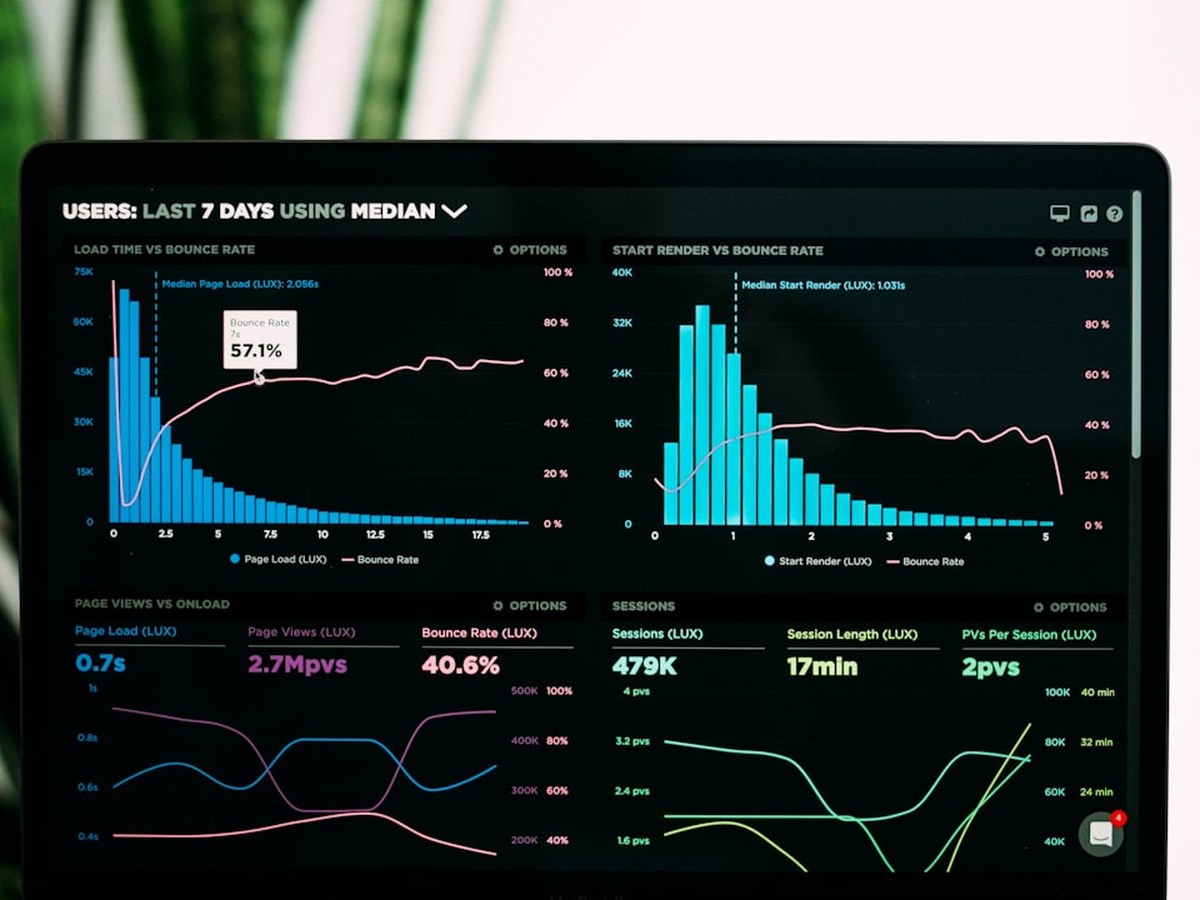
I do not recommend you copy this. I recommend you understand why each entry is here so you build your own. Prices as of July 2026.
| Tool | Monthly cost | What it does in my workflow |
|---|---|---|
| ChatGPT Plus | $20 | Ad hoc drafting, prompt iteration, tone matching |
| Claude Pro | $20 | Long-context research summaries, code for automations |
| Zapier Team | $69 | The trigger-and-glue layer for most rung-3 workflows |
| n8n Cloud | $24 | Anything I want self-hostable or multi-step with branching |
| Make (Integromat) | $16 | Backup routing for Zapier when a specific app is not native |
| Fathom Team | $32 | Meeting transcription plus action-item extraction |
| DataForSEO | $50 avg | Programmatic SERP and keyword data for content workflows |
| Slack (share of business plan) | $8 | The action layer where most drafts land for human approval |
| Google Workspace slot | $22 | The scratch inbox and Sheets for automation logs |
| Buffer for scheduled posting | $12 | The publish step at the end of the content workflow |
| Airtable Team seat | $24 | The database of record for workflows that need structure |
| Miscellaneous API credits | $21 | Small OpenAI, Anthropic, Voyage calls that sit outside the SaaS tiers |
| Total | $318 |
Two things worth flagging. First, no image or video generation is in this stack because the client work I do runs through licensed stock and Canva. Second, no dedicated "AI agent platform" (Vellum, Gumloop, Lindy) is here because I have not needed one yet. When a client hits rung 5 with 3 stable workflows, then it goes on the list. Not before.
Three failure patterns I keep seeing

Pattern 1: The demo automation. A vendor demo makes the workflow look elegant. The team copies it, points it at real data, and it breaks on the third real input because the demo used clean data. Fix: never pilot on a workflow you did not audit yourself at rung 1.
Pattern 2: Prompt sprawl. The prompt starts as 40 words and ends as 800 because every edge case gets appended. Then the model changes behavior. Fix: version your prompts in git or a Google Doc; test the new version on 10 held-out examples before you cut over.
Pattern 3: The invisible break. The API fails silently, no error surfaces, the workflow keeps returning stale drafts for a week. Fix: every automation ends with a sanity-check step that verifies output structure and pings a human channel if it fails.
Ethan Mollick, Associate Professor at the Wharton School and co-director of Wharton Generative AI Labs, put the mental model well: "AI behaves less like software" than teams expect, meaning it degrades in fuzzy, hard-to-monitor ways that traditional workflow tools do not. The fix is not "trust the AI more." It is building the checks that let you catch degradation before your client does.
How to measure whether a workflow is worth keeping
Every automation I run has a monthly report card with 4 numbers.
- Time saved per week (in minutes; measured, not estimated).
- Ship rate (percent of AI drafts that got sent unchanged; below 70% means fix the prompt or kill the workflow).
- Error rate (percent of drafts that had a factual or brand-voice error, caught by the human).
- Cost per instance (tool spend divided by number of drafts).
If time saved falls below 30 minutes a week for a workflow, I retire it. That is my threshold. The compounding value of keeping only high-yield automations is bigger than the value of hoarding 40 half-useful ones.
Kieran Flanagan, SVP of Marketing, AI, and GTM at HubSpot, framed the underlying tension in HubSpot's 2026 State of Marketing report: "Today, more content is generated by AI than by humans. But it is mostly average. Consumers seek human-created content, and will tune out brand and AI-generated content." The point is not that AI should be banned from your workflow. It is that the human-in-the-loop rung of the ladder is where quality gets protected. Ship rate matters because it is a proxy for quality; when it drops, your human is telling you the automation is not ready to run without them.
Where to start Monday morning
If you take one thing from this: pick the ONE task on your team that repeats weekly, requires low judgment, and has a deterministic trigger. Get it to rung 3 (AI drafts, human ships) in 5 business days. Measure the ship rate for 30 days. Then do it again.
The MKDM Automation Ladder is not exotic. It is the operational discipline that separates the 5% of GenAI pilots that survive from the 95% that do not. If you want a second opinion on which workflow to start with, or an outside review of a stack you already built, book a strategy call and I will walk your team through the audit live.
Related MKDM reading: Best AI Tools for Marketers in 2026: The Stack That Actually Saves Hours, AI Search Optimization: How to Win Visibility Across AI Engines, and How to Optimize Your Content for ChatGPT.
{
  "url": "https://mattkundodigitalmarketing.com/blog/ai-workflow-automation-marketing-teams-starter-guide/",
  "ai_url": "https://mattkundodigitalmarketing.com/ai/blog/ai-workflow-automation-marketing-teams-starter-guide/",
  "content_type": "sub-page",
  "topic_cluster": "none",
  "categories": ["AI Marketing","Marketing Operations"],
  "published": "Jul 8, 2026",
  "canonical": "https://mattkundodigitalmarketing.com/blog/ai-workflow-automation-marketing-teams-starter-guide/",
  "llms_txt": "https://mattkundodigitalmarketing.com/llms.txt"
}