What the TomorrowX Summit Got Right About the Future, and What I'd Take With a Grain of Salt
{
  "@context": "https://schema.org",
  "@graph": [
    {
      "@type": "BlogPosting",
      "headline": "What the TomorrowX Summit Got Right About the Future, and What I'd Take With a Grain of Salt",
      "url": "https://mattkundodigitalmarketing.com/blog/tomorrowx-summit-2026-takeaways/",
      "mainEntityOfPage": {
        "@type": "WebPage",
        "@id": "https://mattkundodigitalmarketing.com/blog/tomorrowx-summit-2026-takeaways/"
      },
      "author": {
        "@type": "Person",
        "name": "Matt Kundo",
        "jobTitle": "Founder and Growth Marketing Manager",
        "worksFor": {
          "@type": "Organization",
          "name": "Matt Kundo Digital Marketing"
        },
        "knowsAbout": [
          "Search engine optimization",
          "Generative engine optimization",
          "AI search visibility",
          "Digital marketing"
        ]
      },
      "description": "My take on the TomorrowX Summit: the AI future that holds up is managers, power, skilled trades and judgment. On the loudest claims, I'd want the numbers first.",
      "publisher": {
        "@type": "Organization",
        "name": "Matt Kundo Digital Marketing",
        "url": "https://mattkundodigitalmarketing.com/"
      },
      "datePublished": "2026-11-22",
      "dateModified": "2026-11-22",
      "image": "https://mattkundodigitalmarketing.com/assets/blog/tomorrowx-summit-2026-takeaways/hero.jpg"
    },
    {
      "@type": "FAQPage",
      "mainEntity": [
        {
          "@type": "Question",
          "name": "What was the TomorrowX Summit?",
          "acceptedAnswer": {
            "@type": "Answer",
            "text": "The TomorrowX Summit was a two-day summit on November 17 and 18, 2026, at the Moody Center in Austin, Texas. Gavin Baker of Atreides Management, Antonio Gracias of Valor Equity Partners and Ron Biscardi of iConnections hosted it. It put tech and finance CEOs in front of investors and the people who write about markets online."
          }
        },
        {
          "@type": "Question",
          "name": "Who spoke at TomorrowX 2026?",
          "acceptedAnswer": {
            "@type": "Answer",
            "text": "Speakers included Elon Musk (by video from China), Michael Dell, Lisa Su of AMD, David Solomon of Goldman Sachs, Stan Druckenmiller, Brad Gerstner, Travis Kalanick, Dina Powell McCormick of Meta, Jon Gray of Blackstone, Marc Rowan of Apollo, Tony Xu of DoorDash, Dylan Field of Figma, Guillermo Rauch of Vercel and Ali Ghodsi of Databricks, among others."
          }
        },
        {
          "@type": "Question",
          "name": "Where can I watch the TomorrowX Summit talks?",
          "acceptedAnswer": {
            "@type": "Answer",
            "text": "iConnections posted the full talks on its YouTube channel."
          }
        },
        {
          "@type": "Question",
          "name": "Did TomorrowX speakers think AI is a bubble?",
          "acceptedAnswer": {
            "@type": "Answer",
            "text": "Most said no. Lisa Su called the growth generational, Jon Gray said the negativity had gone too far, and David Solomon called it a recalibration. Stan Druckenmiller didn't call it either way: he said he can't remember a period with less clarity about the next 12 months, and repeated a joke about the auto-reply on his phone that says he's not playing."
          }
        },
        {
          "@type": "Question",
          "name": "What did Elon Musk talk about at TomorrowX?",
          "acceptedAnswer": {
            "@type": "Answer",
            "text": "He spoke by video link from China about SpaceX catching Starship's upper stage, his estimate that Optimus robots will do household chores in 12 to 18 months, Cybercabs operating in Austin, and putting AI computing in space."
          }
        }
      ]
    },
    {
      "@type": "BreadcrumbList",
      "itemListElement": [
        {
          "@type": "ListItem",
          "position": 1,
          "name": "Home",
          "item": "https://mattkundodigitalmarketing.com/"
        },
        {
          "@type": "ListItem",
          "position": 2,
          "name": "Blog",
          "item": "https://mattkundodigitalmarketing.com/blog/"
        },
        {
          "@type": "ListItem",
          "position": 3,
          "name": "TomorrowX Summit 2026 takeaways",
          "item": "https://mattkundodigitalmarketing.com/blog/tomorrowx-summit-2026-takeaways/"
        }
      ]
    }
  ]
} The TomorrowX Summit was billed as an AI event, but what its speakers described that holds up best is unglamorous: who manages the work, the power and skilled hands it runs on, and the judgment AI can't replace. That first shift, from doing to managing, is the one I see in AI and marketing automation. On the loudest claims, I'd want the numbers first.
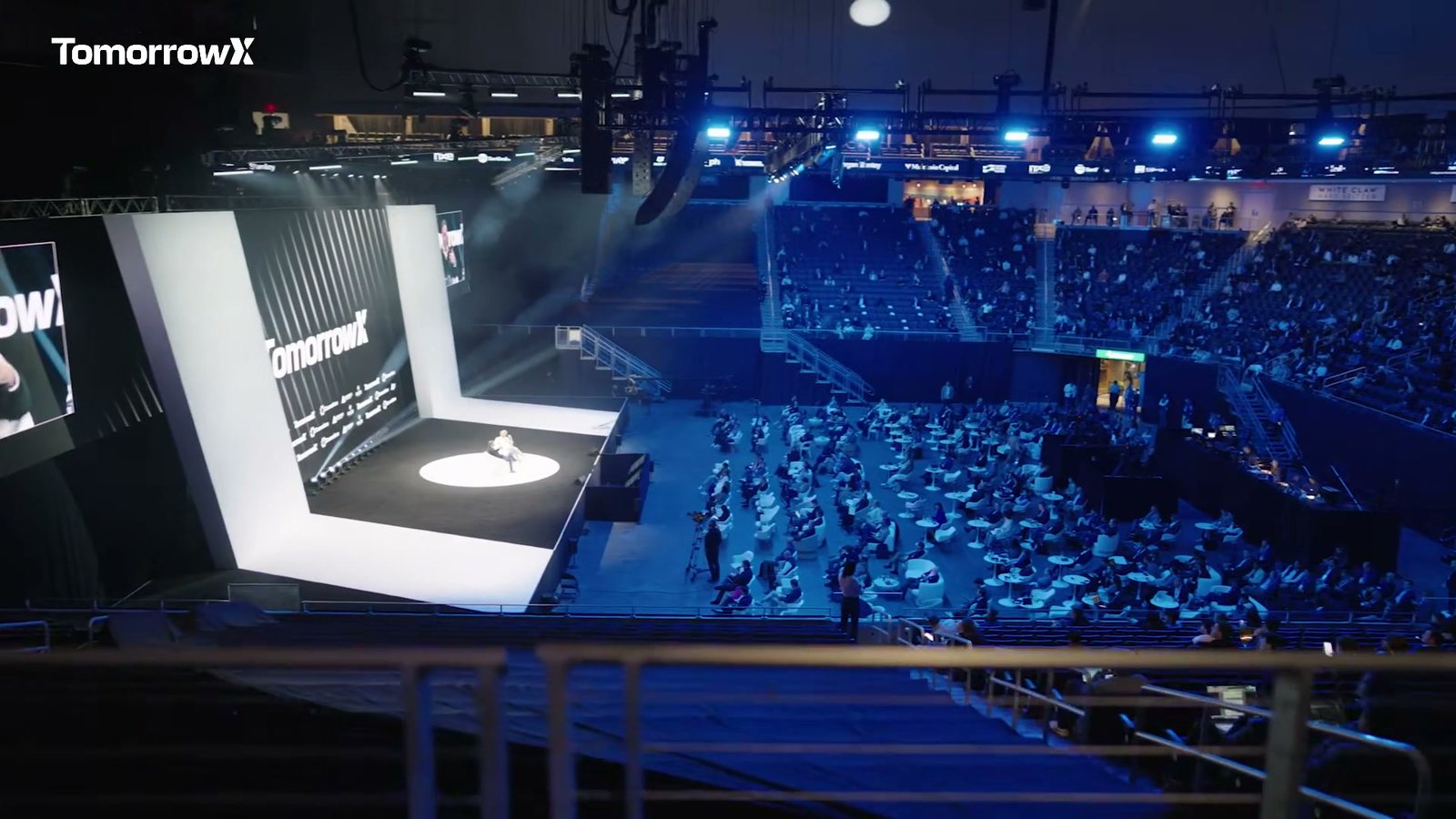
The summit ran November 17 and 18, 2026, at the Moody Center in Austin, Texas. Gavin Baker of Atreides Management, Antonio Gracias of Valor Equity Partners and Ron Biscardi of iConnections hosted it, and iConnections has since posted the full talks on YouTube. The table at the end links the ones I draw on. A lot of what was said there is closer than it sounds.
The best framing for all of it came from Zipline CEO Keller Rinaudo Cliffton. He pointed out that today, a 4,000-pound car with a human driver delivers a package that weighs about five pounds. Then he described what happens when something better replaces it.
"It's just, like, a fundamentally new layer of infrastructure that seems like science fiction for about seven days to people and then just seems completely normal."
Keller Rinaudo Cliffton, CEO of Zipline, at the TomorrowX Summit
That's the lens I'd use for everything below. Some of what the speakers described is already in its seven days. Some of it is still somebody's bet, and it's worth knowing which is which.
My key takeaways in 30 seconds
- The skill worth building now is managing work you don't do yourself. Travis Kalanick says a new graduate will be in charge of a team of 50 automated workers.
- The best AI stories were physical, not software. DoorDash CEO Tony Xu says its sidewalk robot, Dot, completes close to 10% of DoorDash orders in Phoenix.
- The jobs story nobody puts on a slide is the trades. Crusoe CEO Chase Lochmiller says apprentices on his projects make about $200,000 two years into training.
- AI's real limit is electricity, chips and permits. Crusoe's first two phases in Abilene, Texas draw about as much power as Denver.
- Nearly everyone on stage said AI isn't a bubble, and nearly everyone on stage sells the shovels. Test small before you bet big.
Will AI take your job, or make you a manager?
If I had to pick one skill to get good at right now, it's managing work you don't do yourself. That means a clear ask, clear ownership, and knowing how you'll tell it worked. AI doesn't take that part off your plate. From what the TomorrowX speakers described, it hands you more of it.
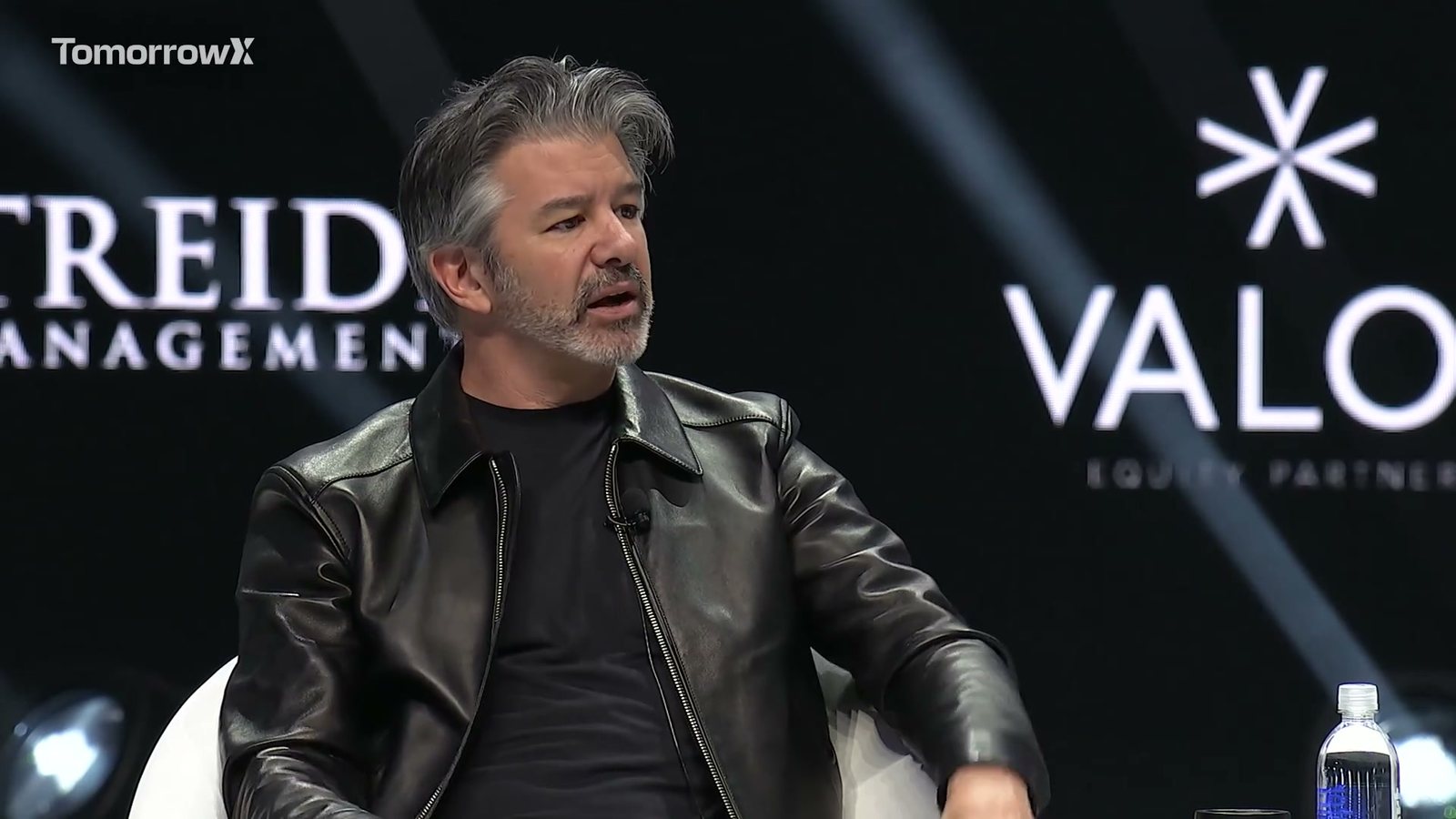
Travis Kalanick, who now runs a company called Atoms, made the case most directly. His picture of a new graduate's first job isn't a junior role doing grunt work. It's being in charge of a team of 50 automated workers.
"But you're coming in, you're first year out of school, you're going to be the boss."
Travis Kalanick, founder of Atoms, at the TomorrowX Summit
Walk that through. The graduate doesn't do each task. They decide what the 50 should work on, check what comes back, and fix the instructions when the output is off. That's a manager's job on day one, without the years of practice most managers get first.
Databricks CEO Ali Ghodsi added the part I'd underline. He says he increasingly runs his 12,000-person company through an AI assistant that knows its data and org chart. He was just as clear that when the AI gets something wrong, a person is still liable for it. Somebody's name stays on the work.
Anyone who has managed work they didn't do themselves already has a head start. I've led projects with a team of contractors who reported directly to me, and the habits transfer: a clear ask, clear ownership, and checking the work against the outcome, not the activity. If you've never done it, hand one low-stakes task to an AI assistant and review it the way you'd review a new hire's work. My beginner's guide to Claude Code is one place to start.
Why were the best AI stories at TomorrowX about atoms, not apps?
The most important AI stories at the TomorrowX Summit weren't about software. They were about drones, sidewalk robots, tunnels and rockets. The physical world is finally getting some of the speed software has had for 20 years, and some of it is already running instead of sitting in a forecast.
DoorDash CEO Tony Xu explained why this is harder than it looks. A robotaxi passenger walks out to the car. Burritos and bananas don't. So the delivery has to come all the way to the door, which is the slow, expensive part.
DoorDash's answer is Dot, a sidewalk robot Xu described as a self-driving car shrunk to a tenth of the size. He says Dot now completes close to 10% of DoorDash orders in Phoenix. That isn't a demo. It's a share of real orders in a real city.
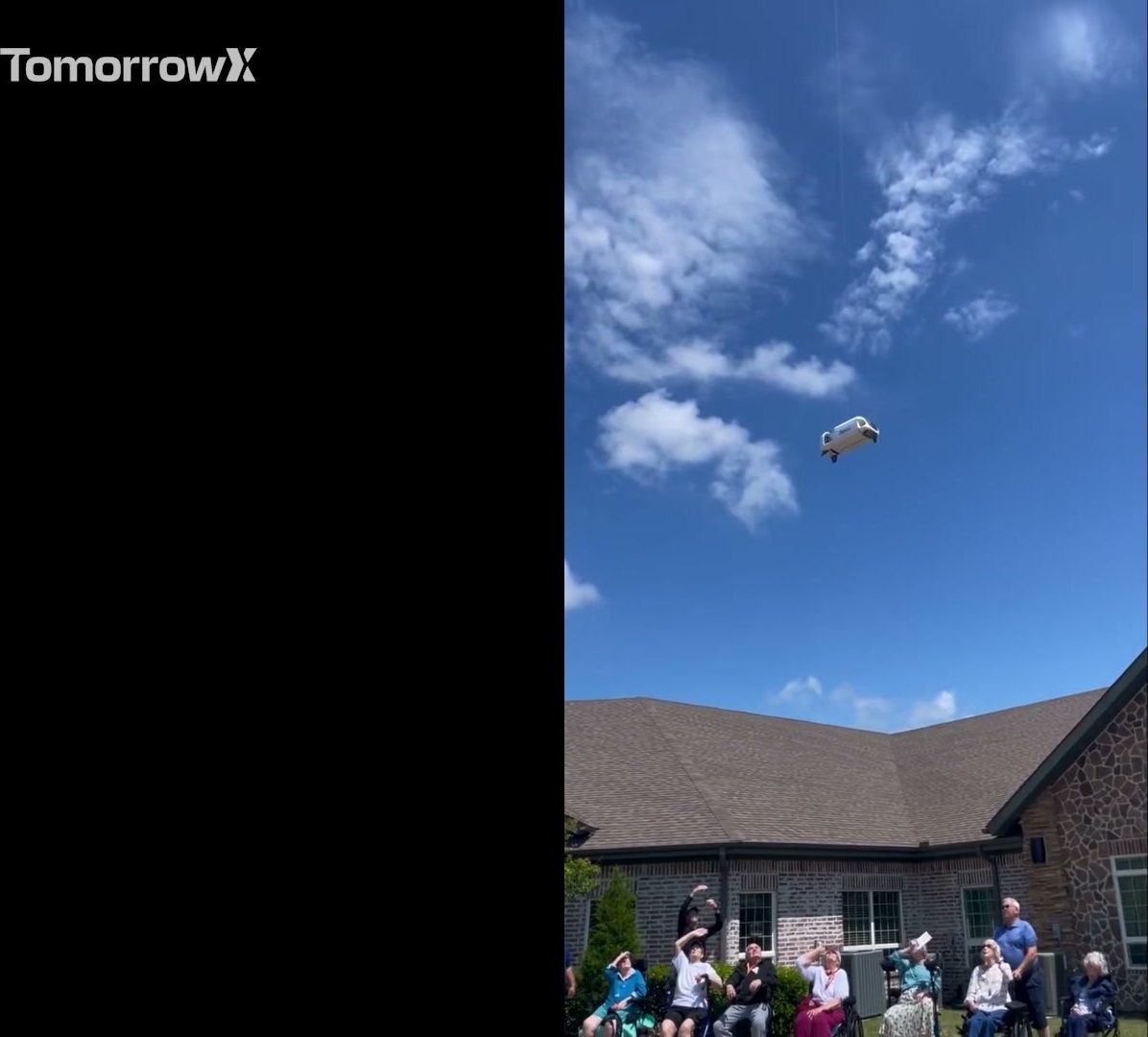
Zipline is the same idea in the air. It launched in Austin a couple of weeks before the summit, and its talk showed drones dropping deliveries in a front yard and at a nursing home.
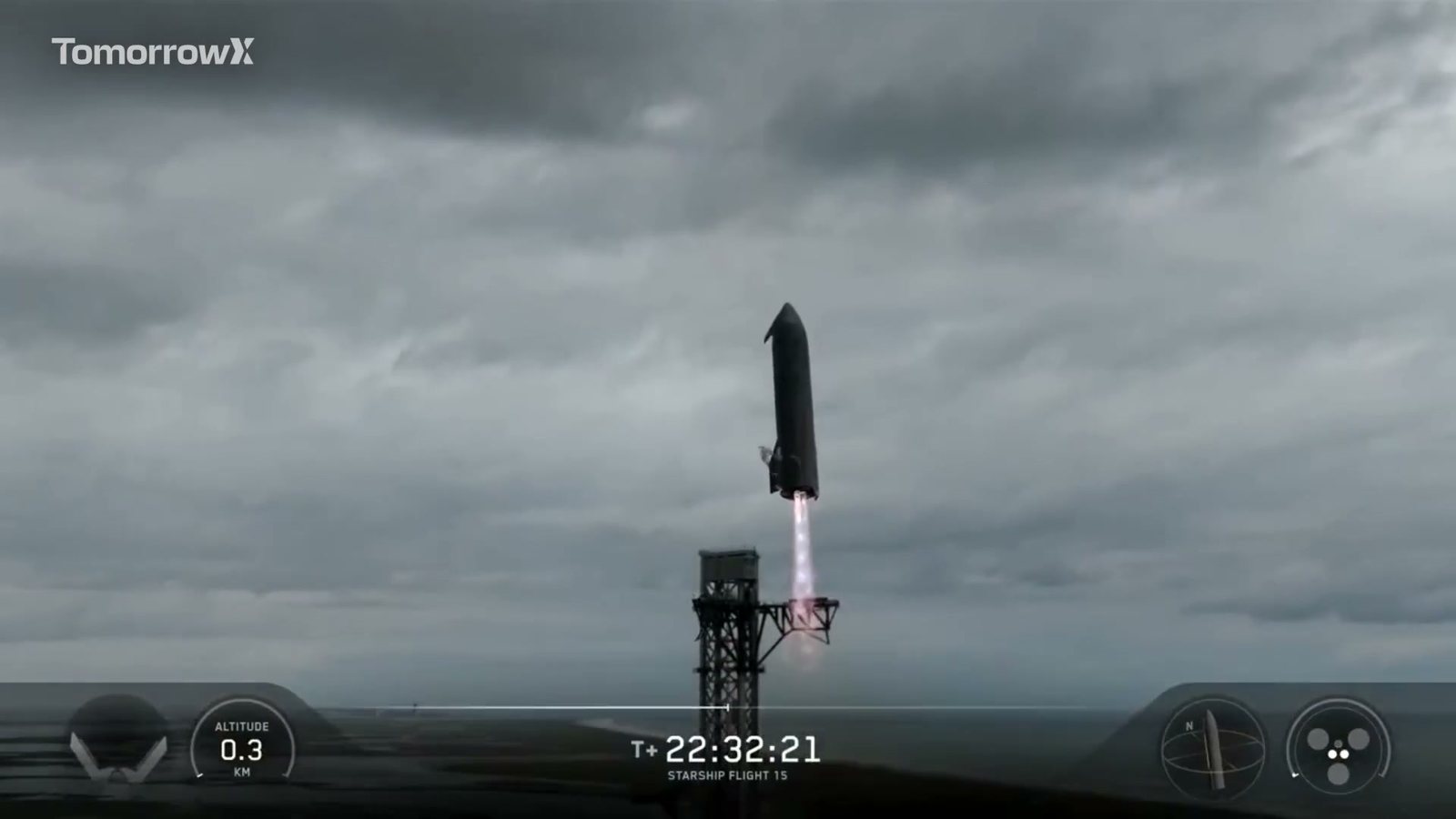
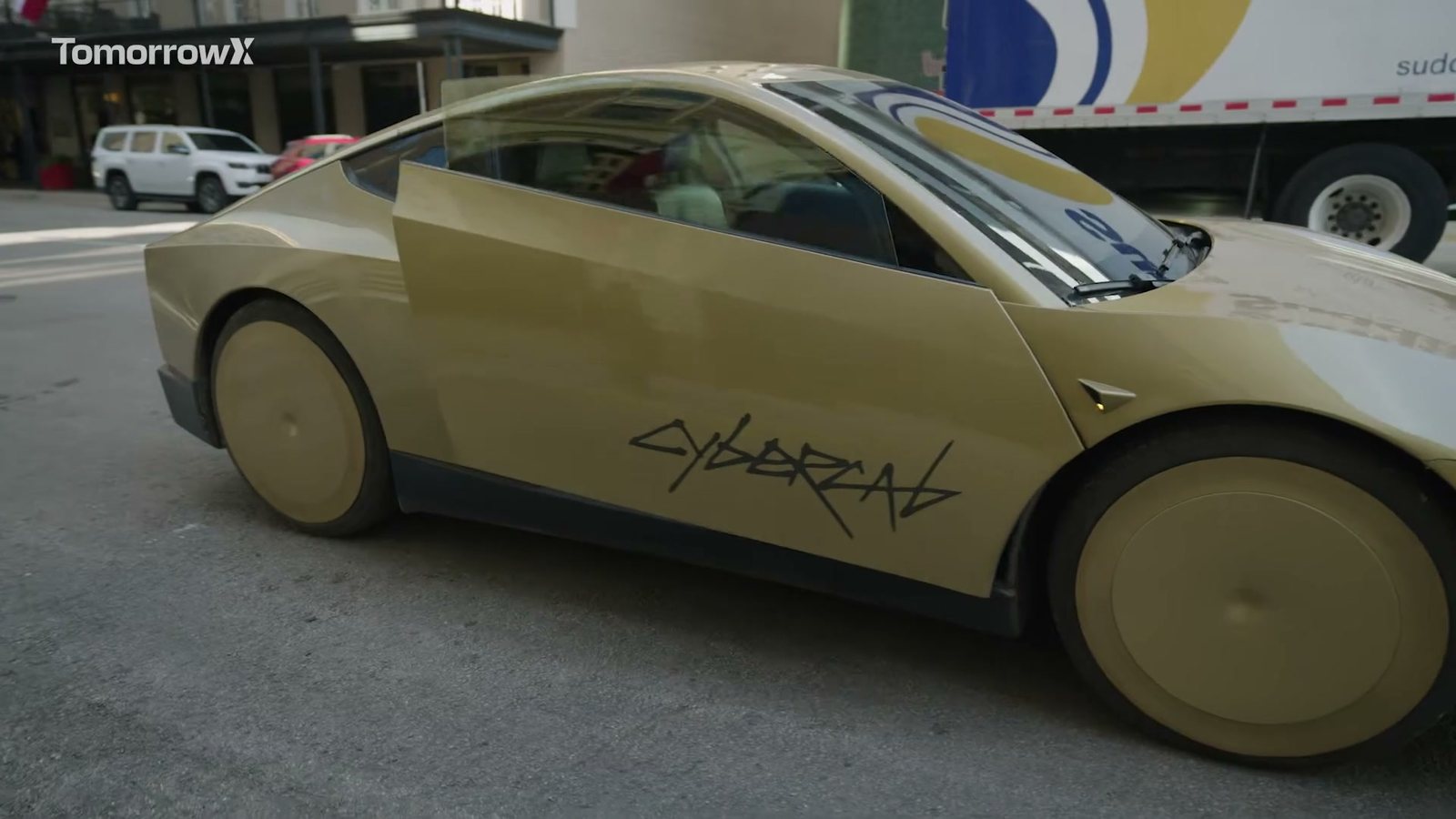
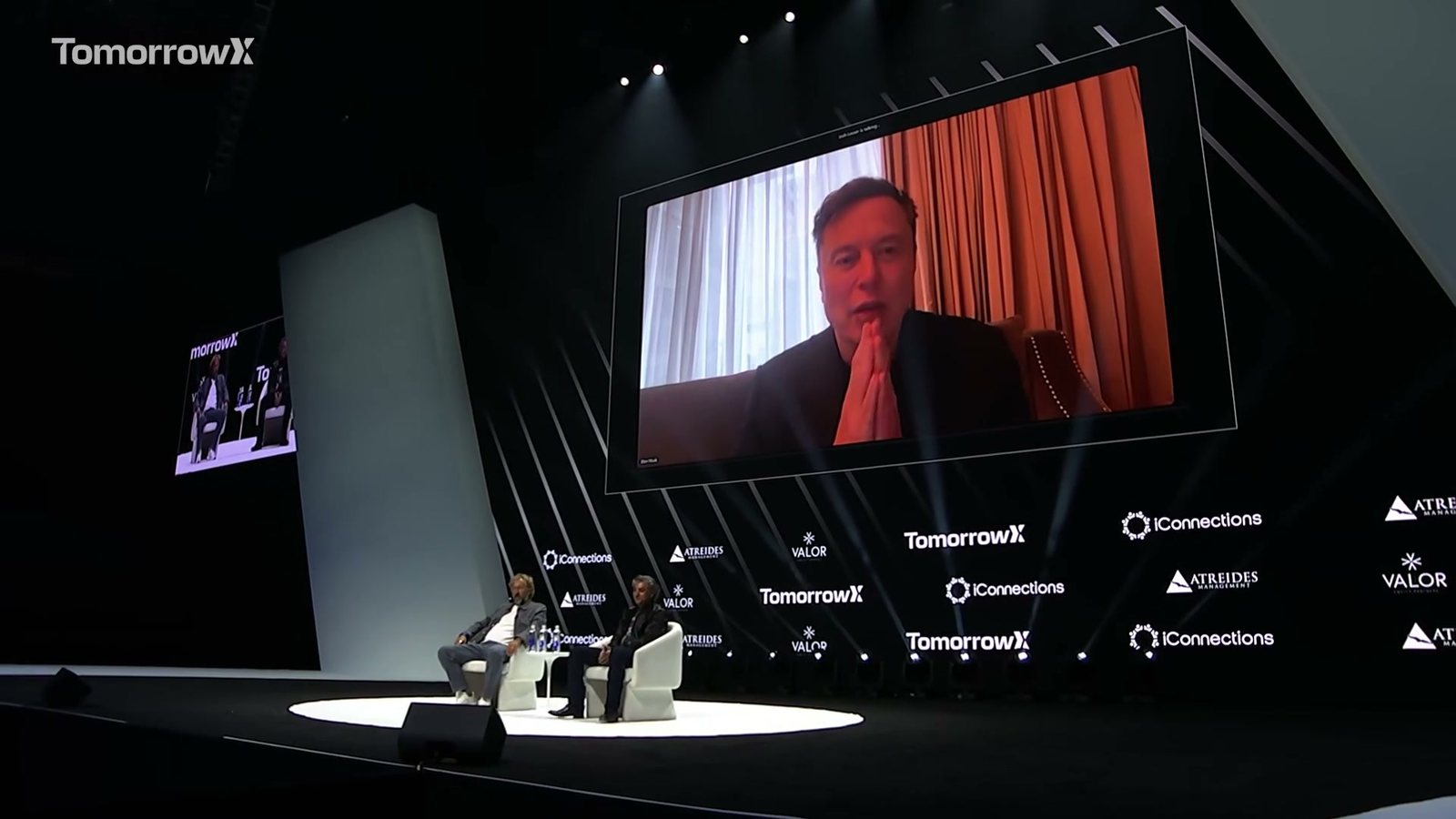
Elon Musk, who closed the summit by video from China, is where I'd separate running from promised. He talked about SpaceX catching Starship's upper stage with the launch tower's giant chopsticks, and he says Tesla's Cybercabs are already picking people up in Austin. He also says Optimus robots will do household chores in 12 to 18 months. That's his bet. I'd want to see it working in a real home first.
Who is the AI buildout hiring right now?
The AI jobs story most people tell is about desk jobs disappearing. The one told on stage at the TomorrowX Summit was about physical work getting scarcer and better paid. Both can be true at once, and the second one gets far less attention than it should.
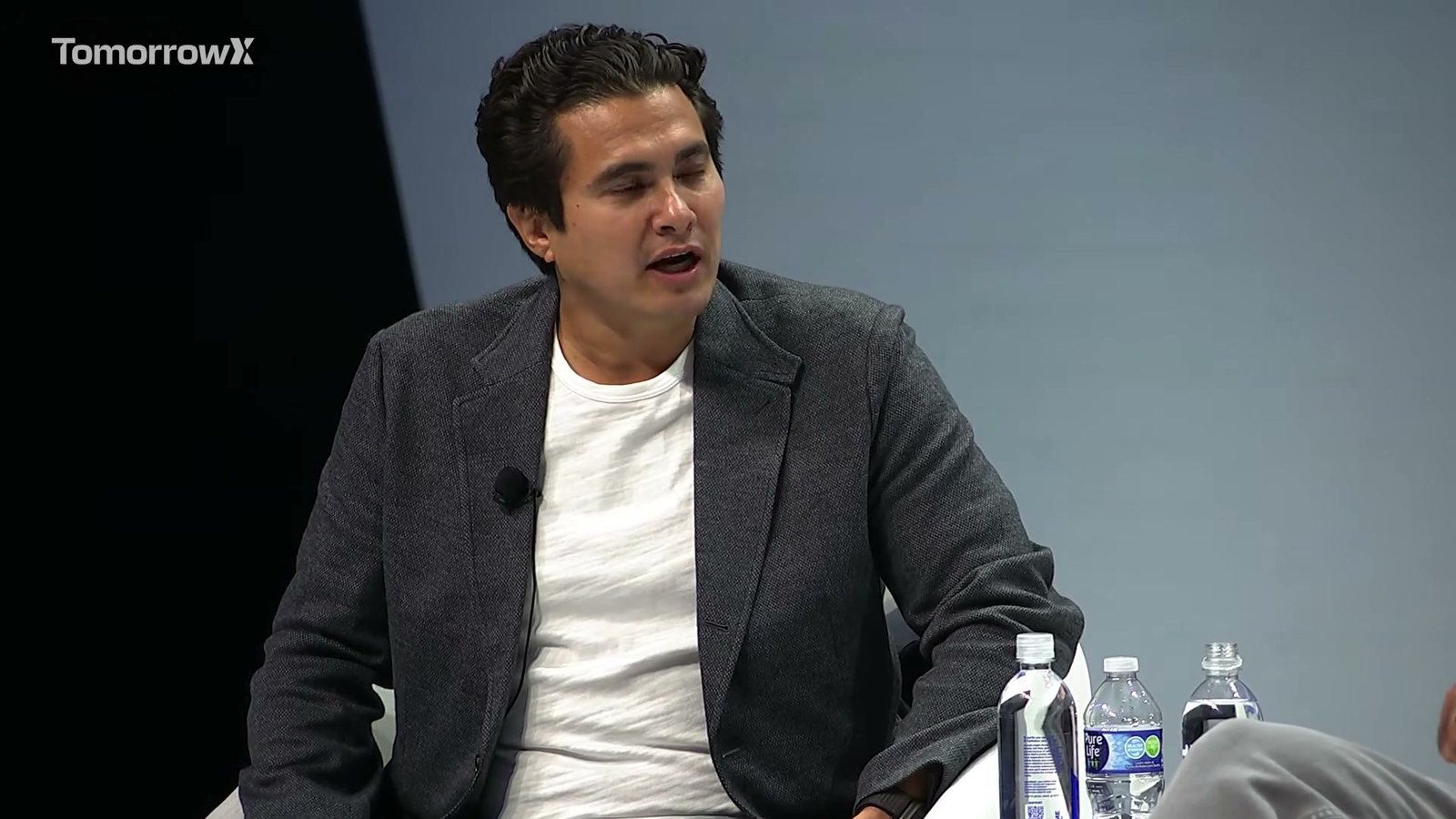
Crusoe builds AI data centers, and CEO Chase Lochmiller walked through what that takes in people. He says almost 20,000 skilled trade workers are on his projects. He says apprentices make about $200,000 two years into their training. And he still can't find enough of them.
"We can't hire enough skilled trade workers."
Chase Lochmiller, CEO of Crusoe, at the TomorrowX Summit
Apollo CEO Marc Rowan called it blue collar ascendance. His example was a worker who can level a concrete floor, and his forecast for that worker was a very busy calendar.
Lochmiller and Rowan both need these workers, so they have a reason to talk the trades up. Still, the pay figures are specific and on the record. If you're helping someone pick a career, or rethinking your own, the trades belong in that conversation.
Why does AI keep running into the power grid?
The real limit on AI isn't intelligence. It's electricity, chips, memory and permits. Intelligence now has a physical supply chain, and those limits set the real timelines. If you want to know how fast any of this moves, I'd watch power and permits, not model launches.
Lochmiller gave the clearest sense of scale. The first two phases of Crusoe's campus in Abilene, Texas came to 1.2 gigawatts, about as much power as the whole city of Denver. That's one company's campus. Memory is just as tight: Micron says 75% of its 2027 supply is already sold.
That's why some speakers are looking up. SpaceX CFO Bret Johnsen argued that compute in orbit has no energy, cooling or land cost, and he says SpaceX will fly its first orbital compute satellites in 2027. Even Stan Druckenmiller, the summit's resident skeptic, put the odds of data centers in space within 10 years at 70% or better.
Orbital compute is outside what I can judge. The ground-level signals are easier to follow: how long new data centers wait to connect to the grid, how fast permits clear, and where new transmission lines go. Those will tell you more about the timeline than any keynote.
Is AI a bubble? I'd take the answers with a grain of salt
Almost everyone on stage at the TomorrowX Summit said AI isn't a bubble, and almost everyone on stage sells the picks and shovels. I'm not saying they're wrong. I'd just want the bottom-line numbers before I believed it, and even the summit's best-known investor wouldn't call it.
The no-bubble case came close to unanimous. AMD's Lisa Su called the growth generational, not cyclical, Blackstone's Jon Gray said the negativity had gone too far, and Goldman Sachs CEO David Solomon called it a recalibration, not a peak.
Then Fireworks AI CEO Lin Qiao described the view from the other side of the table. Companies come to her because running AI is costing them more than it earns.
"They're saying, hey, we're scaling to bankruptcy. Scaling to bankruptcy sounds absurd. But that's the reality."
Lin Qiao, CEO of Fireworks AI, at the TomorrowX Summit
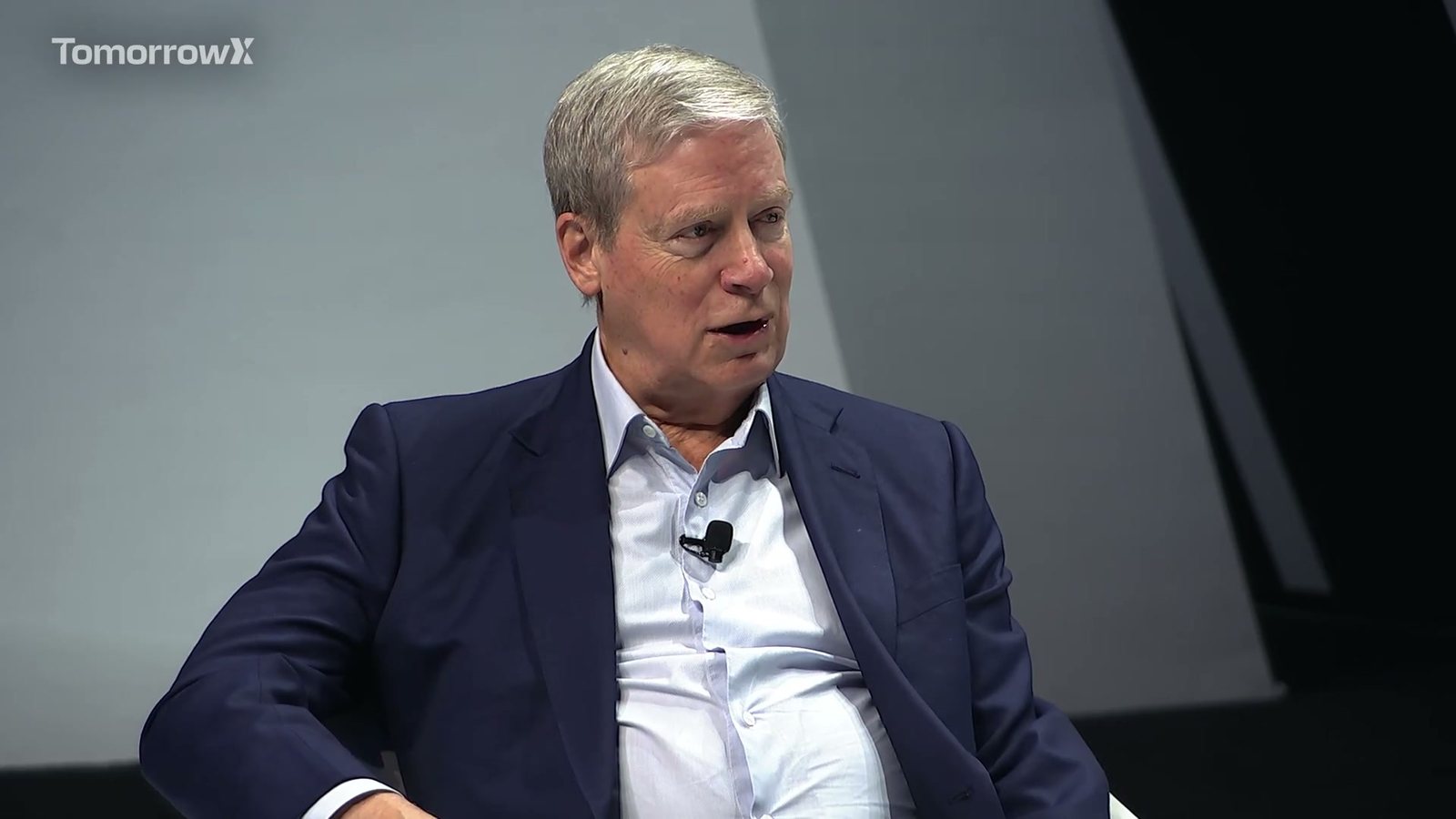
Druckenmiller, after 50 years of investing, didn't call it either way. He said he can't remember a period with less clarity about where things will be in 12 months, and he repeated a joke about the auto-reply on his phone that says he's not playing.
So my position is the one I'd take on any big claim. Be sure about the direction, humble about the timing, and test small before betting big. The question I'd ask of any AI investment, at any company, is how you'd quantify its impact on the bottom line. Qiao's customers are what happens when nobody asks it early. None of this is investment advice.
What's left for people when anyone can build anything?
There aren't really tricks of the trade anymore. When anyone can build almost anything, the edge is judgment and execution: knowing what's worth making, for whom, and then actually doing it well. AI can help with nearly every step except deciding which steps are worth taking.
Figma CEO Dylan Field made that case from design, one of the places AI tools have moved fastest. His point was that AI can help with the work but can't do the thinking.
"And it is still the case that design is something that AI can be helpful with, but it cannot do for you. It can't think for you. You got to do that yourself. You got to provide the human judgment."
Dylan Field, CEO of Figma, at the TomorrowX Summit
He added that every model's house style turns into a cliché once people get used to it. That's the same problem I've written about with brand voice and AI writing tools. When everyone uses the same defaults, the defaults stop standing out.
Vercel CEO Guillermo Rauch gave the sharper warning. If you stop reading what the AI wrote, you're on your way to becoming a useful idiot.
For marketing leaders, this is familiar ground. Taste, positioning and deciding what's worth making were always the job. When output gets cheap, that's what's left: judgment first, then the execution to back it up.
Where does AI show up for people outside of work?
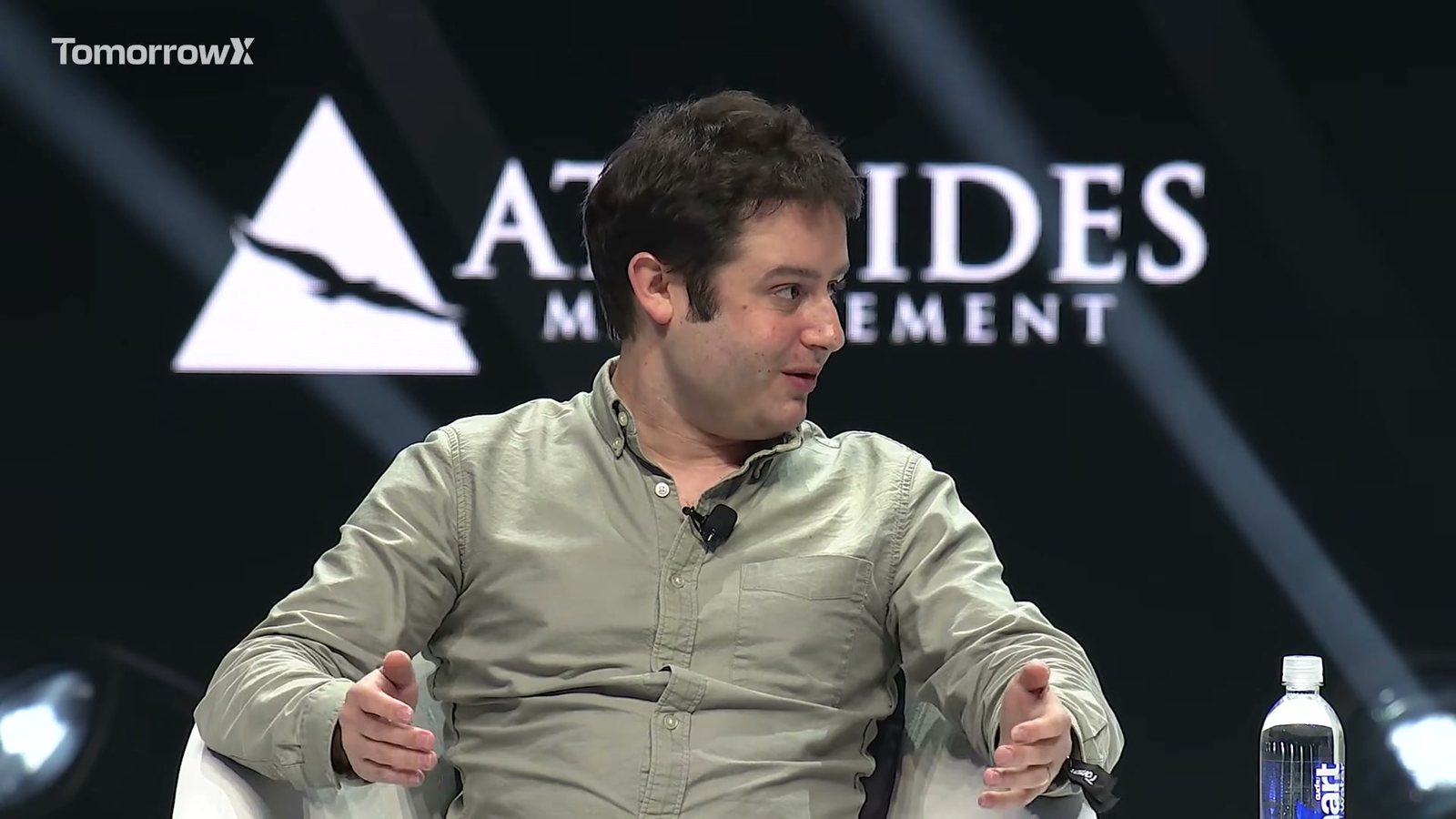
The most human stories at the TomorrowX Summit weren't about work. They were about the doctor's office and the kitchen table. That's the version of this future I'd most like to see show up first, and a couple of speakers described it happening already.
Meta President Dina Powell McCormick told the story of a totally blind veteran at the Korean War Memorial. Wearing Meta's glasses, he could read the inscription for the first time.
"And it said, sure, freedom is not free."
Dina Powell McCormick, president of Meta, at the TomorrowX Summit
She says Meta will donate the glasses to every blind veteran in America.
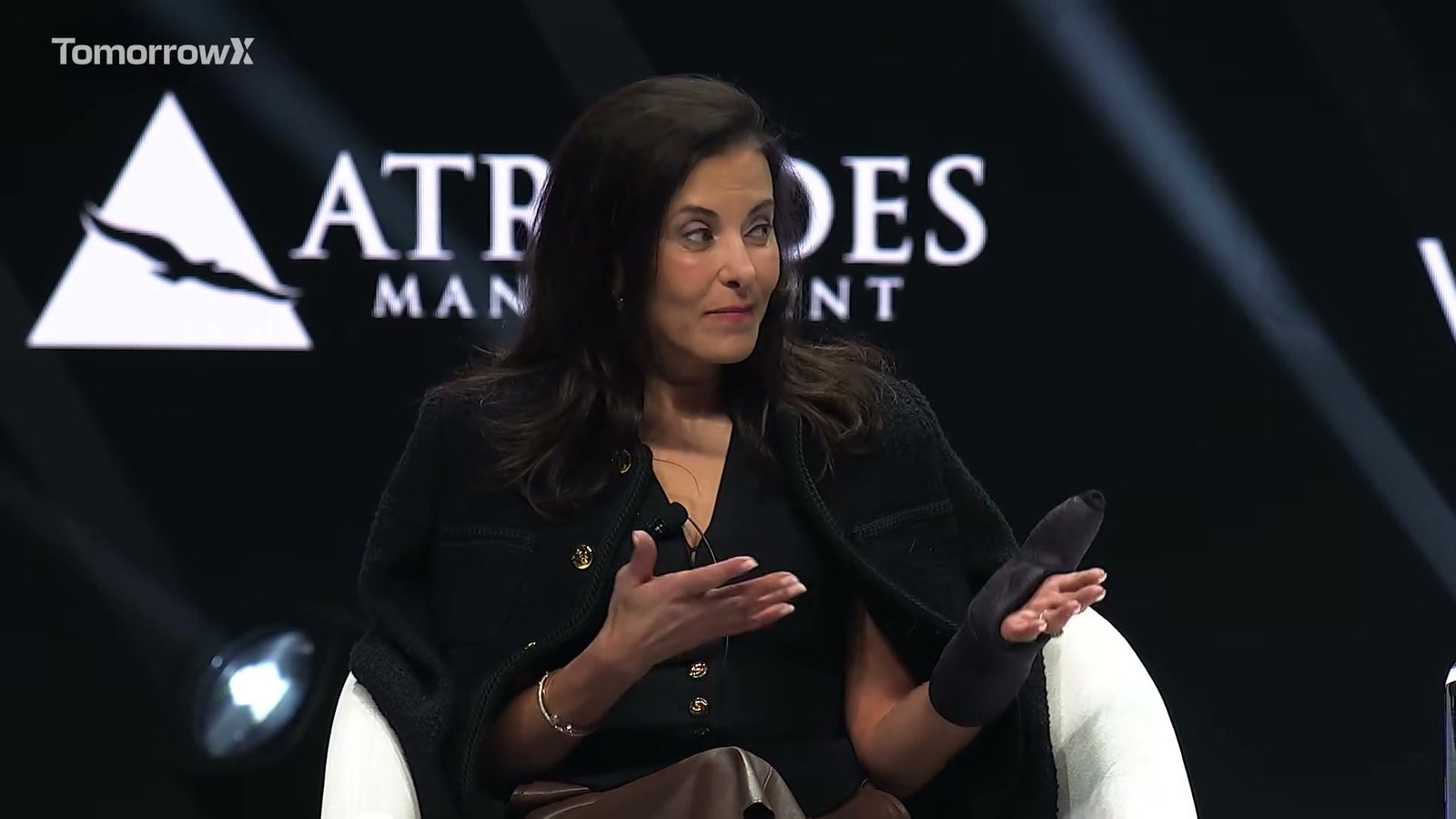
Astera Labs CEO Jitendra Mohan told a quieter one. A close family member had two sets of symptoms that no doctor had connected. AI suggested the link, the doctor agreed, and a change in medication fixed it. Mohan now runs family medical reports through AI first, then takes them to a doctor.
Those are their stories, not medical advice, and I'd keep a doctor in the loop the way Mohan does. They're also the clearest examples on stage of AI doing something for a person that wasn't possible before.
What is the Seven-Day Test for AI headlines?
The Seven-Day Test is the five questions I'd ask about any AI headline that sounds like science fiction. It borrows Rinaudo Cliffton's point that real infrastructure feels strange for about a week and then normal. The questions sort what's already in its seven days from what's still someone's bet.
- Is it already running somewhere real? If yes, it's probably close to feeling normal. Zipline says it launched in Austin, and DoorDash says Dot completes close to 10% of its Phoenix orders.
- What does it need from the physical world? Power, chips, memory, permits and trained people set the real timeline, as Crusoe's gigawatts and Micron's sold-out supply show.
- Who owns it when it goes wrong? That's where the new jobs are, like Zipline's fleet commanders, who oversee 100 aircraft at a time, and it's why Ghodsi's liability point matters.
- Who's telling me, and what are they selling? Weigh the claim against the seller. Nearly everyone saying there's no bubble sells the shovels.
- Can I test a small version myself this week? A small win with your own data beats a big bet on someone else's forecast, and it goes a long way when you have to explain the decision later.
How will you use your 20 watts?
The best closing question at the TomorrowX Summit wasn't about gigawatts. It was about the 20 watts your own brain runs on, and whether you spend them reacting to AI news or building something with it. That's the choice I'd start with.
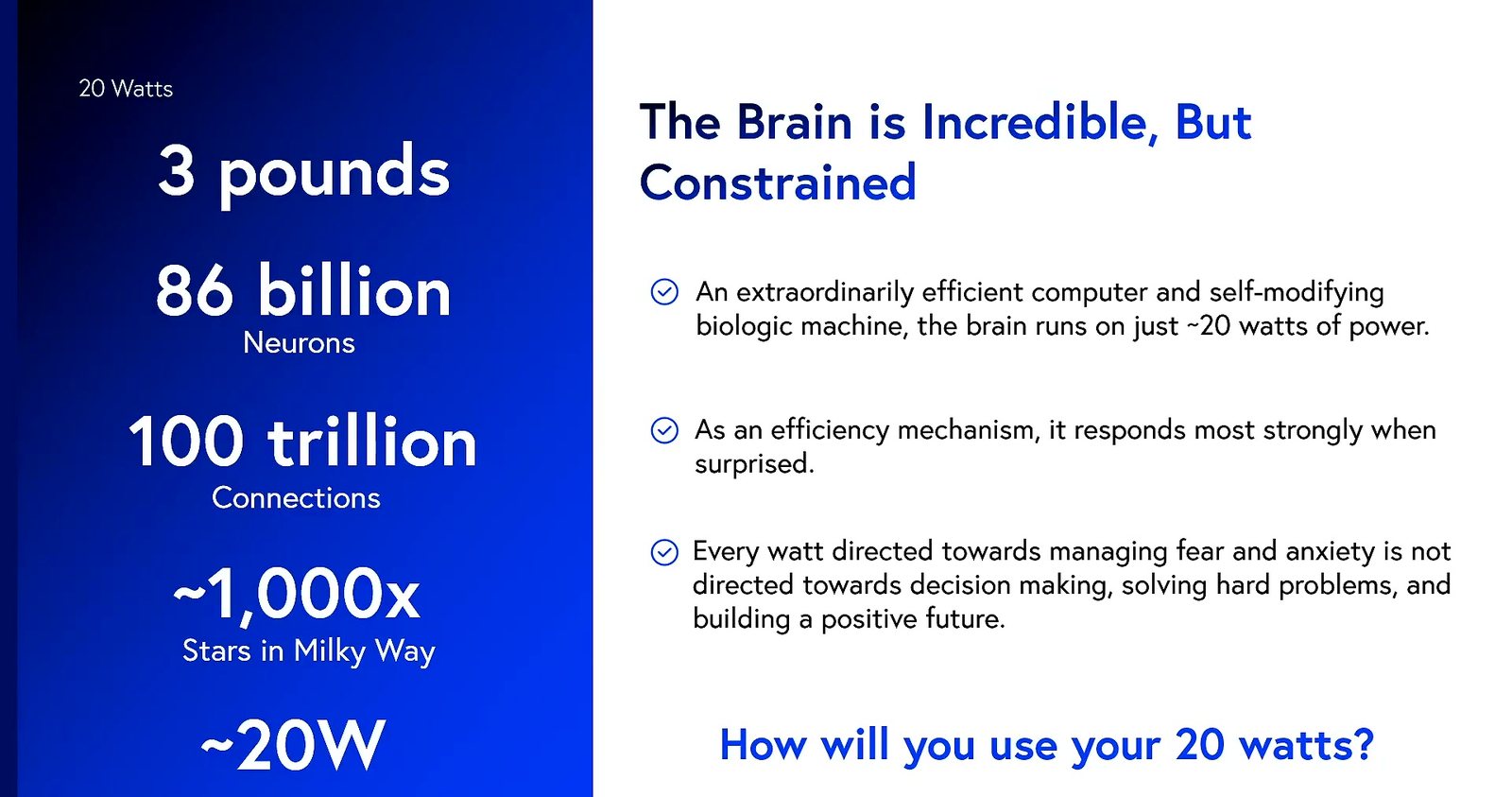
Dr. Laura Harrison, the staff neuroscientist at Valor Equity Partners, presented with Antonio Gracias. She described the brain as about three pounds, with 86 billion neurons, running on about 20 watts. Every watt spent on fear, she argued, is a watt you can't spend creating.
"Do you want to use it to react, or do you want to use it to create?"
Dr. Laura Harrison, staff neuroscientist at Valor Equity Partners, at the TomorrowX Summit
Her tool for a fear spike is short: notice it, name what feels threatened, then pause before you decide anything.
Here are three things I'd try this week:
- Ship one small win. Pick one tedious task, test an AI assistant on it, and check its work like you'd check a new hire's. These real-world AI agent use cases are a good place to find one.
- Run the Seven-Day Test on the next AI headline that worries or excites you.
- When AI news spikes your anxiety, name it, pause, and build one small thing instead of reading another prediction.
Watch the talks
| Speaker | The idea in one line | Watch |
|---|---|---|
| Keller Rinaudo Cliffton, Zipline | Drone delivery that feels like science fiction for a week, then normal | Full talk |
| Travis Kalanick, Atoms | Treat atoms like bits, and expect new graduates to run teams of 50 automated workers | Full talk |
| Ali Ghodsi, Databricks | Everyone becomes a manager, and a person is still liable for what the AI did | Full talk |
| Tony Xu, DoorDash | Why burritos and bananas make delivery harder than robotaxis | Full talk |
| Elon Musk, closing session by video | Rockets, Cybercabs, Optimus and a future that makes you glad to be alive | Full talk |
| Chase Lochmiller, Crusoe | The skilled trades boom behind AI data centers | Full talk |
| Marc Rowan, Apollo | Blue collar ascendance | Full talk |
| Bret Johnsen, SpaceX | Why compute might move to orbit | Full talk |
| Lisa Su, AMD | Growth that looks generational, not cyclical | Full talk |
| Lin Qiao, Fireworks AI | Companies scaling to bankruptcy when AI costs more than it earns | Full talk |
| Stan Druckenmiller, Duquesne Family Office | Why he can't remember a period with less clarity about the next 12 months | Full talk |
| Dylan Field, Figma | AI can't think for you | Full talk |
| Dina Powell McCormick, Meta | AI glasses that help blind veterans read | Full talk |
| Dr. Laura Harrison and Antonio Gracias, Valor Equity Partners | Your brain runs on 20 watts, so spend them creating | Full talk |
Frequently asked questions
What was the TomorrowX Summit?
The TomorrowX Summit was a two-day summit on November 17 and 18, 2026, at the Moody Center in Austin, Texas. Gavin Baker of Atreides Management, Antonio Gracias of Valor Equity Partners and Ron Biscardi of iConnections hosted it. It put tech and finance CEOs in front of investors and the people who write about markets online.
Who spoke at TomorrowX 2026?
Speakers included Elon Musk (by video from China), Michael Dell, Lisa Su of AMD, David Solomon of Goldman Sachs, Stan Druckenmiller, Brad Gerstner, Travis Kalanick, Dina Powell McCormick of Meta, Jon Gray of Blackstone, Marc Rowan of Apollo, Tony Xu of DoorDash, Dylan Field of Figma, Guillermo Rauch of Vercel and Ali Ghodsi of Databricks, among others.
Where can I watch the TomorrowX Summit talks?
iConnections posted the full talks on its YouTube channel. The table above links the ones this piece draws on.
Did TomorrowX speakers think AI is a bubble?
Most said no. Lisa Su called the growth generational, Jon Gray said the negativity had gone too far, and David Solomon called it a recalibration. Stan Druckenmiller didn't call it either way: he said he can't remember a period with less clarity about the next 12 months, and repeated a joke about the auto-reply on his phone that says he's not playing.
What did Elon Musk talk about at TomorrowX?
He spoke by video link from China about SpaceX catching Starship's upper stage, his estimate that Optimus robots will do household chores in 12 to 18 months, Cybercabs operating in Austin, and putting AI computing in space.
{
  "url": "https://mattkundodigitalmarketing.com/blog/tomorrowx-summit-2026-takeaways/",
  "ai_url": "https://mattkundodigitalmarketing.com/ai/blog/tomorrowx-summit-2026-takeaways/",
  "content_type": "sub-page",
  "topic_cluster": "none",
  "categories": ["AI and Marketing Automation"],
  "published": "Nov 22, 2026",
  "canonical": "https://mattkundodigitalmarketing.com/blog/tomorrowx-summit-2026-takeaways/",
  "llms_txt": "https://mattkundodigitalmarketing.com/llms.txt"
}