2025 was a watershed year for AI in marketing. The tools matured, adoption exploded, and the early skeptics became believers. But here's what I'm seeing now: the gap between companies who implemented AI strategically versus those who just experimented is widening fast. As we head into 2026, the question isn't whether to use AI—it's how to build on what works and position your marketing for what's coming next.
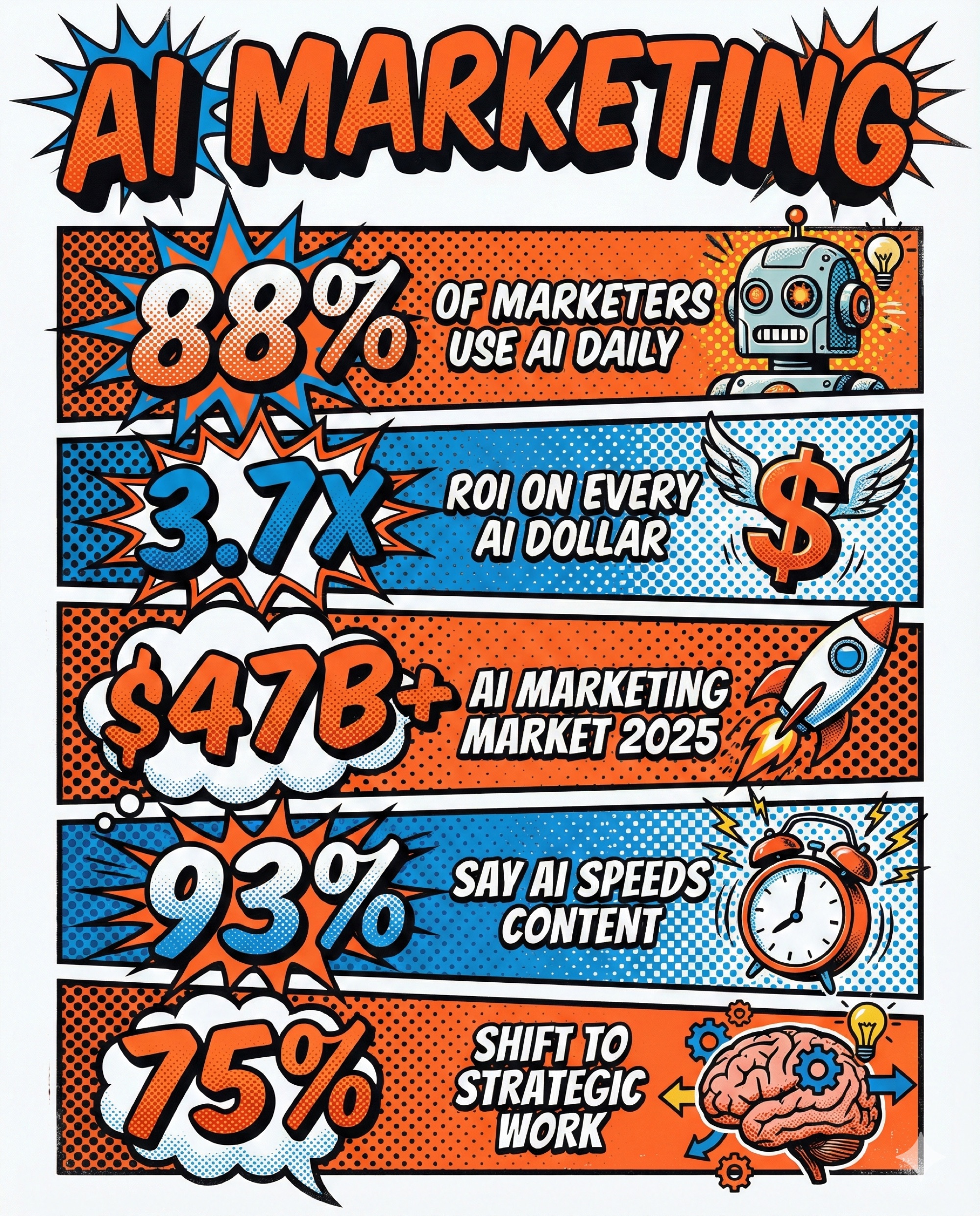
AI applications in digital marketing now span content creation, audience targeting, personalization, predictive analytics, and campaign optimization. By late 2025, 88% of digital marketers were using AI in their day-to-day tasks—a baseline that will only increase in 2026. Tools like ChatGPT, Jasper, and HubSpot AI have transformed how teams create content, analyze data, and engage customers. Looking ahead, the key to 2026 success isn't adopting more tools—it's deepening your strategic implementation while preparing for the next wave of AI capabilities.
What Are AI Applications in Marketing?
AI applications in marketing refer to the use of artificial intelligence technologies to automate, optimize, and enhance marketing activities. These applications leverage machine learning, natural language processing, and predictive analytics to help marketers work smarter and achieve better results.
The core categories of AI digital marketing applications include:
- Content Generation: AI copywriting tools that create ad copy, blog posts, product descriptions, and email content at scale
- Personalization: Dynamic content delivery that tailors messaging to individual users based on behavior and preferences
- Predictive Analytics: Machine learning models that forecast customer behavior, churn risk, and lifetime value
- Marketing Automation: AI-enhanced workflows that optimize send times, segment audiences, and trigger campaigns
- Conversational AI: Chatbots and virtual assistants that handle customer support and lead qualification
Understanding these applications matters because we've reached an inflection point. According to Sequencr.ai, AI adoption in marketing jumped from 21% in 2022 to 74% in 2023, and continued accelerating through 2025. Heading into 2026, if you're working in AI content marketing, these tools are no longer optional—they're essential infrastructure. The competitive advantage now comes from how deeply and strategically you integrate them.
How AI Is Transforming Digital Marketing
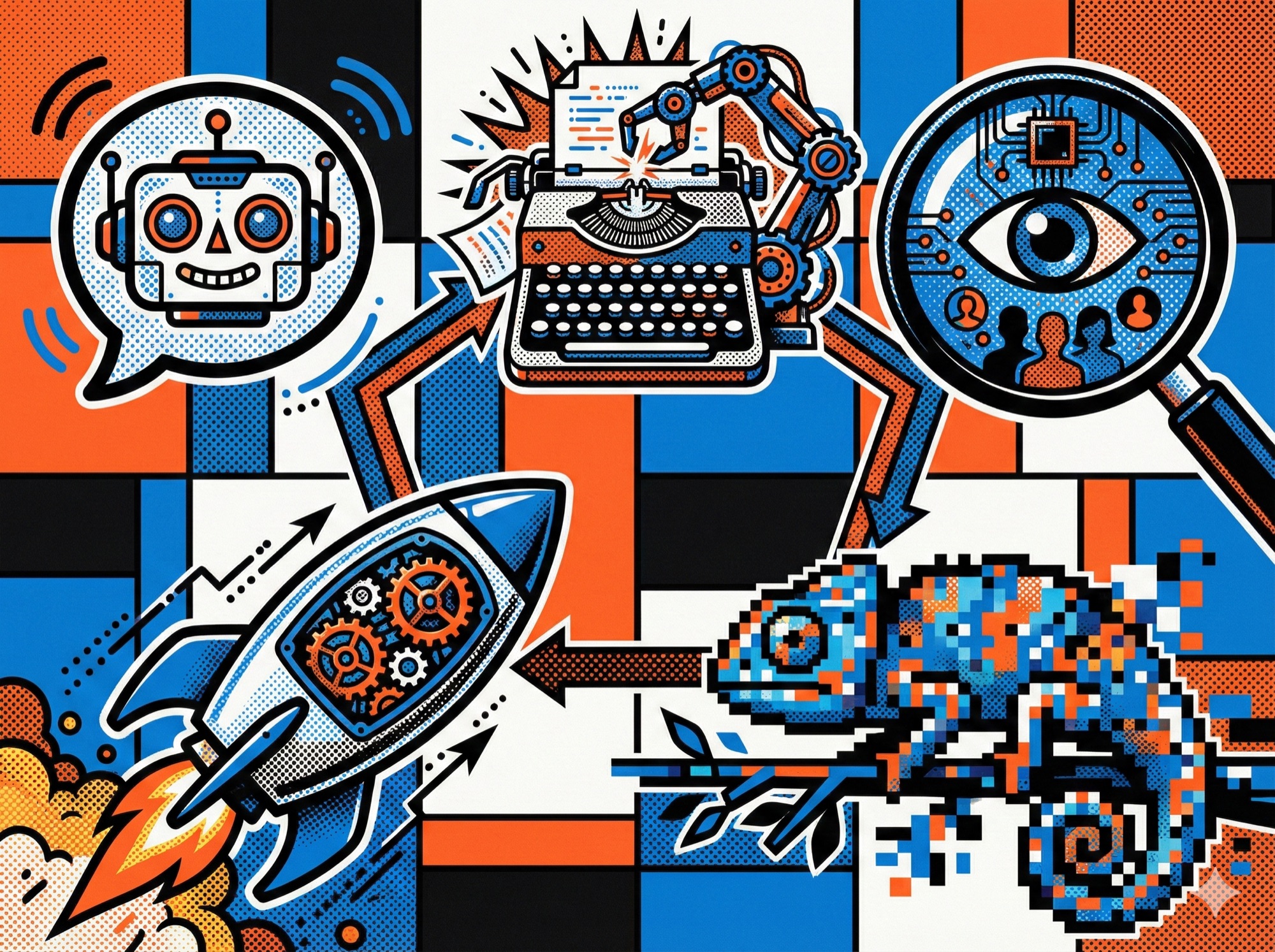
The impact of artificial intelligence marketing extends across every stage of the customer journey. I'm seeing five key transformation areas that are reshaping how marketers approach their work.
1. Content Creation at Scale
AI-powered copywriting has moved from novelty to necessity. According to SEO.com, 93% of marketers say AI helps them create content faster. Tools like ChatGPT and Jasper enable teams to produce first drafts, brainstorm angles, and repurpose content across channels in a fraction of the time.
2. Smarter Audience Targeting
Predictive analytics now powers audience targeting with unprecedented precision. AI systems analyze historical data to identify lookalike audiences, predict purchase intent, and optimize media spend in real-time. This shift from demographic-based to behavior-based targeting has transformed campaign effectiveness.
3. Hyper-Personalization
Recommendation systems and dynamic creative optimization enable personalization at scale that was previously impossible. AI can now customize subject lines, product recommendations, and even ad creative based on individual user signals.
4. Automated Campaign Optimization
From Google's Performance Max to Meta's Advantage+ campaigns, AI digital marketing tools now handle bidding strategies, creative testing, and budget allocation automatically. 81% of marketers report AI increases brand awareness and sales—largely due to these optimization capabilities.
5. Conversational Customer Engagement
Chatbots and conversational AI have matured beyond simple FAQ responses. Today's AI assistants can qualify leads, schedule appointments, and provide personalized product recommendations. For deeper context on how the industry transformed in 2025, I recommend reading about AI in digital marketing: industry transformation and strategic opportunities.
"AI is transforming marketing from a reactive function focused on past campaigns into a proactive, predictive discipline that can anticipate customer needs and deliver personalization at scale."
— Dr. Jim Lecinski, Clinical Associate Professor of Marketing, Kellogg School of Management
Top AI Marketing Tools for 2026
The AI marketing industry reached $47.32 billion in 2025, up from $12.05 billion in 2020—and 2026 projections show continued aggressive growth. With 92% of companies planning to invest in generative AI over the next three years, the tools that emerged in 2025 are maturing rapidly. Here's what's worth your attention heading into 2026.
Rather than an exhaustive list, here are the high-impact categories and standout tools I recommend based on actual client results:
Content & Copy
- ChatGPT (OpenAI): The general-purpose workhorse for brainstorming, drafting, and research assistance
- Jasper: Purpose-built for marketing with brand voice controls and campaign workflows
- Copy.ai: Specialized in sales and marketing copy with strong email templates
SEO & Research
- Surfer SEO: AI-driven content optimization based on SERP analysis
- MarketMuse: Topical authority planning and content gap analysis
- SEMrush AI: Integrated AI features for keyword research and content recommendations
CRM & Marketing Automation
- HubSpot AI: AI assistants embedded throughout the HubSpot ecosystem for content generation, lead scoring, and campaign optimization
- Salesforce Einstein: Predictive scoring and personalization across the Salesforce platform
Advertising
- Albert.ai: Autonomous AI for digital advertising that manages media buying and creative optimization
- Google Performance Max: AI-driven campaign management across Google's inventory
Email Optimization
- Seventh Sense: Send-time optimization using behavioral data to improve open rates
The key is matching tools to your specific AI marketing strategy rather than adopting everything. If you're exploring emerging channels for 2026, consider how advertising on AI chat platforms might fit your media mix—it's one of the fastest-growing opportunities on the horizon.
Implementing AI in Your Marketing Strategy
Here's where most marketing teams go wrong: they start with the technology instead of the problem. As Thomas H. Davenport, Distinguished Professor at Babson College, puts it:
"The biggest mistake marketers make with AI is starting with the technology instead of the problem. You don't need an 'AI strategy'—you need a business strategy for which AI is one of the tools."
— Thomas H. Davenport, Distinguished Professor, Babson College
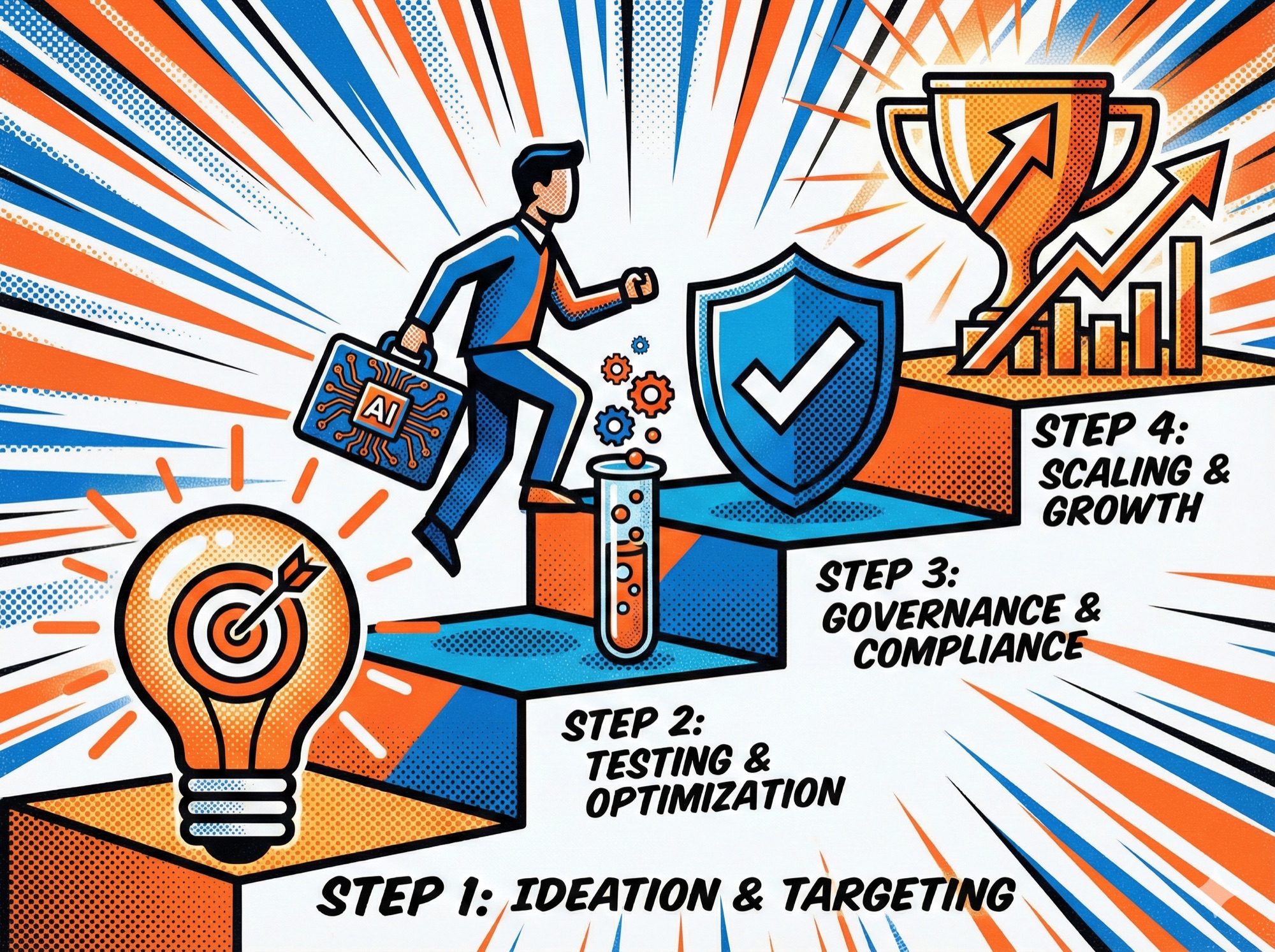
I've developed a four-step framework for AI implementation that consistently delivers results:
Step 1: Identify High-Impact Use Cases
Don't try to transform everything at once. Analyze your current marketing operations and identify 2-3 areas where AI can make the biggest difference. Common starting points include:
- Content creation bottlenecks
- Manual audience segmentation
- Email optimization
- Customer support volume
Step 2: Run Small Pilots
Before committing to enterprise contracts, test AI tools with limited scope. Run a pilot with one campaign type, one channel, or one content category. Measure results against your baseline and iterate.
"You don't need to transform everything at once. Pick 2-3 high-impact areas where AI can make the biggest difference—like content creation or audience targeting—run small pilots, and scale what works."
— Michal Leszczynski, Head of Content & Education, DigitalFirst.ai
Step 3: Establish Governance
According to SEO.com, 49.5% of businesses implementing AI report data privacy or ethics concerns. Before scaling, establish clear guidelines for:
- Data handling and privacy compliance
- Brand safety and voice consistency
- Human oversight and approval workflows
- Disclosure requirements for AI-generated content
Step 4: Measure and Iterate
Set clear KPIs before implementation. Track time saved, quality improvements, and business outcomes. Use these metrics to refine your approach and make the case for expanded investment.
Common Mistakes to Avoid
- Tool-first thinking: Buying AI tools before identifying specific problems to solve
- Skipping the human-in-the-loop: Removing human oversight too quickly
- Ignoring training: Expecting teams to adopt tools without proper onboarding
- Measuring inputs, not outcomes: Tracking AI usage instead of business results
According to IBM, companies using AI will shift 75% of staff activity from production to strategic tasks—but only if implementation is thoughtful.
Measuring AI Marketing ROI
The ROI question is the one I get most often: "How do I prove AI is actually working?" The good news is that the data is compelling when you measure correctly.
According to Netguru, companies report a 3.7x ROI for every dollar invested in generative AI. But to capture that value, you need a structured measurement approach.
Key Metrics to Track
Efficiency Gains
- Time saved on content creation (hours per piece)
- Reduction in manual data analysis
- Decrease in campaign setup time
Performance Improvements
- Click-through rate changes
- Conversion rate improvements
- Customer acquisition cost reduction
Customer Engagement
- Response time improvements with conversational AI
- Personalization lift (control vs. AI-driven)
- Customer satisfaction scores
Before/After Framework
I recommend establishing clear baselines before any AI implementation:
- Document current performance metrics
- Track resource allocation (time, cost, headcount)
- Measure output volume and quality
- Compare post-implementation against these baselines
Real-World Results
The Digital Marketing Institute reports that 79% of companies say AI agents are delivering value. More specifically, retailers with AI chatbots saw a 15% increase in conversion rates during 2024 Black Friday according to Netguru.
Attribution Challenges
AI often improves multiple touchpoints simultaneously, making attribution difficult. I recommend using a Customer Data Platform (CDP) to unify data and track AI impact across the full customer journey rather than isolated channels.
What to Expect in 2026
Based on the momentum we saw in 2025, here's what I expect will define AI digital marketing in 2026. According to SEO.com, global AI marketing revenue is projected to exceed $107.5 billion by 2028, growing at a 36.6% CAGR. Much of that growth will accelerate in 2026 as enterprise adoption matures.
2026 Trends to Prepare For
AI Agents Replace Point Solutions
2026 will be the year of agentic AI in marketing. We're moving beyond single-purpose tools to AI agents that can manage multi-step marketing workflows independently—from campaign creation to optimization to reporting. Early movers in 2025 are already testing these systems; by mid-2026, they'll be mainstream.
Personalization Becomes Invisible
The generative AI market is forecast to reach $356.05 billion by 2030. In 2026, expect personalization capabilities that feel individually crafted rather than algorithmically generated. The best implementations will be seamless—customers won't even realize they're experiencing AI-driven personalization.
AI-Native Marketing Stacks Emerge
AI won't remain a standalone tool category in 2026. It's becoming embedded throughout the marketing technology stack—from CRM to analytics to creative production. Watch for AI-native platforms that were built from the ground up with AI integration, rather than bolted-on features from legacy vendors.
Multimodal AI Goes Mainstream
AI marketing campaigns will increasingly leverage voice, video, and interactive formats in 2026. AI-generated video ads, voice-optimized content, and immersive experiences powered by multimodal AI will move from experimental to standard practice. Marketers who built experience with these formats in 2025 will have significant advantages.
"In the very near future, every successful marketing organization will be an AI-enabled organization. AI won't be a side project—it will be embedded into how we plan, create, and optimize every campaign."
— Dr. David Dockterman, Faculty Member, Harvard
Your 2026 Preparation Checklist
If 2025 was about adoption, 2026 is about optimization. Start building deeper AI literacy across your team now. The marketers who understand how to work with AI—prompt engineering, quality control, agentic workflows, strategic oversight—will have significant advantages. Don't wait for the new tools to launch; prepare your team and processes so you can move fast when they do.
Ready to Win in 2026?
The foundation you built in 2025 matters—but it's what you do next that will determine whether you lead or follow in 2026. The marketers who optimize strategically now will build advantages that compound throughout the year.
At Matt Kundo Digital Marketing, I help businesses cut through the AI hype and focus on what actually drives measurable results. For 2026, my approach combines:
- 2026 readiness assessment of your current AI implementation and gaps to address
- Strategic roadmaps that build on your 2025 foundation while preparing for emerging capabilities
- Ongoing optimization to ensure your AI investments deliver increasing value as the landscape evolves
Whether you're looking to deepen your current AI capabilities or prepare for the next wave of tools, I can help you navigate the 2026 landscape without the overwhelm.
Ready to plan your 2026 AI marketing strategy?
→ Schedule a free consultation to discuss your 2026 AI marketing opportunities
FAQs
What is the best AI tool for digital marketing?
The best AI tool depends on your specific needs. For content creation, ChatGPT and Jasper lead the market. For marketing automation with AI features, HubSpot AI offers strong integration. For advertising optimization, Google Performance Max provides AI-driven campaign management. I recommend starting with one tool that addresses your biggest pain point rather than adopting multiple tools simultaneously.
How do I start using AI in my marketing?
Start by identifying your biggest marketing bottleneck—whether that's content creation speed, audience segmentation, or campaign optimization. Choose one AI tool that addresses that specific challenge and run a small pilot. Measure results against your baseline, establish governance guidelines for AI use, and scale what works. The key is strategic implementation rather than broad adoption.
Is AI replacing digital marketers?
No—AI is transforming the role of marketers rather than replacing them. AI handles repetitive tasks like data analysis, content drafting, and campaign optimization, freeing marketers to focus on strategy, creativity, and relationship building. The most effective approach is human-in-the-loop workflows where AI handles execution and humans provide oversight, quality control, and strategic direction. According to research, companies using AI will shift 75% of staff activity from production to strategic tasks.
Sources
- SEO.com - AI Marketing Statistics 2025
- Netguru - AI Adoption Statistics
- Sequencr.ai - Key Generative AI Statistics and Trends for 2025
- Digital Marketing Institute - 10 Eye-Opening AI Marketing Stats in 2025
- IBM - A Guide to AI in Marketing
- Harvard Business Review - How to Design an AI Marketing Strategy