
Real talk—AI in marketing automation isn't just another buzzword anymore. It's fundamentally changing how businesses connect with customers, and 67% of marketing leaders already report significant benefits from integrating these technologies. Whether you're exploring AI content marketing strategies or looking to transform your entire marketing operation, understanding how AI and automation work together is essential for staying competitive in 2026.
AI in marketing automation combines artificial intelligence technologies—including machine learning, predictive analytics, and natural language processing—with marketing automation platforms to personalize customer experiences, optimize campaigns in real-time, and automate complex marketing tasks at scale. The market has reached $20.44 billion in 2024 and is projected to hit $82 billion by 2030.
Table of Contents
What Is AI in Marketing Automation?
AI in marketing automation refers to the integration of artificial intelligence technologies into marketing automation platforms. These systems use machine learning to analyze customer behavior patterns, natural language processing to understand customer intent, and predictive analytics to forecast outcomes like churn risk and conversion likelihood.
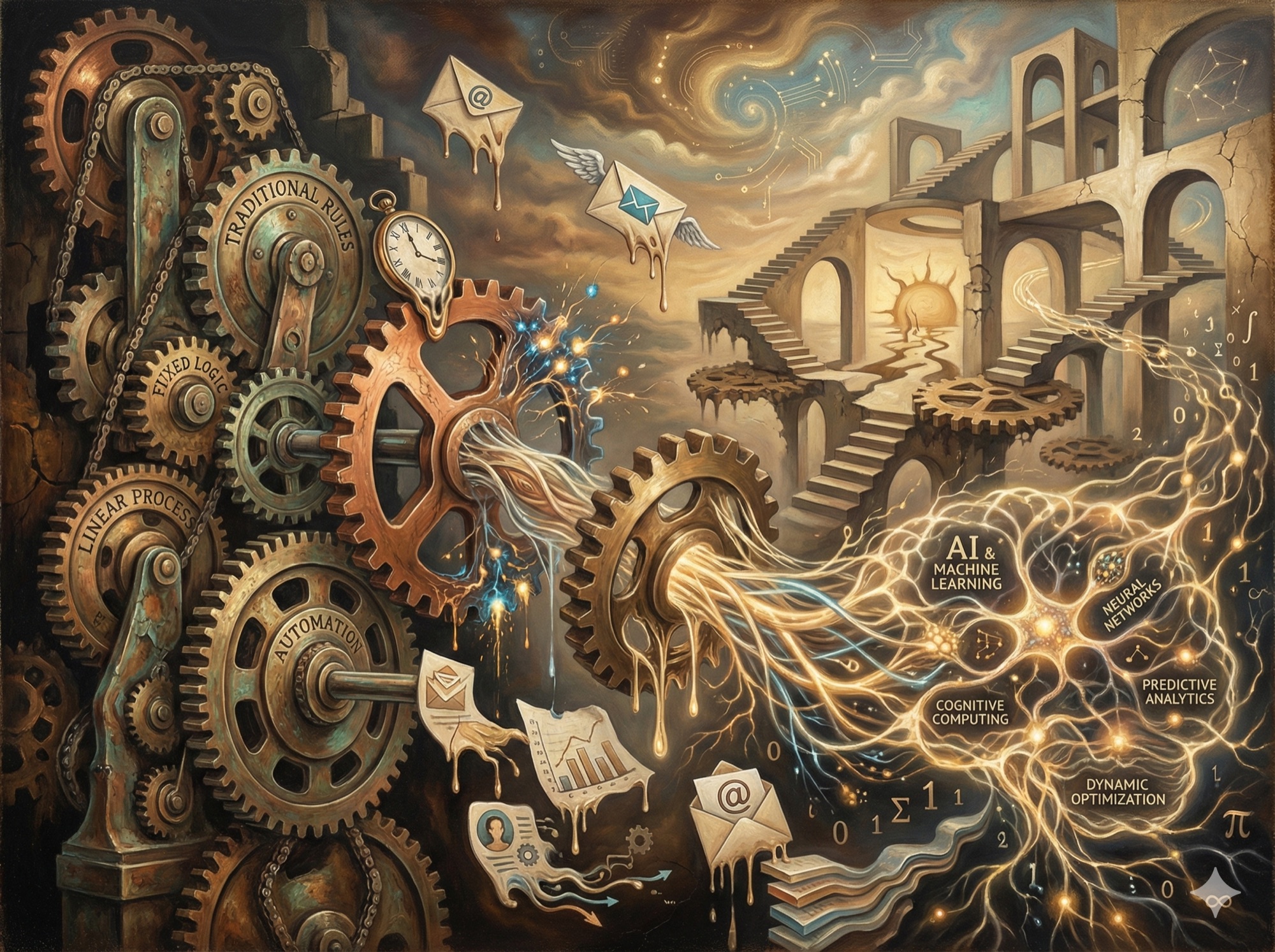
Traditional marketing automation relied on rule-based workflows—if a customer does X, then send email Y. Marketing automation artificial intelligence transforms this approach by enabling systems to learn from data, recognize patterns, and adapt campaigns dynamically without manual intervention.
According to Grand View Research, the AI in marketing market reached $20.44 billion in 2024, with projected growth at a 25% CAGR through 2030. This rapid expansion reflects the shift from static automation to intelligent, data-driven systems.
The key technologies powering this transformation include:
- Machine Learning (ML): Enables platforms to learn from historical data and optimize campaigns in real-time
- Natural Language Processing (NLP): Powers chatbots and virtual assistants that understand customer intent
- Predictive Analytics: Uses algorithms to forecast customer behaviors and optimal campaign timing
- Generative AI: Creates personalized text, images, and content at scale
How AI Is Transforming Marketing Automation in 2026
The evolution from static automation to intelligent systems represents a fundamental shift in marketing operations. In 2026, marketing automation artificial intelligence enables real-time optimization that was impossible with traditional rule-based approaches.
According to Salesforce's 2025 State of Marketing report, 67% of marketing leaders report significant benefits from AI integration, including more accurate lead scoring and faster campaign execution. This transformation extends beyond efficiency gains to enable entirely new capabilities.
Consider Upday's implementation: the news aggregation platform used AI-powered predictive churn modeling to re-engage over 500,000 dormant users—a scale of personalization that manual processes could never achieve. Similarly, Lease End reported that 25% of their lead-driven revenue now comes from text-based AI follow-up agents.
"AI won't replace humans, but humans with AI will replace humans without AI."
— Karim Lakhani, Professor, Harvard Business School
The transformation also accelerates decision-making. Organizations implementing AI in marketing automation report a 30% reduction in decision times through automated analysis and recommendations.
The Rise of AI Agents in Marketing
AI agents represent the next evolution of marketing automation artificial intelligence. Unlike traditional automation that responds to triggers, AI agents proactively manage entire campaign workflows autonomously.
These self-managing systems handle research, content creation, budget allocation, and performance optimization without constant human oversight. By 2026, autonomous marketing systems will manage budgets and campaigns independently, with human marketers focusing on strategy and creative direction.
According to industry forecasts, marketing teams using AI agents can expect significant efficiency gains while maintaining the strategic oversight that ensures brand consistency and ethical practices.
Key Applications of AI in Marketing Automation
AI in marketing automation enables several practical applications that transform marketing effectiveness:
Lead Scoring and Prioritization
AI-driven behavioral analysis evaluates leads based on real-time conversion likelihood rather than static demographic criteria. Machine learning models continuously refine scoring based on actual outcomes, improving accuracy over time.
Personalization at Scale
"The state of marketing personalization is at a macro level. We can do better. AI can enable individualization of every journey."
— Sandie Young, Former Director of Marketing, Ready North
Marketing automation artificial intelligence delivers 1:1 tailored experiences across customer journeys. Dynamic content generation adapts messaging, offers, and recommendations based on individual behavior patterns and preferences.
Email Optimization
AI refines send times for maximum engagement, tests subject line variations automatically, and personalizes email content based on recipient behavior. These optimizations happen continuously without manual A/B test management.
Predictive Analytics
Beyond lead scoring, predictive analytics forecasts customer lifetime value, identifies churn risk before customers disengage, and recommends optimal budget allocation across channels.
Content Creation
Generative AI tools create personalized marketing copy, blog content, and creative assets. These systems produce A/B test variants at scale, enabling rapid experimentation that drives continuous improvement.
Campaign Optimization
AI in marketing automation enables real-time campaign adjustments based on performance data. Budget allocation, targeting parameters, and creative elements optimize automatically to maximize ROI.

Benefits of AI-Powered Marketing Automation
Organizations implementing marketing automation artificial intelligence report measurable improvements across multiple dimensions:
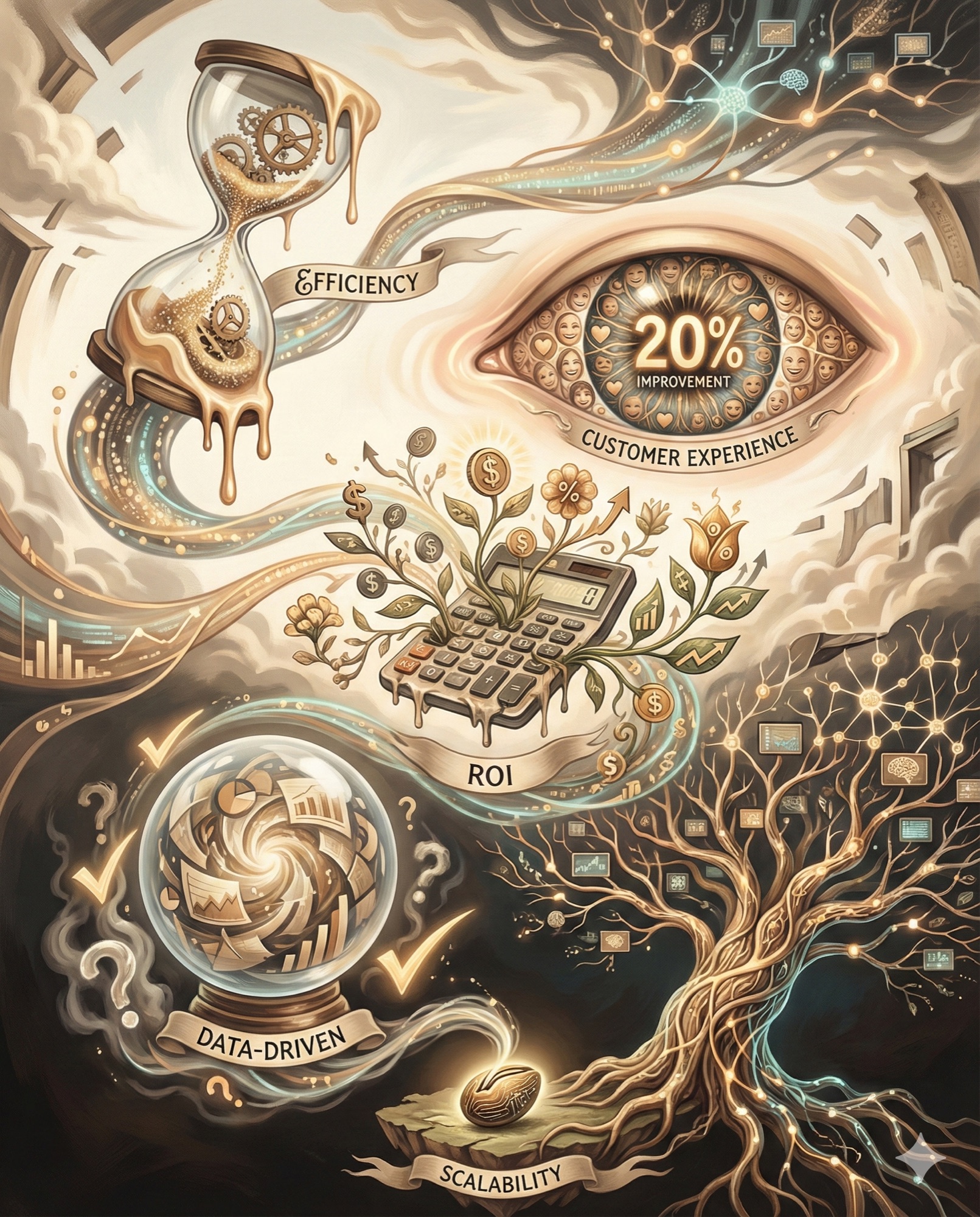
Improved Efficiency
AI automates repetitive tasks like data analysis, report generation, and routine customer communications. This automation frees marketers to focus on strategic planning and creative development rather than manual execution.
Better Customer Experiences
"By leveraging these tools, marketers can personalize, optimize, and tailor marketing messages to specific audience segments, leading to higher engagement and conversion rates."
— Christina Kozloff, CMO, Plenty of Fish
According to implementation data, organizations report a 20% increase in customer satisfaction from AI-powered personalization. Customers receive relevant communications at optimal times, improving engagement across the customer journey.
Higher Marketing ROI
AI in marketing automation enables smarter budget allocation and reduces wasted spend. Predictive models identify high-value opportunities while flagging campaigns that underperform before they consume significant resources.
Data-Driven Decisions
Machine learning removes guesswork from marketing decisions. AI analyzes massive datasets to surface actionable insights that would be impossible to identify manually, enabling analysis of consumer behaviors at unprecedented scale.
Scalability
Marketing automation artificial intelligence handles growing data volumes and customer bases without proportional increases in team size or operational costs. Systems that required manual scaling now adapt automatically to business growth.
According to Grand View Research, the marketing automation market will reach $15.58 billion by 2030—reflecting the industry's recognition that these technologies deliver substantial business value.
Getting Started with AI Marketing Automation
Implementing AI in marketing automation requires a structured approach that balances ambition with practical execution:
Assess Your Current State
Begin by auditing existing marketing automation capabilities. Identify manual processes that consume significant time and areas where data-driven insights could improve decisions. Document integration requirements between current systems.
Start Small
"The way to prevent being disrupted is to be very bold and move forward to embrace AI as quickly as possible."
— Kipp Bodnar, CMO, HubSpot
Despite this urgency, successful implementations of AI in marketing automation typically begin with a single use case. Email optimization or lead scoring often serve as effective starting points because they offer measurable outcomes and contained scope.
Choose the Right Platform
Evaluate marketing automation artificial intelligence platforms based on AI capabilities, not just traditional automation features. Consider integration with existing CRM systems, data requirements, and scalability needs. Platforms like Salesforce Marketing Cloud and HubSpot offer robust AI features built into their automation tools.
Train Your Team
AI literacy development ensures marketing teams can leverage new capabilities effectively. Human-AI collaboration models position AI as a tool that amplifies human creativity and strategic thinking rather than replacing it.
Scale Gradually
Expand successful AI in marketing automation implementations methodically. Monitor performance, document learnings, and apply insights to new use cases. This approach builds organizational capability while managing risk.
Next Steps
AI in marketing automation represents a fundamental shift in how organizations connect with customers. The technologies are mature, the benefits are documented, and early adopters are establishing competitive advantages that will compound over time.
Start by identifying one high-impact use case where AI can improve your marketing automation. Evaluate platforms that align with your existing technology stack. Build team capabilities that enable effective human-AI collaboration.
The market is moving quickly—organizations that embrace marketing automation artificial intelligence in 2026 will be better positioned to deliver personalized customer experiences at scale while operating more efficiently than competitors who delay adoption.
Ready to transform your marketing with AI? Explore our content & landing pages services for strategies to get started.