AI search SEO is the practice of optimizing content for visibility in AI-powered search results, including Google AI Overviews, ChatGPT, Perplexity, and Claude. Unlike traditional SEO that focuses on ranking web pages, AI search SEO ensures your brand appears in synthesized AI answers through Generative Engine Optimization (GEO), entity definition, and E-E-A-T signals that large language models use to source information.
The AI search engine market has grown to $15.23 billion in 2024 and is projected to reach $51.48 billion by 2032, according to Navistra Analytics. With 50% of Americans now using AI LLMs like ChatGPT, Gemini, Claude, and Copilot according to the Elon University Imagining the Internet Center, businesses that ignore AI search optimization risk becoming invisible in the new search landscape.
This guide covers everything you need to know about AI search SEO in 2026: how AI platforms are reshaping search behavior, the impact on traditional SEO traffic, actionable optimization strategies, and tools for monitoring your AI visibility. Whether you're already implementing AI content marketing strategies or just beginning, these insights will help position your brand for the AI-first search era.
Table of Contents
What Is AI Search SEO?
AI search SEO encompasses a suite of optimization methodologies designed to increase brand visibility in AI-generated answers. These approaches include Generative Engine Optimization (GEO), AI Optimization (AIO), Large Language Model Optimization (LLMO), and Answer Engine Optimization. While traditional SEO focuses on ranking webpages in search engine results pages, AI search SEO targets the synthesized answers that AI systems provide directly to users.
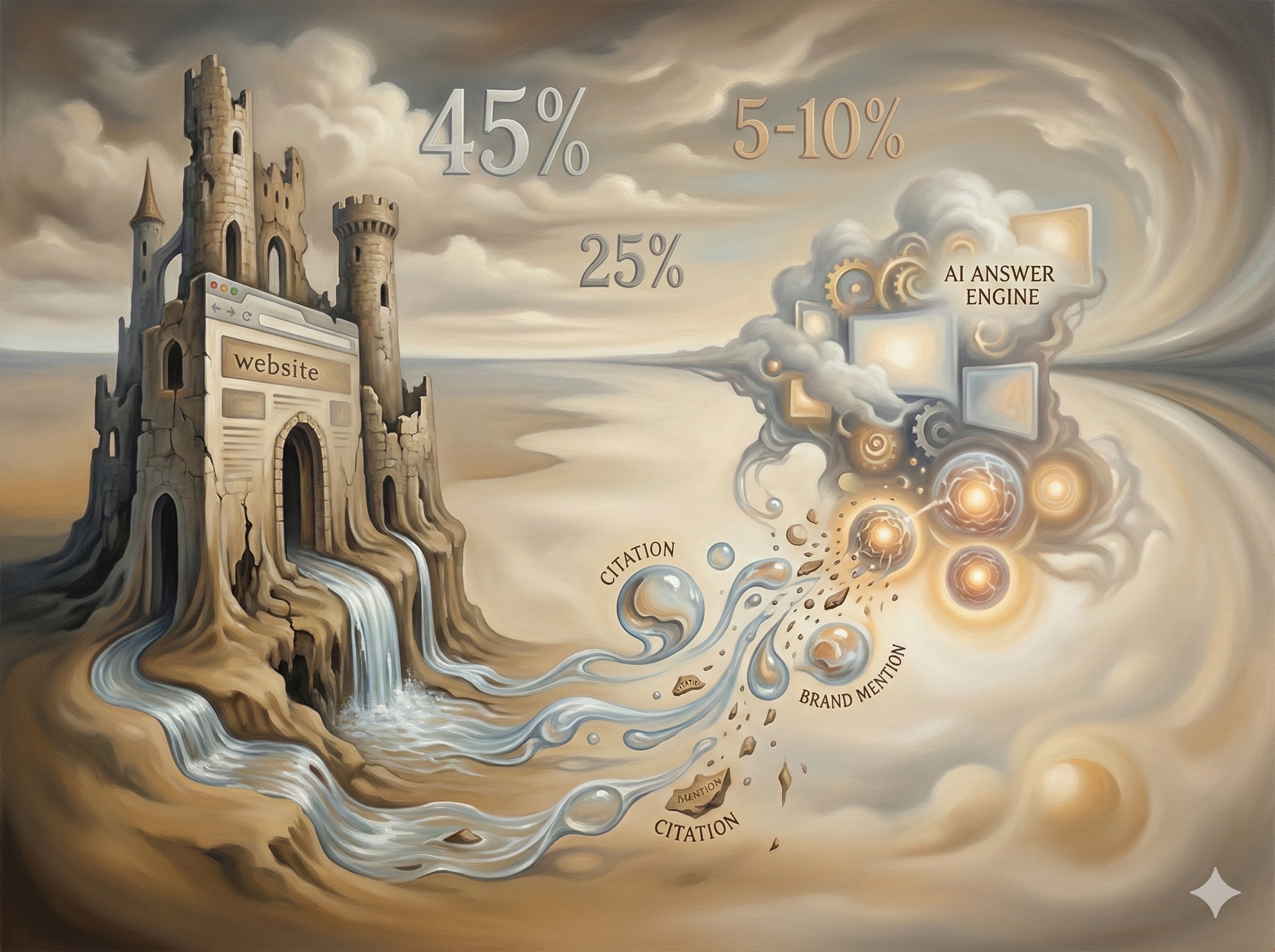
The distinction matters because brand sites comprise only 5-10% of sources referenced in AI search answers, according to McKinsey & Company. This means your website content alone cannot guarantee AI visibility. Instead, your brand's presence across the web—in reviews, articles, forums, and citations—determines whether AI systems reference you.
According to Salesforce:
"AI SEO refers to the application of artificial intelligence to optimize websites. AI enhances SEO by automating keyword research, optimizing content creation, predicting search trends."
— Salesforce
With nearly 2 billion people using AI globally according to Menlo Ventures, GEO and AI search optimization have become essential components of modern marketing strategy. The fundamental shift requires businesses to think beyond their own websites and consider how their brand appears across all crawlable web content.
The Rise of AI-Powered Search Platforms
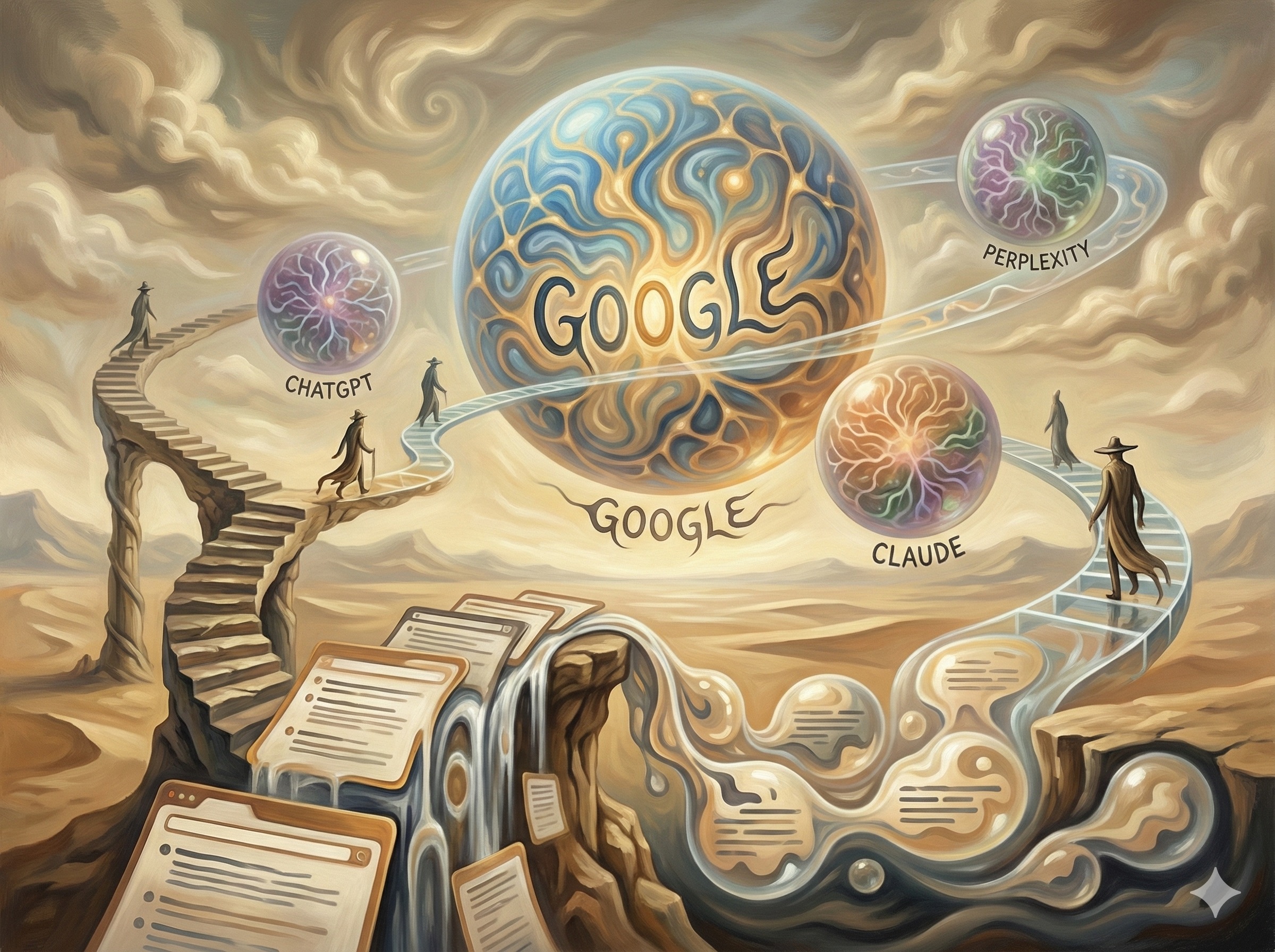
The AI search landscape in 2026 is dominated by several major platforms, each changing how users discover and interact with information. Understanding these platforms is essential for effective AI search SEO implementation.
Google remains the search giant, holding 89.99% worldwide search engine market share according to StatCounter. However, Google's integration of AI fundamentally changes the search experience. Google AI Overviews now appear in approximately 50% of searches, with that number expected to exceed 75% by 2028 according to McKinsey trend analysis. Google AI Mode, launched in mid-2025 and powered by Gemini, offers an interactive chat search experience that represents the next evolution.
Beyond Google, platforms like ChatGPT from OpenAI, Perplexity, and Claude from Anthropic have established significant user bases. SearchGPT, OpenAI's real-time web search feature launched in July 2024, directly competes for informational queries. These platforms don't rank websites—they synthesize information and provide direct answers, often without users clicking through to source pages.
Rand Fishkin, CEO and Co-founder of SparkToro, explains the implications:
"If your brand is mentioned often across the web – especially in public, crawlable formats – it's more likely to show up in ChatGPT, Gemini, or Perplexity results."
— Rand Fishkin, SparkToro
Multimodal search is also accelerating, with Google reporting a 65% year-over-year increase in visual searches according to Google. AI search SEO in 2026 must account for voice, image, and conversational query patterns alongside traditional text search.
How AI Search Is Changing SEO in 2026
The impact of AI on traditional SEO is substantial and measurable. Businesses relying solely on conventional search optimization strategies face significant traffic declines as AI platforms reshape user behavior.
According to research from Semrush and Ahrefs:
"Studies from Semrush and Ahrefs reveal a significant decline in organic clicks when AI Overviews are present. In fact, top-ranking organic results lose up to 45% of their traffic due to AI."
— Concord USA
This 45% traffic loss represents a fundamental shift in search economics. When AI Overviews appear, users often get their answers without clicking any search result. The concept of zero-click searches has expanded dramatically as AI provides comprehensive, synthesized answers.
McKinsey & Company adds important context:
"While SEO focuses on own-site content, in many cases, a brand's own sites only comprise 5 to 10 percent of the sources that AI-search references."
— McKinsey & Company
Traditional search engine web traffic is expected to decline 25% by 2026 according to Navistra Analytics. This decline affects featured snippets and SERP features that marketers previously targeted. The competition now centers on being cited in AI answers rather than ranking in position one.
Looking ahead to 2026 and beyond, agentic AI represents the next frontier. These autonomous AI agents research and make purchasing decisions without ever visiting websites. Businesses must prepare for AI that acts on behalf of users, making structured data and comprehensive entity information more critical than ever.
One advantage emerges from this shift: AI systems can predict search trends 4-6 weeks earlier via social and news signals, according to AI SEO tools analysis. Brands that leverage AI-powered forecasting can create content ahead of demand curves.
Key AI Search SEO Strategies for 2026
Effective AI search SEO in 2026 requires a fundamentally different approach than traditional optimization. The following strategies address how AI systems discover, evaluate, and cite brands in their responses.
Entity Definition Optimization stands at the core of AI search SEO. AI systems need clear, consistent information about what your brand is, what you do, and why you're authoritative. This means defining your entities with precision across all web properties. Ensure your company, products, services, and key personnel have well-structured, consistent definitions that AI can confidently reference.
E-E-A-T for LLMs extends Google's Experience, Expertise, Authoritativeness, and Trustworthiness framework for AI contexts. LLMs evaluate content differently than traditional algorithms. They look for question-focused content that provides direct answers, credentials that establish expertise, and citations from authoritative sources. Structuring content in snippet-ready formats increases the likelihood of AI citation.
Semantic Clustering organizes your content around intent-based keyword groups rather than individual keywords. AI systems understand relationships between concepts. Building topic clusters with clear entity connections helps AI understand your brand's expertise across related subjects.
Structured Data and Schema Markup provides explicit signals that AI systems use when crawling content. While traditional SEO benefits from schema, AI search SEO depends on it. Technical SEO for AI crawlers requires comprehensive markup that defines entities, relationships, and content types.
Brand Mention Strategy may be the most critical shift in 2026. According to SparkToro, branded web mentions are the number one correlation with AI visibility. Rand Fishkin emphasizes:
"If you want AI tools to recommend you, be the brand they learn from. Websites still matter – but their role has changed. They now act as sources of truth and credibility that feed other channels and AI systems."
— Rand Fishkin, SparkToro
This shift from "influence through clicks" to "influence through citations" defines AI search SEO in 2026. The AI software market reflects this opportunity, having grown to $122 billion in 2024 with expectations to reach $467 billion by 2030 at a 25% CAGR according to ABI Research.

AI Search SEO Tools and Monitoring
Implementing AI search SEO requires new tools and monitoring approaches. Traditional ranking trackers cannot measure AI visibility, making dedicated AI visibility monitoring essential for 2026.
AI Visibility Tracking tools monitor when and how your brand appears in AI-generated answers. Unlike keyword ranking tools that track position 1-10, AI visibility tools measure citation frequency, context, and accuracy across platforms like ChatGPT, Perplexity, and Google AI Overviews. This represents a fundamental shift in SEO measurement.
Industry leaders like Semrush, Ahrefs, and SparkToro have begun incorporating AI visibility metrics into their platforms. These tools track brand mentions across crawlable web content—the same content that AI systems learn from. Understanding where your brand is (and isn't) mentioned helps identify optimization opportunities.
Predictive Trend Forecasting represents a unique advantage of AI tools. AI systems can predict search trends 4-6 weeks earlier than traditional methods by analyzing social signals, news patterns, and emerging topics. Brands leveraging this capability can create content ahead of demand, establishing authority before competitors.
Technical SEO for AI Crawlers requires attention to structured data implementation, content accessibility, and clear entity definitions. Tools like Search Engine Land provide guidance on technical optimization, while platforms like Frase.io help create AI-optimized content structures.
Setting up effective monitoring workflows involves tracking several metrics:
- Brand citation frequency in AI answers
- Citation accuracy (is the AI correctly representing your brand?)
- Competitor citation comparison
- Source diversity (are citations coming from varied web properties?)
For more marketing insights on implementing these tools, explore our resources on AI-powered marketing strategies.
How to Get Started with AI Search SEO
Beginning your AI search SEO journey in 2026 doesn't require overhauling your entire strategy. Start with high-impact actions and build toward comprehensive optimization.
Quick Wins (First 30 Days):
Implement comprehensive structured data across your website. Schema markup for your organization, products, services, and personnel provides AI systems with explicit entity definitions. Audit existing content for clear, answer-focused paragraphs that AI can easily excerpt. Ensure your direct answer to common questions appears early in relevant content.
Medium-Term Strategy (1-3 Months):
Restructure content around AI-friendly formats. Build topic clusters with clear hub-spoke architecture that demonstrates expertise. Expand your brand presence beyond your website through guest content, industry publications, and authoritative citations. Focus on earning mentions in the types of sources that AI systems frequently reference.
Long-Term Authority Building (3-12 Months):
Develop a comprehensive GEO strategy that aligns content creation with AI citation patterns. Build E-E-A-T signals through expert content, credentials, and third-party validation. Monitor AI visibility metrics and iterate based on what drives citations.
When to Seek Professional Help:
AI search SEO requires specialized knowledge that differs significantly from traditional SEO. If your team lacks AI-specific expertise, or if you're seeing significant traffic declines from AI Overviews, professional guidance can accelerate results. Consider working with specialists who understand both the technical requirements of GEO and the strategic shifts in search behavior.
Ready to optimize your brand for AI search? Schedule a consultation with Matt Kundo Digital Marketing to develop a customized AI search SEO strategy for your business. Our SEO services include comprehensive GEO optimization designed for the 2026 search landscape.
Key Takeaways
AI search SEO represents a fundamental evolution in how businesses achieve visibility in search results. As AI-powered search platforms like Google AI Overviews, ChatGPT, Perplexity, and Claude become primary information gateways, traditional SEO strategies alone cannot guarantee visibility.
The key principles for AI search optimization in 2026 include:
- Entity definition optimization ensures AI systems understand and accurately reference your brand
- Brand mention strategy prioritizes citations across the web over website-only optimization
- E-E-A-T signals establish the authority AI systems need to confidently cite your content
- AI visibility monitoring tracks performance in a landscape where rankings matter less than citations
With AI search projected to dominate discovery by 2028, the businesses that adapt now will capture the opportunities this shift creates. AI search SEO isn't replacing traditional SEO—it's expanding the optimization landscape to include new platforms, new metrics, and new strategies for visibility.
Sources
- Navistra Analytics - AI Search Engine Market Report
- McKinsey & Company - New Front Door to the Internet: Winning in the Age of AI Search
- Salesforce - AI for SEO Guide
- SparkToro - How Can My Brand Appear in AI LLM Tools
- Google Search Central - Succeeding in AI Search
- StatCounter - Search Engine Market Share
- Google Blog - Google Search AI Mode Update
- Exploding Topics - AI Overviews SEO
- Concord USA - The Evolution of Search in 2025: What AI Means for SEO
- ABI Research - Artificial Intelligence Market Size
- Microsoft Ads Blog - Optimizing Content for AI Search Answers
- Search Engine Land - What Is AI SEO Guide