
Real talk—I've tested over 20 AI SEO tools in the past year, and here's what most marketers get wrong: they're treating these platforms like magic buttons instead of what they actually are—intelligent assistants that amplify human strategy. Let me break down what I've learned.
AI SEO tools are software applications that leverage artificial intelligence and machine learning to automate and enhance search engine optimization workflows. These platforms handle everything from keyword research and content optimization to technical audits and rank tracking. According to SeoProfy, 86% of SEO professionals have now integrated AI into their strategy. And with the global AI SEO software market hitting $1.99 billion in 2024, it's clear these tools aren't going anywhere.
But here's my thesis: while adoption is nearly universal, most marketers miss the true strategic value of AI SEO tools by treating them as set-and-forget solutions rather than the intelligent assistants they're designed to be.
Table of Contents
Why AI SEO Tools Are Transforming Search Marketing
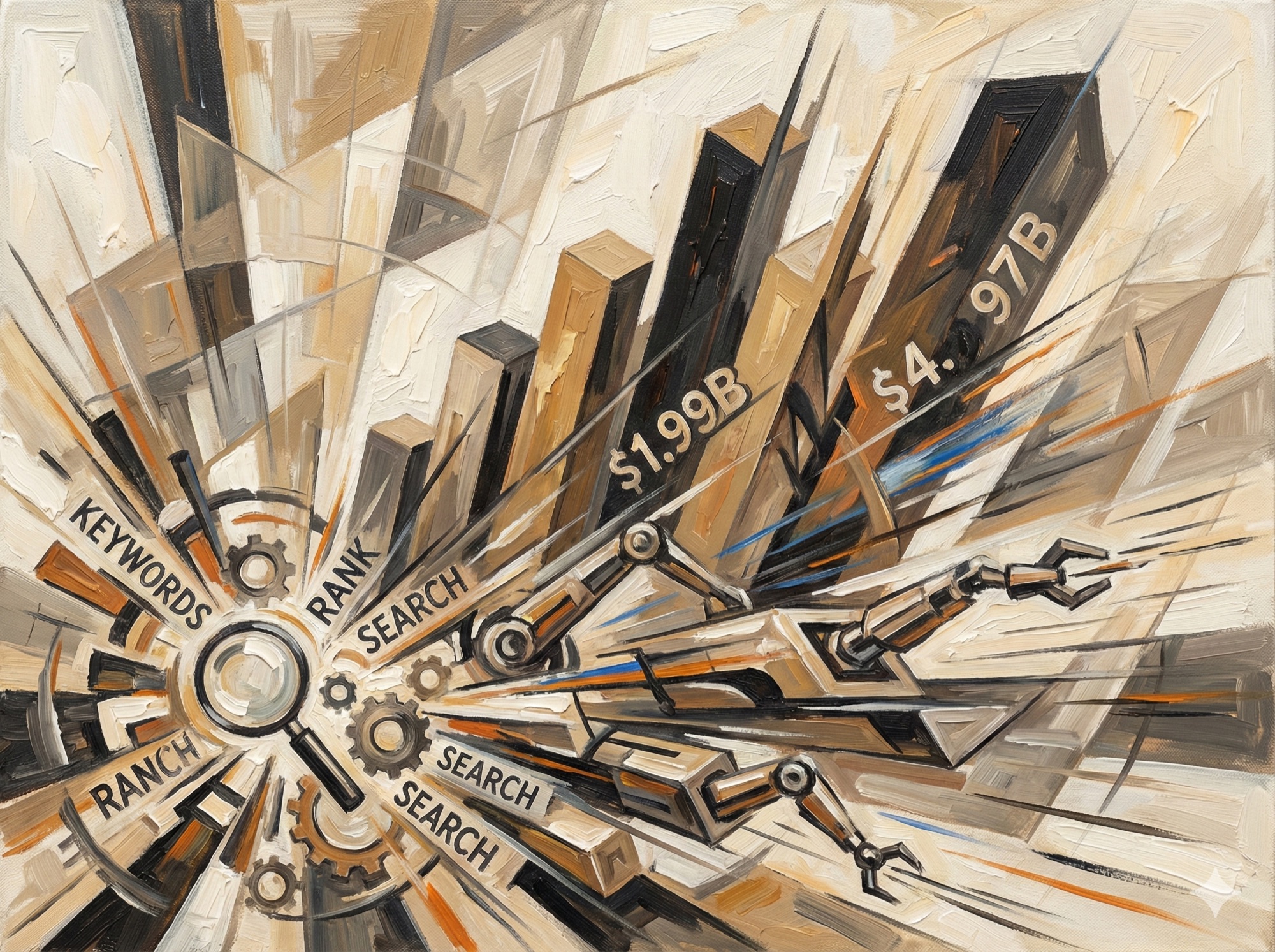
The numbers tell a compelling story about why AI SEO tools have become essential for digital marketing success. The market trajectory alone should grab your attention: that $1.99 billion market in 2024 is projected to reach $4.97 billion by 2033, representing sustained double-digit growth across the industry.
This growth isn't happening in a vacuum. According to SEOmator, the broader AI sector grew beyond $184 billion in 2024—up nearly $50 billion from the previous year. Search engines and their optimization strategies sit at the heart of this transformation.
What's driving adoption? Efficiency gains are the primary catalyst. SeoProfy reports that 75% of marketers leverage AI to reduce time spent on manual tasks like keyword research and meta-tag optimization. When you can automate the tedious work, you free up capacity for strategic thinking.
Enterprise adoption signals where the industry is headed. According to the same research, 82% of enterprise SEO specialists plan to invest more in AI SEO tools. These aren't experimental budgets—they're strategic commitments.
"Brands that use AI have a serious competitive advantage over those who don't. They write better content that ranks higher in far less time than others in their match."
— Jeff Coyle, Co-founder and Chief Product Officer at MarketMuse
That competitive advantage is real. But adoption doesn't automatically translate to effectiveness—which brings me to the problems I've observed.
The Real Problem: How Most Marketers Use AI SEO Tools Wrong
After testing dozens of AI SEO tools and consulting with teams across industries, I've identified a consistent pattern: marketers are using these platforms as replacements rather than assistants. It's the wrong mental model entirely.
The data reveals the gap. According to SeoProfy, only 35% of companies use AI to create SEO-driven content strategies. That means 65% are using AI SEO tools without strategic frameworks—essentially generating content on autopilot.
Here's what happens when you treat AI as replacement rather than assistant:
Over-automation degrades quality. When you let AI handle everything from ideation to publication without human oversight, you get content that technically checks SEO boxes but fails to connect with readers. Search engines are increasingly sophisticated at detecting thin, AI-generated content that lacks genuine value.
Strategic thinking gets abandoned. SeoProfy reports that 67% of SEO experts believe the key benefit of generative AI is automating repetitive tasks. That's correct—but when automation extends beyond repetitive tasks into strategic decisions, you've crossed a line.
Accuracy becomes a real concern. According to the same research, 64.48% of SEO experts prioritize the accuracy of AI tools. That high concern percentage tells you something: these tools make mistakes, and professionals know it.
"If you see AI as an essential way to help you produce content that is helpful and original it might be useful to consider if you see AI as an inexpensive easy way to game search engine rankings then no."
— Danny Sullivan, founder of Search Engine Land
The distinction matters. AI SEO tools excel at acceleration, not replacement. When you use them to speed up research, identify opportunities, and handle technical optimizations while keeping human judgment central, you get results. When you use them to bypass thinking, you get problems.
What the Data Actually Tells Us About AI SEO Tools
Let me be clear: when used correctly, AI SEO tools deliver measurable results. The evidence supports strategic implementation.
According to SEOmator, citing Neil Patel's research, businesses leveraging AI for SEO-driven content strategies experienced up to 45% increase in organic traffic and 38% increase in conversion rates. Those aren't marginal improvements—they're transformational outcomes.

The ranking impact is similarly significant. SEOmator reports that AI tools are capable of improving SEO rankings by 49.2%, with nearly half of businesses reporting enhanced rankings even after Google algorithm updates. In an environment where algorithm changes can devastate traffic overnight, that resilience matters.
Overall satisfaction metrics confirm the pattern. SeoProfy found that 65% of businesses noticed better SEO results with AI help. For on-page SEO specifically, 52% of professionals noticed performance improvement from using AI tools.
My interpretation of this data: AI SEO tools work when strategy guides them. The 45% traffic increase didn't happen to businesses running AI on autopilot—it happened to businesses using AI to execute strategic content optimization approaches. The tools accelerated their strategy; they didn't replace it.
This is why I recommend treating AI search optimization as a capability amplifier. Your SEO strategy should define the direction; AI SEO tools should accelerate the execution.
The Counterargument: When AI SEO Tools Fall Short
Intellectual honesty requires acknowledging where AI SEO tools genuinely struggle. These limitations aren't reasons to avoid the technology—they're reasons to maintain human oversight.
Accuracy remains inconsistent. As noted earlier, 64.48% of SEO experts prioritize accuracy concerns with AI tools. That concern is warranted. Large language models hallucinate facts, misinterpret context, and occasionally produce content that sounds authoritative but contains errors. Human verification isn't optional.
Adoption isn't universal for good reasons. SeoProfy reports that only 19% of marketers plan to add AI in search to their SEO strategy in 2025. Some of that hesitation reflects legitimate caution about implementation challenges, governance requirements, and organizational readiness.
The NIST AI Risk Management Framework addresses these concerns at a federal level, establishing guidelines for trustworthiness, transparency, and governance in automated systems. For enterprises using AI SEO tools at scale, these governance considerations matter.
E-E-A-T (Experience, Expertise, Authoritativeness, Trustworthiness) presents another limitation. Google's quality guidelines increasingly prioritize content demonstrating genuine human expertise. AI can assist in research and optimization, but it cannot replace the authentic experience that search engines are learning to detect and reward.
Strategic context represents the final limitation. AI SEO tools can analyze data, identify patterns, and generate content—but they cannot understand your business objectives, competitive positioning, or brand voice at the level required for truly strategic content. That context remains irreducibly human.
My Recommendation: A Balanced Approach to AI SEO in 2026
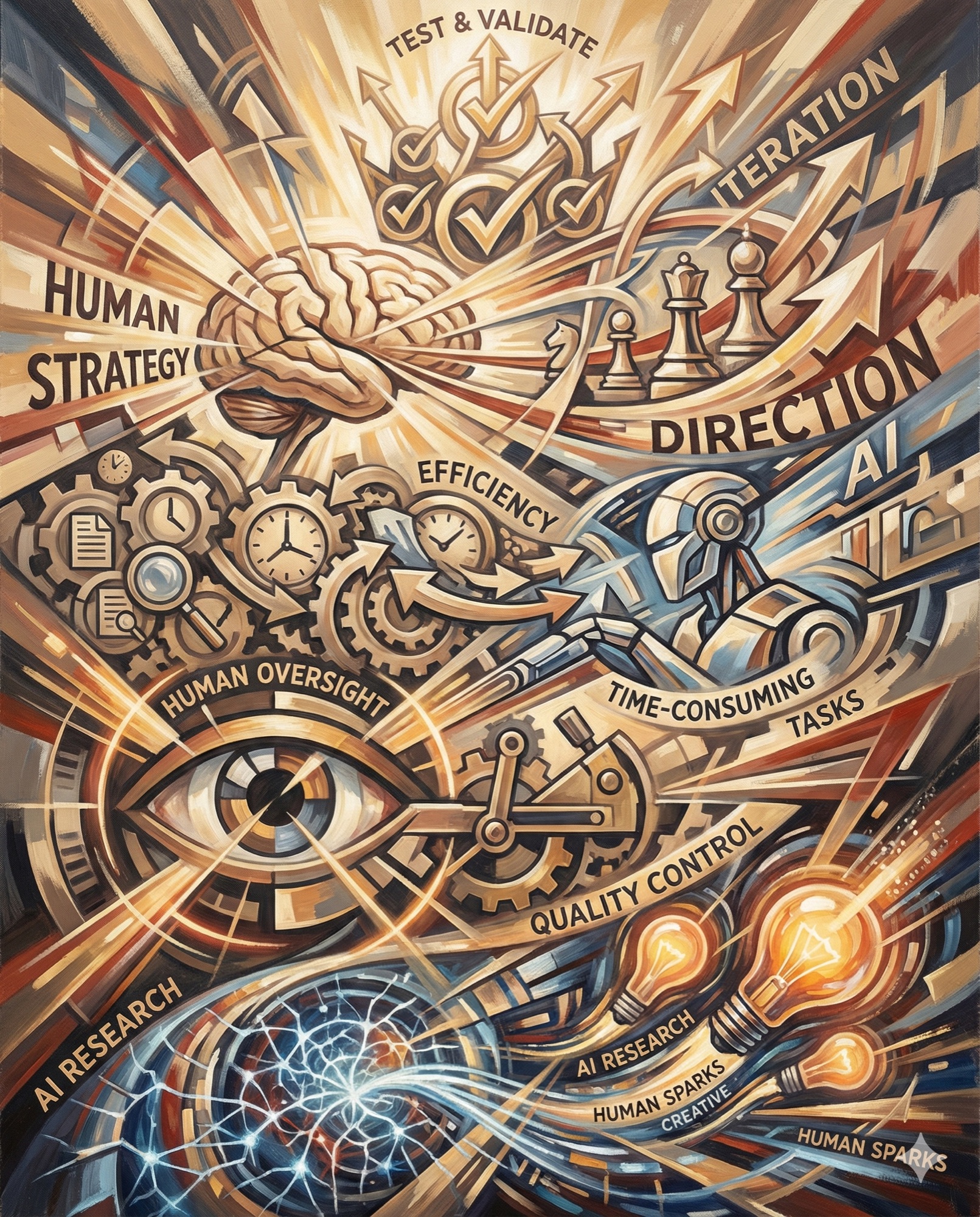
Based on testing 20+ platforms and observing both successes and failures, here's my framework for using AI SEO tools effectively:
1. Use AI for research and ideation, not final content. Let AI SEO tools accelerate your keyword research, competitive analysis, and content gap identification. Review and refine the outputs before acting on them.
2. Maintain human oversight for quality and accuracy. Every piece of AI-assisted content should pass through human review for factual accuracy, brand voice consistency, and genuine value. Never publish AI outputs without verification.
3. Focus AI on time-consuming tasks. Technical SEO audits, rank tracking, and meta-tag optimization are ideal automation targets. These repetitive tasks don't require strategic judgment—they require consistent execution.
4. Keep strategic thinking human-led. Your content strategy, competitive positioning, and brand differentiation should emerge from human intelligence informed by AI-surfaced data. Don't outsource strategy to algorithms.
5. Test and validate AI outputs continuously. AI SEO tools improve through iteration. Track which AI-assisted content performs well, identify patterns, and refine your prompts and processes accordingly.
"By leveraging these tools, marketers can personalize, optimize, and tailor marketing messages to specific audience segments, leading to higher engagement and conversion rates."
— Christina Kozloff, CMO at Plenty of Fish
That's the opportunity. AI SEO tools amplify human strategy when implemented thoughtfully. They accelerate what works. They don't replace the thinking that determines what works in the first place.
For 2026, my recommendation is clear: integrate AI SEO tools as capability multipliers, maintain human oversight at every strategic decision point, and never mistake automation for strategy.
Ready to implement AI SEO the right way? Explore our digital marketing solutions and let's talk about building a strategy that leverages AI effectively.
Sources
- SeoProfy - AI SEO Statistics 2025
- SEO.com - AI SEO Statistics
- SEOmator - AI SEO Statistics and Trends
- McKinsey - The Economic Potential of Generative AI
- HubSpot - State of AI in Marketing 2024
- NIST - AI Risk Management Framework
- Gartner - How Generative AI Will Transform Search and SEO
- Search Engine Land - What Is AI SEO