
The way potential customers discover AI products has fundamentally shifted. When a developer asks ChatGPT "What's the best observability tool for LLMs?" or a CTO asks Perplexity for vendor recommendations, traditional SEO alone won't get your product mentioned. That's where answer engine optimization comes in—and for AI tech companies, it's becoming as critical as traditional search optimization.
I've been testing AEO platforms and strategies over the past year, watching how AI search engines cite sources and surface recommendations. The findings are clear: companies that optimize specifically for AI-generated answers are capturing visibility that competitors miss entirely. This guide covers the best answer engine optimization solutions and strategies for AI tech companies looking to dominate in generative search.
If you're also evaluating broader SEO tools, my guide to content optimization tools covers the full landscape of platforms for traditional and AI-powered search.
What is Answer Engine Optimization?
Answer engine optimization (AEO) is the practice of optimizing content to be cited, referenced, and recommended in AI-generated answers. Unlike traditional SEO—which focuses on ranking in link-based search results—AEO ensures your brand appears when AI systems like ChatGPT, Perplexity, Claude, Google AI Overviews, and Gemini synthesize answers for users.
For AI and SaaS companies, this distinction matters enormously. Your potential customers increasingly ask questions like "best RAG implementation tools" or "how to monitor LLM performance in production" directly to AI assistants. If your product isn't being cited in those responses, you're invisible to a growing segment of decision-makers.
The market statistics tell the story: ChatGPT now handles over 2 billion monthly queries, Google AI Overviews appear in at least 13% of all searches, and 58% of search queries are now conversational or question-based. By 2026, voice search alone is projected to account for over 50% of all searches. The shift isn't coming—it's already here.
AEO differs from generative engine optimization (GEO) primarily in scope. GEO is broader, encompassing all generative AI platforms including image and video generators. AEO focuses specifically on text-based answer engines—the platforms where your potential customers are asking questions and expecting direct recommendations.
Top AEO Platforms for AI Tech Companies
The answer engine optimization landscape has matured rapidly. Here are the leading platforms that specifically help AI and tech companies track and improve their visibility in AI-generated answers.
Gauge — Best for Analytics and Measurement
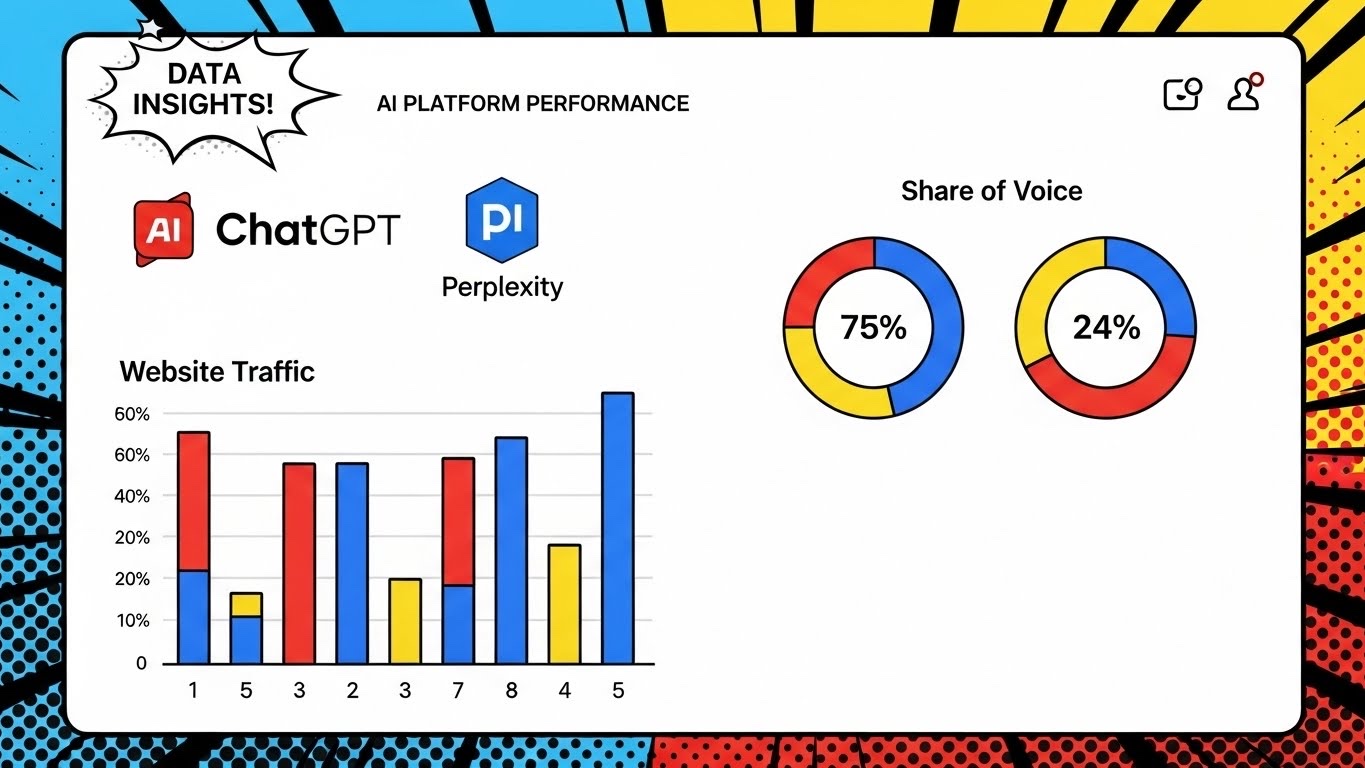
Gauge takes an analytics-first approach to AEO. The platform tracks hundreds of custom prompts per client across ChatGPT, Perplexity, Gemini, and other AI engines, recording both the answers generated and sources cited.
Key strengths:
- Converts keyword research into trackable AI prompts
- Connects to Google Analytics to estimate AI-driven traffic
- Provides specific recommendations based on citation patterns
Best for: Growth-stage SaaS and AI startups that need measurement and recommendations but have strong in-house content capabilities.
Relixir — Best for Automated Optimization
Relixir offers a closed-loop approach they call "Growth Engine Optimization." The Y Combinator-backed platform simulates thousands of buyer questions across major AI engines to understand how they perceive your brand.
Key strengths:
- Automatically generates and publishes optimized content
- Multimodal schema implementation (text + structured data)
- Claims visible ranking shifts in under 30 days
Best for: AI companies that want automation from diagnosis through content creation, with minimal development lift.
Profound — Best for Competitive Intelligence
Profound focuses on multi-engine competitive intelligence, tracking 10+ AI engines to analyze competitor share of voice and identify intent-based opportunities.
Key strengths:
- Broad AI engine coverage
- Competitor citation analysis
- Category and market positioning insights
Best for: Product marketing and category design teams at AI vendors who need strategic intelligence.
Semrush AEO Toolkit — Best for Hybrid SEO + AEO
For teams already using Semrush for traditional SEO, their AEO toolkit integrates AI visibility tracking into existing workflows. The platform evaluates "share of voice" and brand perception in ChatGPT and Google AI modes.
Key strengths:
- Integration with existing SEO workflows
- Combined traditional and AI search insights
- Familiar interface for Semrush users
Best for: SEO teams wanting to add AEO capabilities without adopting an entirely new platform.
Platform Comparison
| Platform | Focus | Pricing Tier | Best For |
|---|---|---|---|
| Gauge | Analytics & measurement | Mid-tier | SaaS/AI startups |
| Relixir | Automated optimization | Enterprise | Resource-constrained teams |
| Profound | Competitive intelligence | Enterprise | Product marketing |
| Semrush AEO | Hybrid SEO + AEO | Subscription add-on | Existing Semrush users |
AEO vs SEO: Understanding the Difference
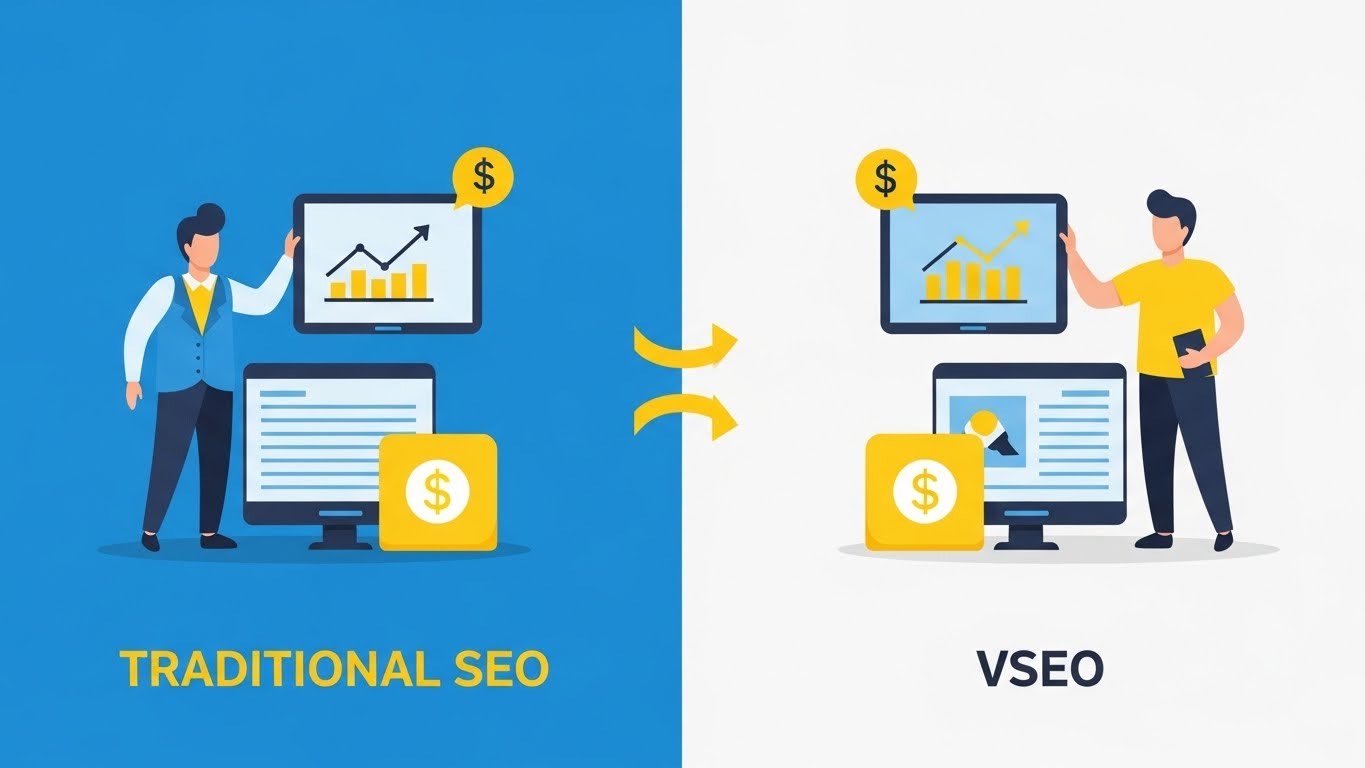
Understanding how answer engine optimization differs from traditional search engine optimization helps clarify strategy priorities for AI companies.
| Aspect | Traditional SEO | Answer Engine Optimization |
|---|---|---|
| Primary Goal | Rank in SERPs | Be cited in AI answers |
| Success Metrics | Rankings, clicks, traffic | AI citations, share-of-voice |
| Content Focus | Keyword-optimized, comprehensive | Question-driven, quotable passages |
| Technical Focus | Backlinks, site speed, meta tags | Schema markup, NLP optimization |
| Target Platforms | Google, Bing | ChatGPT, Perplexity, AI Overviews |
The critical insight: these strategies complement each other. Strong traditional SEO provides the foundation—if you don't rank, AI systems may never encounter your content during their training or retrieval processes. But ranking alone doesn't guarantee AI citation.
The most effective approach integrates both. First Page Sage research shows that companies combining GEO/AEO with traditional SEO saw customer acquisition costs drop 37.5%—from $895 to $559—between 2023 and 2025. The integration isn't optional; it's becoming standard practice.
Essential AEO Strategies for AI Products
Here are the specific strategies that get AI tech companies cited in answer engines.
Structure Content for AI Extraction
AI systems extract information differently than humans read. Optimize your content structure for how LLMs process and cite sources:
Use question-based headings. Frame H2s and H3s as actual questions users ask: "How does [Product] handle authentication?" rather than "Authentication Overview." This matches the query patterns AI engines recognize.
Front-load answers. Put your direct answer in the first 40-60 words after each heading. This is what AI systems often extract for citations. Follow with supporting detail, examples, and edge cases.
Format for extraction. Use bullet lists for features and benefits, tables for comparisons, and numbered lists for processes. AI engines frequently lift these formats directly.
Create quotable passages. Write concise, authoritative statements that stand alone. "Vector databases store embeddings as high-dimensional vectors, enabling semantic similarity search at scale" is more citable than a paragraph that buries the definition.
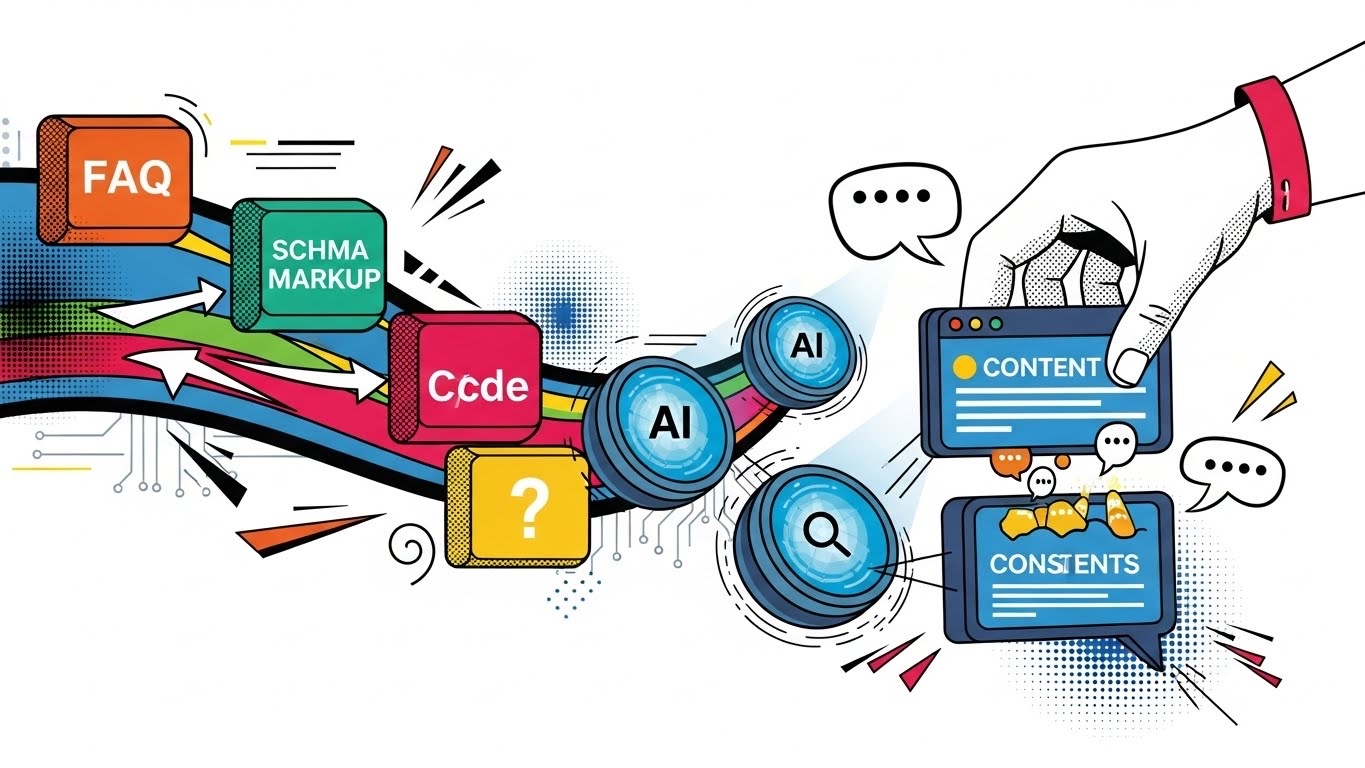
Implement Schema Markup
Structured data helps AI systems understand your content's meaning and authority:
- FAQPage schema for Q&A sections—essential for product pages and documentation
- HowTo schema for step-by-step guides and implementation tutorials
- Product/SoftwareApplication schema declaring name, category, features, and pricing
- Speakable schema marking key explanatory sections that voice assistants and AI can quote
Schema doesn't guarantee citation, but it significantly improves how AI systems interpret and categorize your content.
Optimize Documentation and Product Pages
For AI and SaaS companies, documentation is often your most-cited content type:
Turn docs into answer hubs. Every major concept should have a canonical page answering: What is it? How does it work? Who is it for? What are the limits?
Create clear product definitions. Your main product page needs a clean, 40-60 word definition: "[Product] is a [category] that helps [audience] do [jobs] by [differentiators]." This is what LLMs paraphrase when answering "What is [Product]?"
Own comparison content. Publish factual, balanced "[Product] vs [Competitor]" pages with feature comparison tables. AI engines frequently surface these for vendor selection queries.
Build Topical Authority
AI systems favor authoritative sources. Build credibility through:
Content clusters. Create interconnected content around core topics—one canonical explainer plus 3-10 deep-dive posts covering patterns, benchmarks, and case studies.
E-E-A-T signals. Show named authors with credentials, link to conference talks and open-source contributions, maintain clear About and Security pages.
Third-party presence. Earn citations from reputable dev/AI sites, documentation references, and academic or benchmark publications. Perplexity especially pulls heavily from authoritative third-party sources.
Platform-Specific Optimization Tips
While general AEO principles apply across platforms, each AI engine has specific characteristics:
ChatGPT and OpenAI-Based Tools
- Ensure content is publicly accessible without JavaScript gating or heavy cookie walls
- Don't block OpenAI-User and related crawlers in robots.txt
- Provide clear, generalizable code examples that ChatGPT can recommend without modification
- Focus on conceptual explanations that help users understand, not just implement
Perplexity
- Create concise, quotable passages with clear definitions—Perplexity cites inline and prefers clean extraction
- Publish neutral-toned comparison and "top tools" content
- Build presence in third-party authoritative sites, since Perplexity heavily pulls from aggregated sources
Google AI Overviews
- Continue strong traditional SEO—AI Overviews heavily favor well-ranked pages
- Implement comprehensive schema markup (FAQPage, HowTo, Product)
- Strengthen E-E-A-T signals through expert bylines, references, and case studies
- Optimize explicitly for featured snippets, which AI Overviews often incorporate
Measuring AEO Success
Traditional SEO metrics don't capture AEO performance. Here's how to measure AI visibility:
Track AI citations. Use platforms like Gauge or Profound to monitor whether you're being cited across ChatGPT, Perplexity, and AI Overviews. Track share of voice against competitors.
Run regular query tests. Monthly, ask AI engines key queries about your category:
- "What is [Product]?"
- "Best [category] tools for [use case]"
- "How to [implement X] with [technology]"
Note which of your URLs get cited, which competitors dominate, and where you're absent.
Monitor featured snippets. Featured snippet ownership often correlates with AI Overview inclusion. Track your featured snippet wins in Google Search Console and traditional SEO tools.
Attribute carefully. AI-driven traffic is harder to track than organic clicks. Look for patterns in direct traffic and branded search that may indicate AI-sourced discovery.
Getting Started with AEO for Your AI Product
Ready to improve your AI search visibility? Here's a quick-start approach:
- Audit current visibility. Test 10-20 key queries across ChatGPT, Perplexity, and Google to see where you appear (and where you don't)
- Define core questions. List the 20-50 most important questions prospects ask about your category and product
- Create answer-optimized content. Ensure each question has a page with a direct 40-60 word answer prominently placed
- Implement schema. Add FAQPage and Product schema to key pages
- Choose a tracking platform. Start with manual testing, then consider Gauge or Profound as you scale
- Monitor monthly. Track citations and adjust content based on what's working
Signs you need AEO investment now:
- Competitors appear in AI answers while you're absent
- Your category has high conversational search volume
- You've invested in traditional SEO but see diminishing returns
The cost of waiting is real. ChatGPT handles billions of queries monthly, Perplexity recorded 153 million visits in May 2025 (up 191.9% year-over-year), and Google AI Overviews have reached over 1.5 billion monthly users. Every month you delay, competitors are establishing their presence in AI-generated answers.
Ready to improve your AI search visibility? At Matt Kundo Digital Marketing, I approach answer engine optimization as an extension of foundational SEO work—not a replacement for it. The goal is ensuring your AI product gets recognized, cited, and recommended whether customers find you through traditional search, AI assistants, or the AI Overview at the top of Google results.
If you're ready to evaluate how your AI product appears across answer engines and what it would take to improve that visibility, let's talk. The shift to AI-powered search isn't coming—it's already here.