
Here's the thing—the way people search is fundamentally changing, and most marketers haven't caught on yet. While everyone's still obsessing over Google rankings, AI-powered platforms like ChatGPT and Perplexity are quietly reshaping how your audience discovers information. Let me break down what you actually need to know.
Generative Engine Optimization (GEO) is the process of strategically creating content so that AI systems can understand, cite, and present it in their responses. Unlike traditional SEO, which focuses on ranking in search engine results pages, GEO optimizes for AI citations—getting your brand mentioned when someone asks ChatGPT a question. According to Gartner, traditional search engine volume will drop 25% by 2026 as users shift to AI-powered answer engines.
What Is Generative Engine Optimization (GEO)?
Generative engine optimization represents a fundamental shift in digital visibility strategy. Rather than optimizing for search engine algorithms that rank pages, GEO focuses on how large language models (LLMs) and AI chatbots process, understand, and cite your content.
According to Conductor Academy:
"GEO is the process of strategically creating and refining your website content so that answer engines and AI chatbots can effectively understand, surface, and present it to users."
The distinction matters because AI systems don't simply match keywords—they map entities, understand context, and synthesize information from multiple sources. When someone asks ChatGPT about your industry, generative engine optimization determines whether your expertise gets cited or ignored.
Traditional SEO asks: "How do I rank higher?" Generative SEO asks: "How do I become the authoritative source that AI systems reference?"
Why Generative Engine Optimization Matters in 2026
The urgency around GEO isn't theoretical—the data tells a compelling story about shifting user behavior.
Key Statistics:
- ChatGPT now has 180+ million monthly active users, according to SearchAtlas research
- Perplexity AI search volume has grown 850% in the past year
- Google AI Overviews appear in over 15% of complex search queries
- According to HubSpot, 60% of marketers expect AI-powered search to become their primary content discovery channel by 2026
As Andreessen Horowitz (a16z) notes:
"In a world of AI-generated outputs, GEO means optimizing for what the model chooses to reference, not just whether or where you appear in search results."
For marketers and business owners, this represents both a challenge and an opportunity. Brands that master ai engine optimization early will capture visibility while competitors struggle to adapt.
GEO vs SEO: Understanding the Key Differences
The relationship between GEO and traditional SEO isn't competitive—it's complementary. Both approaches remain essential for comprehensive digital visibility.
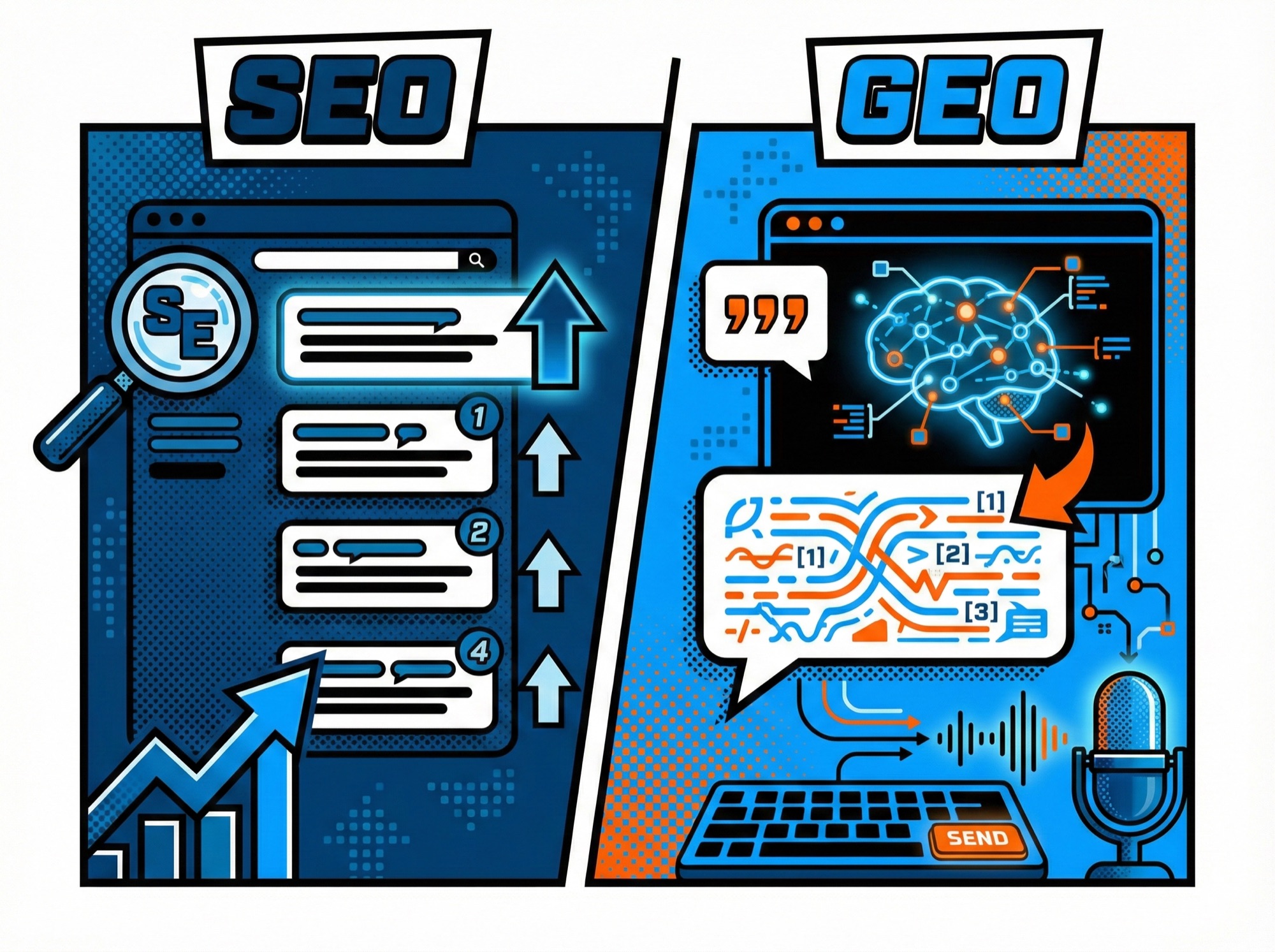
| Aspect | Traditional SEO | Generative Engine Optimization |
|---|---|---|
| Target | Google, Bing, Yahoo | ChatGPT, Gemini, Perplexity, AI Overviews |
| Goal | Rank high in SERPs | Be cited in AI-generated answers |
| Focus | Keywords, backlinks, UX | Clarity, accuracy, structure, authority |
| Output | List of ranked links | Direct synthesized answer |
| User Experience | Click through to website | Instant answer, often zero-click |
As SearchAtlas emphasizes:
"GEO is not replacing SEO. It's expanding it. Both approaches are now essential to reach users across different search platforms."
The fundamental difference: SEO optimizes for ranking algorithms; geo optimization prepares content for AI comprehension and citation. Your SEO strategy needs to incorporate both.
7 Proven Strategies for Generative Engine Optimization
Implementing effective generative engine optimization requires a systematic approach. Based on research from leading industry sources, here are seven proven strategies:
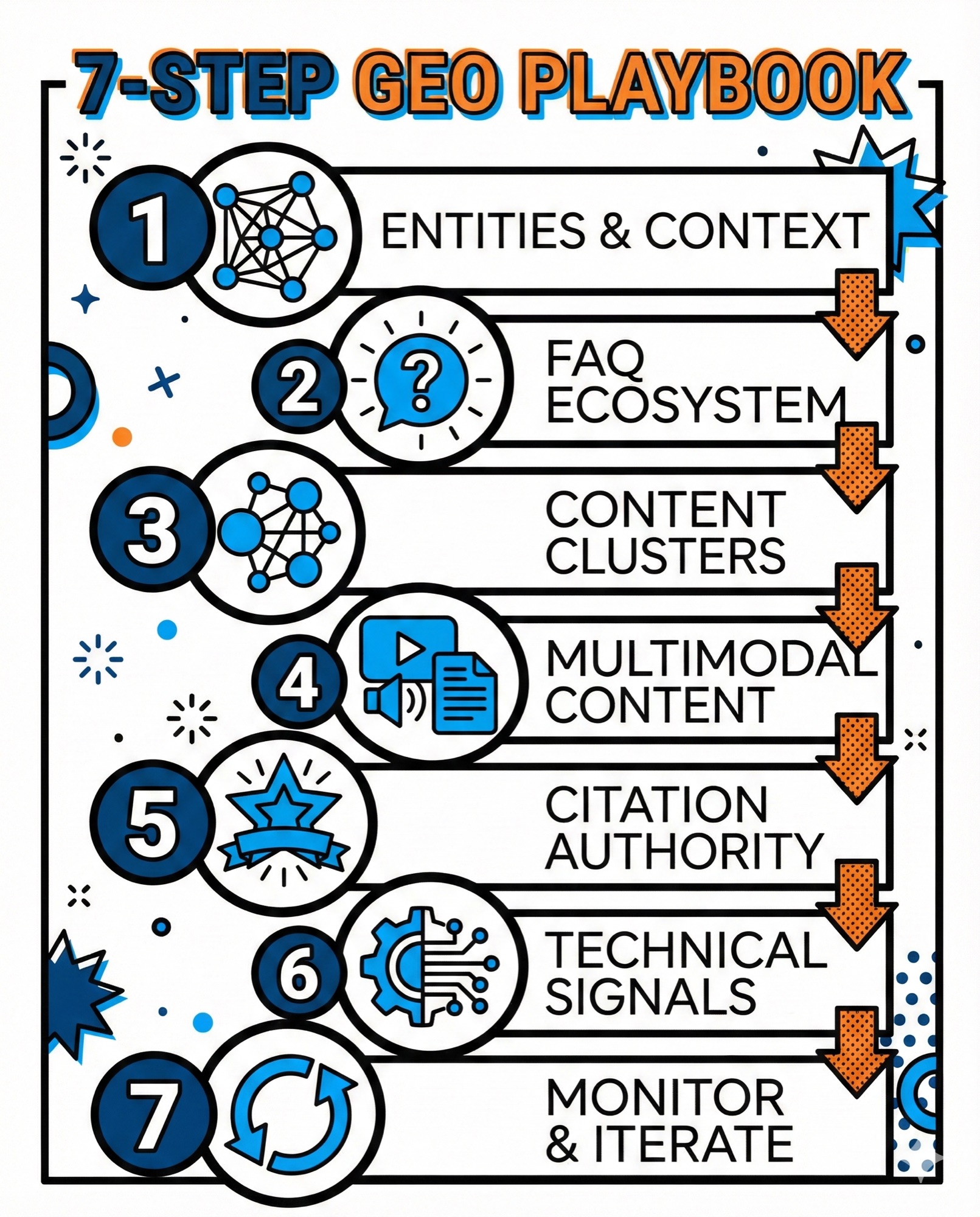
1. Transform Keywords into Entities
AI systems don't just match keywords—they understand entities and relationships. Replace isolated keyword phrases with entity-rich sentences that include context.
Result: According to ClickForest, entity optimization delivers 67% more AI citations within four months.
2. Build a Comprehensive FAQ Ecosystem
AI platforms are essentially question-answering machines. Create structured FAQ content with proper schema markup for each core topic.
Result: Per Contently research, FAQ schema implementation drives 65% more featured snippet wins.
3. Create Semantic Content Clusters
Build pillar pages connected to related subtopics. This demonstrates topic authority—a key factor in AI citation decisions.
Result: MarketMuse data shows topic clustering improves domain expertise scores by 78%.
4. Diversify with Multimodal Content
Modern AI systems like GPT-4V and Google Gemini process text, images, audio, and video. Generative search optimization increasingly requires multiple content formats.
5. Cite Authoritative Sources and Be Cited
AI systems verify information by cross-referencing sources. Reference reputable studies and publish original research that others will cite.
6. Optimize Technical Signals
Ensure HTTPS, mobile speed under 1.8 seconds, and complete structured data. Consider adding an LLMs.txt file to guide AI crawlers.
Result: Alli AI reports 73% reduction in technical optimization time with proper setup.
7. Monitor and Iterate Quarterly
Track AI citations, visibility, and brand sentiment using tools like Profound, BrightEdge, or SEMrush. Regular benchmarking ensures your generative engine optimization strategy adapts to platform changes.
Key AI Platforms for Your GEO Strategy
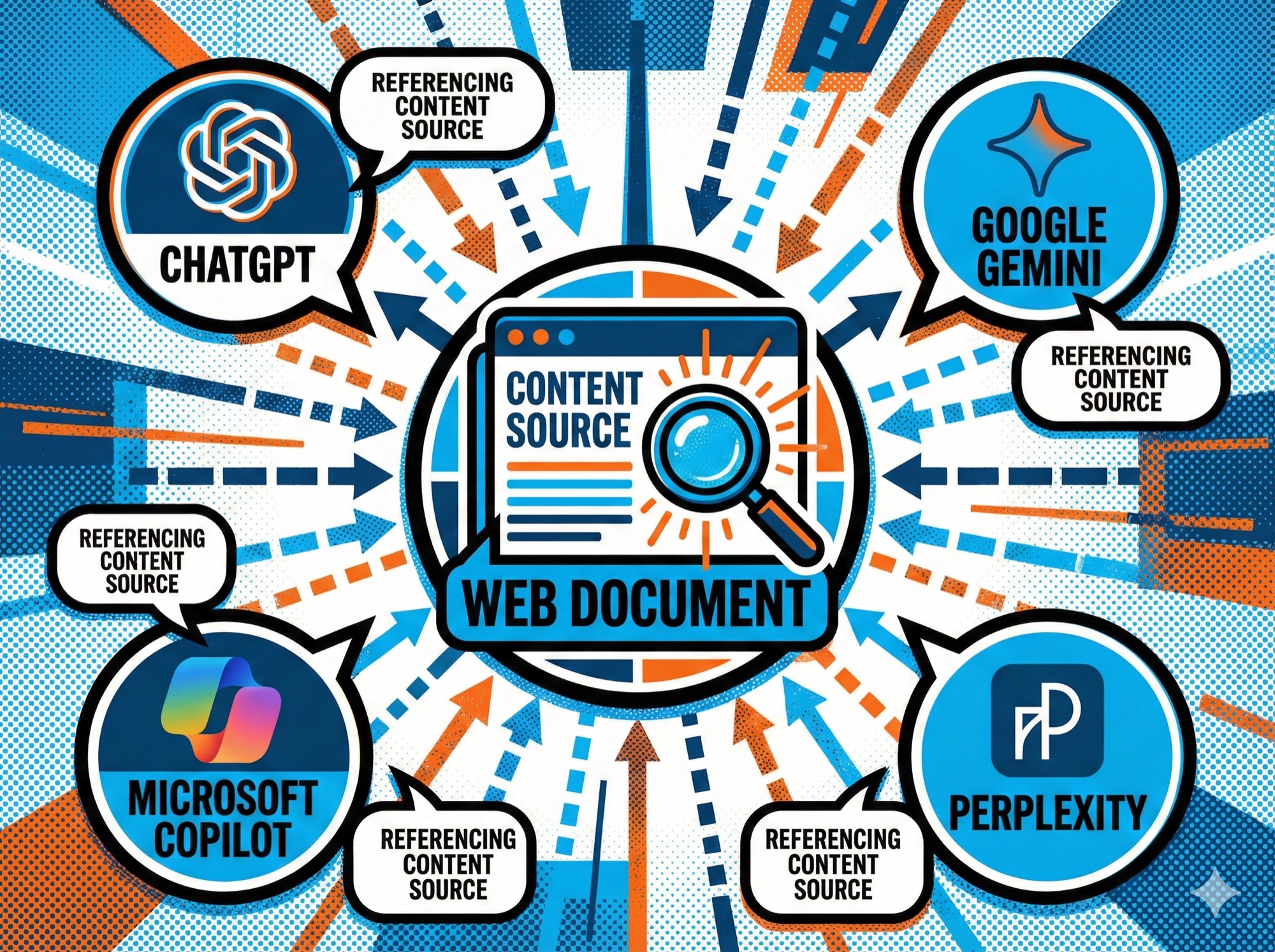
Effective geo seo requires understanding each major AI platform:
ChatGPT (OpenAI): With 180+ million users, this remains the dominant conversational AI. It cites web content directly and favors well-structured, authoritative sources.
Google AI Overviews: Formerly Search Generative Experience, these AI summaries appear in 15%+ of Google searches. They pull from Google's search index, prioritizing E-E-A-T signals.
Perplexity AI: The fastest-growing answer engine provides source citations prominently. Accuracy and recency strongly influence citation likelihood.
Google Gemini: Google's multimodal AI processes text, images, and video—making diverse content formats increasingly valuable.
Microsoft Copilot: Integrated with Bing, Copilot represents growing enterprise adoption of AI-assisted search.
What GEO Means for Marketers and Business Owners
For anyone managing a brand's digital presence, generative engine optimization isn't optional—it's becoming essential infrastructure.
Consider the implications: when a potential customer asks an AI assistant about solutions in your industry, will your brand be mentioned? That's the new visibility battleground.
Practical impacts:
- Brand visibility in an AI-first discovery environment
- Thought leadership positioning through citation authority
- Competitive advantage over slower-adapting competitors
- Future-proofed marketing as AI adoption accelerates
The brands that understand this shift early—and adapt their content strategy accordingly—will maintain visibility while others struggle to understand why their traffic declined.
Frequently Asked Questions
What is generative engine optimization?
Generative engine optimization (GEO) is the process of optimizing content so AI systems like ChatGPT, Perplexity, and Google AI Overviews can understand, cite, and present it in their responses.
How is GEO different from SEO?
SEO focuses on ranking in search engine results pages; GEO focuses on being cited in AI-generated answers. Both are complementary strategies for comprehensive visibility.
Why does GEO matter in 2026?
Gartner predicts a 25% drop in traditional search volume by 2026 as users shift to AI-powered answer engines, making GEO essential for maintaining brand visibility.
What AI platforms should I optimize for?
Focus on ChatGPT (180M+ users), Google AI Overviews (15%+ of searches), Perplexity AI (fastest-growing), Google Gemini, and Microsoft Copilot.
Sources
- Conductor Academy – Generative Engine Optimization Guide
- Andreessen Horowitz – GEO Over SEO
- SearchAtlas – GEO Strategy and Tools
- Gartner – Search Volume Predictions 2024
- HubSpot – Generative Engine Optimization for Marketers
- ClickForest – GEO Strategies
- Contently – Top GEO Tools 2025
- MarketMuse – Topic Authority Research