
I've tracked every major Google algorithm update for the past decade, and November 2025 caught my attention for what didn't happen. No official core update announcement. No dramatic "this changes everything" headlines. Instead, Google quietly rolled out something that actually matters: Query Groups in Search Console Insights. Combined with enhanced AI context understanding through Gemini 3, this Google November 2025 update represents a fundamental shift in how we should approach SEO strategy.
What Actually Changed in Google's November 2025 Update
The Google November 2025 update focused on two priorities: AI context understanding and search stability. Unlike traditional core updates that shuffle rankings overnight, these changes refined how Google interprets search intent at a foundational level.
According to Quantifimedia's analysis, Google's algorithms are "becoming more intelligent, contextual, and experience-focused."
Key changes in the Google November 2025 update include:
- Gemini 3 launch: Google's newest large language model is "much better at figuring out the context and intent behind your request," requiring fewer prompts to deliver relevant results.
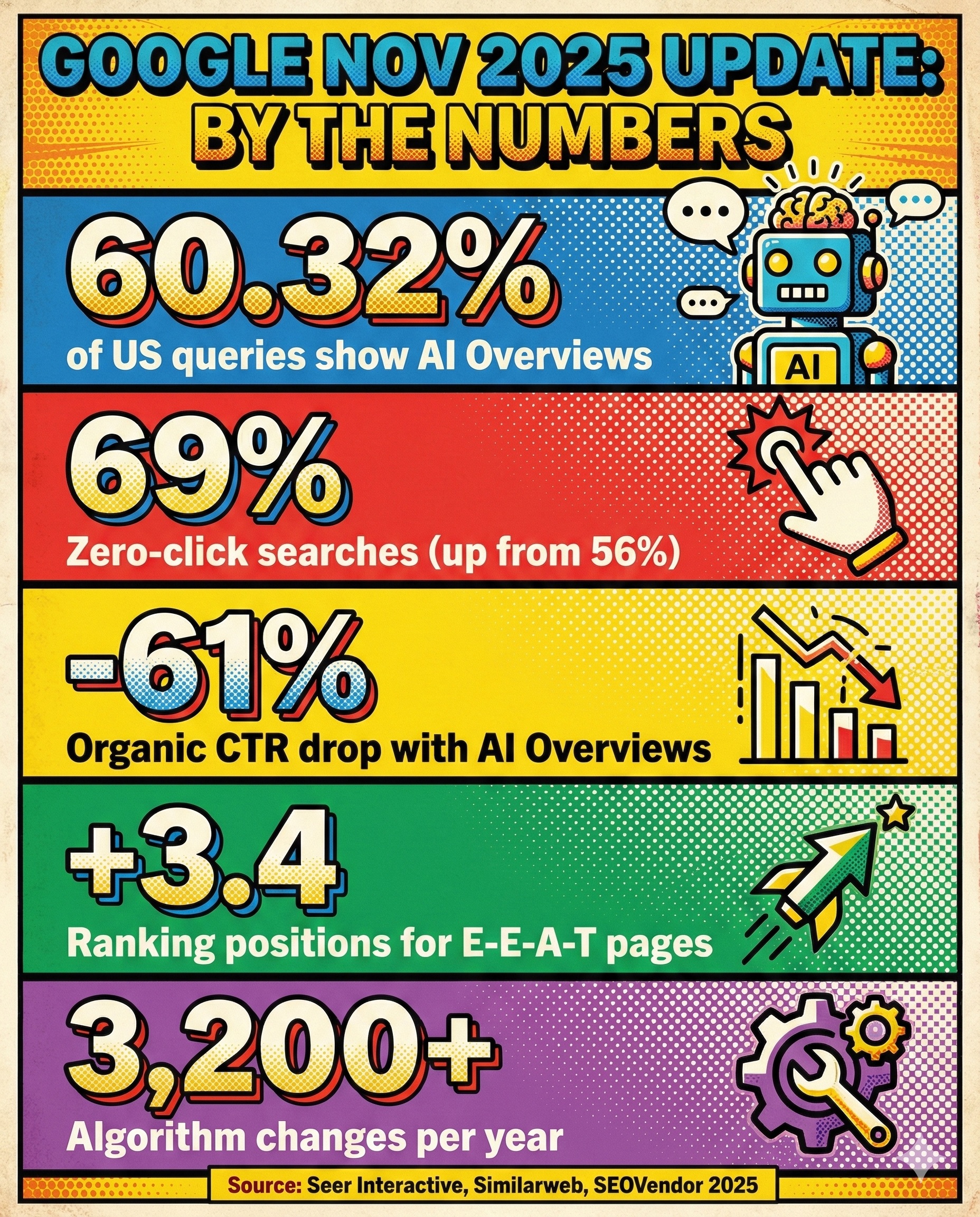
- E-E-A-T signals strengthened: Experience, Expertise, Authoritativeness, and Trustworthiness now carry even more weight. Pages demonstrating genuine expertise gained approximately 3.4 ranking positions.
- Search stability improvements: Following a brief global search glitch, Google prioritized serving reliability alongside AI enhancements.
- Mobile-first indexing reinforced: Every site is now checked by mobile Googlebot as the baseline.
Query Groups: The Biggest Change You Need to Know
The most significant development from this period is Query Groups in Search Console Insights. Announced on October 27, 2025, this AI-powered feature fundamentally changes how SEO professionals analyze search performance data.
What are Query Groups?
Query Groups automatically clusters related search queries by shared user intent. Instead of seeing dozens of separate query rows in your reports—each a slight variation of the same topic—you now see them consolidated under one umbrella.

According to Google's official announcement, Query Groups appear in the "Queries leading to your site" card within Search Console Insights. The feature organizes your data into three categories:
- Top: Groups with the highest total click volume
- Trending Up: Groups showing significant click increases
- Trending Down: Groups experiencing declining interest
Step-by-Step: Using Query Groups for SEO Optimization
Step 1: Access Your Query Groups Data
Navigate to Google Search Console. Click into Search Console Insights (the lightbulb icon). Look for the "Queries leading to your site" card.
Step 2: Identify High-Priority Groups
Start with the "Top" category. These represent your audience's primary interests—the topics already driving meaningful traffic. Document the top 5-10 Query Groups.
Step 3: Analyze Trending Patterns
The "Trending Up" section reveals emerging opportunities. These topics are gaining momentum, often with less competition. "Trending Down" groups signal content that may need refreshing.
Step 4: Map Groups to Content Clusters
Connect each Query Group to your existing content structure. High-performing groups should have cornerstone content. Groups without dedicated pages represent content gaps.
Why AI Context Understanding Changes Everything
The Google November 2025 update's emphasis on AI context understanding has immediate implications for how content ranks.
The numbers tell the story:
- AI Overviews now appear in 60.32% of U.S. queries, up from just 25% in August 2024
- Zero-click searches reached 69% by May 2025, up from 56% in 2024
- Organic CTR dropped 61% for queries showing AI Overviews
What This Means for Marketers and Business Owners
Topic clusters matter more than individual keywords. The era of optimizing single pages for single keywords is over. Google now evaluates your entire content ecosystem.
E-E-A-T isn't optional. Trust factors like author credentials, data citations, and genuine experience now directly impact rankings.
Quality beats quantity. Pages with "honest drawbacks and genuine expertise" gained approximately 3.4 positions in November 2025.
Key takeaways for your team:
- Review your Query Groups monthly in Search Console Insights
- Build content clusters around your top-performing groups
- Strengthen author credentials and cite verified sources
- Focus on helpful, contextually deep content over keyword-stuffed pages
- Monitor "Trending Up" groups for early opportunities
Ready to stop chasing algorithm updates? Schedule a consultation to discuss your digital marketing strategy and build sustainable search visibility.
Frequently Asked Questions
What is Google's November 2025 update?
Google's November 2025 update focused on AI context understanding and search stability. While no official core update was announced, significant changes included the Query Groups feature in Search Console Insights and enhanced AI intent recognition through Gemini 3.
What are Query Groups in Google Search Console?
Query Groups is an AI-powered feature in Search Console Insights that automatically clusters related search queries by shared user intent. Instead of seeing dozens of query variations separately, you see them grouped together.
Is E-E-A-T more important after the November 2025 update?
Yes. The Google November 2025 update strengthened E-E-A-T signals, particularly the Experience component. Pages with genuine expertise and clear sourcing gained ranking positions.