
Real talk—the AI platform landscape is wild right now. With over 70,000 AI companies fighting for attention and new tools dropping every week, figuring out which platforms actually deliver feels like trying to pick the best taco spot in Austin. The good news? We've done the homework. Here's your no-fluff guide to the most popular AI platforms in 2026—what they do, how they stack up, and which one deserves your time (and budget).
Understanding these platforms is essential for AI search SEO strategies, as AI assistants increasingly shape how people discover and consume information online.
Quick answer: The most popular AI platforms in 2026 are ChatGPT (OpenAI), Claude (Anthropic), Google Gemini, and Microsoft Copilot for general AI assistance. For specialized tasks, GitHub Copilot leads coding, Midjourney dominates image generation, and Perplexity AI excels at research. With the AI platform market projected to reach $94.31 billion by 2030, choosing the right platform depends on your specific use case, budget, and integration needs.
Table of Contents
What Are AI Platforms?
What makes the most popular AI platforms stand out? AI platforms are software tools and services powered by artificial intelligence that help users accomplish tasks—from writing and coding to generating images and conducting research. These platforms range from general-purpose assistants like ChatGPT to specialized tools designed for specific industries or workflows. Understanding how many AI platforms exist today helps contextualize why choosing the right one matters.
The AI platform ecosystem breaks down into several key categories:
- Generative AI: Platforms that create new content, including text, images, audio, and video
- Large Language Models (LLMs): The foundation technology powering conversational AI chatbots
- AI Agents: Autonomous systems that perform multi-step tasks with minimal human intervention
- Enterprise AI: Business-focused solutions with security, compliance, and integration features
- AI APIs: Programming interfaces that let developers integrate AI capabilities into their own applications
Understanding these distinctions matters because different platforms excel in different areas. A tool that's perfect for marketing content might struggle with technical documentation, while a coding-focused AI might not be ideal for creative writing.
The AI Platform Landscape in 2026
The AI platform market has exploded in recent years. According to MarketsandMarkets 2025 research, the AI platform market is growing from $18.22 billion in 2025 to a projected $94.31 billion by 2030—a compound annual growth rate of 38.9%.
How Many AI Platforms Are There?
How many AI platforms are there in 2026? The short answer: thousands. According to the Stanford HAI AI Index 2025, there are approximately 70,000 to 90,000 AI companies operating globally. Within those companies, tens of thousands of distinct AI platforms exist across various categories and specializations. This massive number explains why identifying the most popular AI platforms matters—you need to cut through the noise to find what actually works.
Market Growth and Investment
The numbers behind AI platform adoption tell the story:
- Global AI software market: $122 billion in 2024, projected to reach $467 billion by 2030, according to ABI Research 2025
- Corporate AI investment: $252.3 billion in 2024 with 26% year-over-year growth, per the Stanford AI Index 2025
- Generative AI spending: Approximately $19 billion in 2025 on generative AI applications alone, according to Menlo Ventures
Adoption Rates
Enterprise adoption has accelerated dramatically. According to McKinsey's State of AI 2025, more than two-thirds of organizations now use generative AI in at least one business function. Among tech workers specifically, approximately 90% use AI tools in their daily work, per Exploding Topics 2025.
Regional distribution shows North America holding 42.94% of the global AI platform market share in 2025, according to MarketsandMarkets. However, Asia-Pacific is gaining ground rapidly, with AI software revenue projected to reach 47% of the global market by 2030.

Evaluation Criteria for AI Platforms
Before diving into specific platforms, here's how we evaluated the most popular AI platforms. With so many options available (remember: how many AI platforms are there? Tens of thousands), having clear criteria helps separate the leaders from the crowd:
1. Capabilities
Range of tasks the platform can handle, including multimodal AI support (text, images, audio, video). A platform that handles multiple input types offers more flexibility.
2. Context Window
The token limit that determines how much information an AI can process at once. Larger context windows matter for complex tasks involving long documents or codebases.
3. Pricing
Free tier availability, professional plan costs, and enterprise options. Value proposition varies significantly across platforms.
4. Integration
Ecosystem compatibility and AI API access. How well does the platform connect with tools you already use?
5. Safety and Reliability
Accuracy, safety features, uptime, and responsible AI practices. Some organizations prioritize these factors over raw capability.
Top AI Platforms Compared
Now let's examine the most popular AI platforms in detail. These represent the leaders among the tens of thousands of options available today.
ChatGPT (OpenAI)
ChatGPT remains the most popular AI platform by user base, powering everything from casual conversations to enterprise workflows. The platform runs on GPT-4o and GPT-4.5 models, offering strong performance across text, code, and analysis tasks.
Strengths:
- Broadest general capabilities among major platforms
- Extensive plugin ecosystem and custom GPTs
- Strong brand recognition and community support
- Regular model updates and improvements
Limitations:
- Rate limits on free tier restrict heavy usage
- Context window capped at 128K tokens
- Privacy concerns for enterprise users without dedicated instances
Pricing: Free tier (limited GPT-4o), Plus approximately $20-25/month, Enterprise with custom pricing
Best for: General-purpose AI assistance, content creation, brainstorming, and users new to AI
Claude (Anthropic)
Claude, built by Anthropic, has gained significant traction as a safety-focused alternative to ChatGPT. According to Jack Clark, Co-founder of Anthropic, "Development of superhuman machine intelligence (SMI) is probably the greatest threat to the continued existence of humanity"—a philosophy that shapes Claude's design priorities.
Strengths:
- Industry-leading 200K+ token context window
- Nuanced reasoning and thoughtful responses
- Strong coding capabilities, especially for large codebases
- Constitutional AI approach to safety
Limitations:
- Fewer third-party integrations than competitors
- Rate-limited free tier
- Less broad ecosystem of plugins and extensions
Pricing: Free tier (rate-limited), Pro approximately $20/month, Enterprise with SOC2 compliance and custom agreements
Best for: Large document analysis, complex coding projects, users who prioritize safety and nuanced responses
Google Gemini
Google Gemini brings multimodal AI capabilities integrated across the Google ecosystem. The platform advertises a 1 million token context window, making it technically capable of processing extremely long documents.
Strengths:
- Deep integration with Google Workspace (Docs, Sheets, Gmail)
- Multimodal capabilities across text, image, and audio
- Large context window for extended conversations
- Access to Google's search and knowledge infrastructure
Limitations:
- Accuracy concerns compared to specialized competitors
- Responses sometimes less refined than ChatGPT or Claude
- Best value tied to Google ecosystem commitment
Pricing: Free basic tier, $10-30/month for advanced features, Workspace add-on for enterprise
Best for: Google Workspace power users, multimodal tasks, users already embedded in Google ecosystem
Microsoft Copilot
Microsoft Copilot embeds AI assistance directly into Microsoft 365 applications and Windows. The platform leverages OpenAI technology while adding Microsoft's enterprise infrastructure.
Strengths:
- Seamless integration with Word, Excel, PowerPoint, Teams
- Enterprise-grade security and compliance features
- Available in Windows 11 and Edge browser by default
- Strong for document automation and productivity workflows
Limitations:
- Full value requires Microsoft 365 license investment
- Limited standalone capabilities compared to pure AI assistants
- Best features locked behind enterprise tiers
Pricing: Free via Edge/Windows, $10-30/month for enhanced features, Microsoft 365 license plus add-on for enterprise Copilot
Best for: Microsoft 365 power users, enterprise teams, organizations with existing Microsoft infrastructure
As Satya Nadella, CEO of Microsoft, noted at World Economic Forum 2024, "The biggest lesson learned is we have to take the unintended consequences of any new technology along with all the benefits, and think about them simultaneously—as opposed to waiting for the unintended consequences to show up and then address them."
Specialized AI Platforms
Beyond general assistants, specialized platforms dominate specific use cases:
- GitHub Copilot: Best AI coding assistant with deep IDE integration ($10-19/month)
- Midjourney: Premier AI image generation with unmatched artistic quality ($10-60/month)
- Perplexity AI: AI-powered research with real-time citations and source verification
- Jasper: Marketing-focused AI with brand voice consistency features
- Synthesia: AI video generation with realistic avatar presentations
Side-by-Side Comparison Table
These tables provide a quick reference for comparing the most popular AI platforms across key dimensions. When evaluating how many AI platforms are there for each use case, these leaders consistently rise to the top.
General AI Assistants Comparison
| Platform | Context Window | Free Tier | Pro Price | Best For |
|---|---|---|---|---|
| ChatGPT | 128K tokens | Limited GPT-4o | ~$20-25/mo | General use |
| Claude | 200K+ tokens | Rate-limited | ~$20/mo | Large documents |
| Gemini | 1M tokens | Basic chat | $10-30/mo | Google ecosystem |
| Copilot | 32K-128K | Edge/Windows | $10-30/mo | Microsoft 365 |
Best AI Platform by Use Case
| Use Case | Top Platform | Runner-Up | Key Differentiator |
|---|---|---|---|
| General Assistant | ChatGPT | Claude | ChatGPT broadest capabilities, Claude most thoughtful |
| Coding | GitHub Copilot | Claude | Copilot IDE integration, Claude large codebase handling |
| Image Generation | Midjourney | DALL-E | Midjourney artistic quality, DALL-E integration ease |
| Research | Perplexity AI | ChatGPT | Perplexity real-time citations, ChatGPT broader knowledge |
| Marketing Content | Jasper | ChatGPT | Jasper brand voice tools, ChatGPT versatility |
| Video Production | Synthesia | Runway | Synthesia avatars, Runway creative editing |
| Enterprise | Microsoft Copilot | Google Gemini | Copilot M365 integration, Gemini Google Workspace |
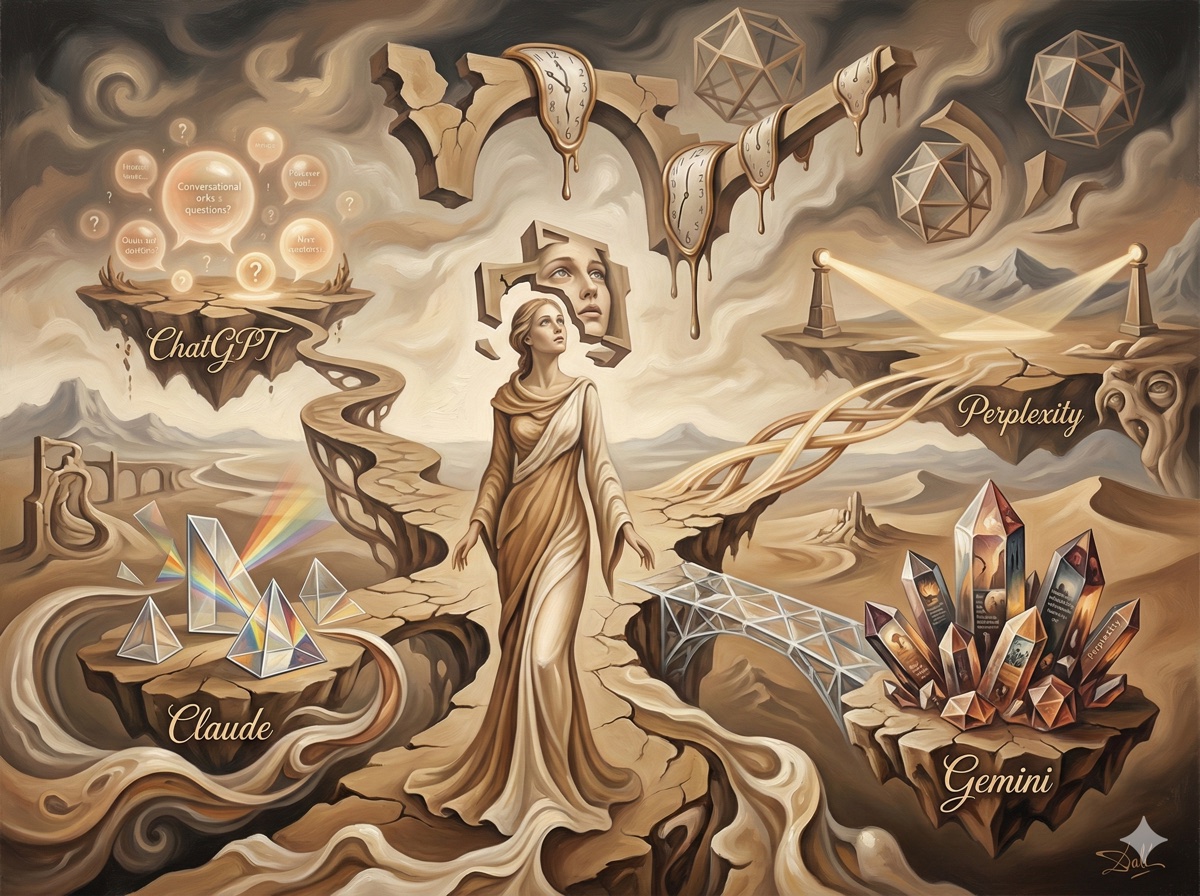
How to Choose the Right AI Platform
With how many AI platforms are there to choose from (tens of thousands), the decision framework for selecting an AI platform depends on your primary use case and existing technology stack. Here's how to navigate the most popular AI platforms and find your best fit.
Choose ChatGPT if...
- You need the most versatile, general-purpose AI assistant
- You want access to the largest ecosystem of plugins and custom GPTs
- You're new to AI and want the most established, well-documented platform
- Your use cases span multiple domains without deep specialization
Choose Claude if...
- You regularly work with large documents, research papers, or codebases
- You prioritize thoughtful, safety-conscious AI responses
- Extended context for complex analysis matters more than breadth of features
- Enterprise compliance and constitutional AI approach align with your values
Choose Gemini if...
- Your organization runs on Google Workspace
- Multimodal capabilities (text, image, audio) are core to your workflow
- Tight integration with Google Search, Docs, and other Google tools adds value
- You want a single provider for AI and productivity software
Choose Microsoft Copilot if...
- Your organization is committed to the Microsoft 365 ecosystem
- AI integrated directly into Word, Excel, and PowerPoint saves time
- Enterprise security, compliance, and IT management are priorities
- You prefer AI as an embedded feature rather than a standalone tool
Choose Specialized Platforms if...
- Coding: GitHub Copilot for IDE integration, Claude for large codebase analysis
- Images: Midjourney for quality, DALL-E 3 for ChatGPT integration, Adobe Firefly for creative workflows
- Research: Perplexity for citations and real-time information
- Marketing: Jasper for brand voice consistency and campaign workflows
- Video: Synthesia for avatar-based content at scale
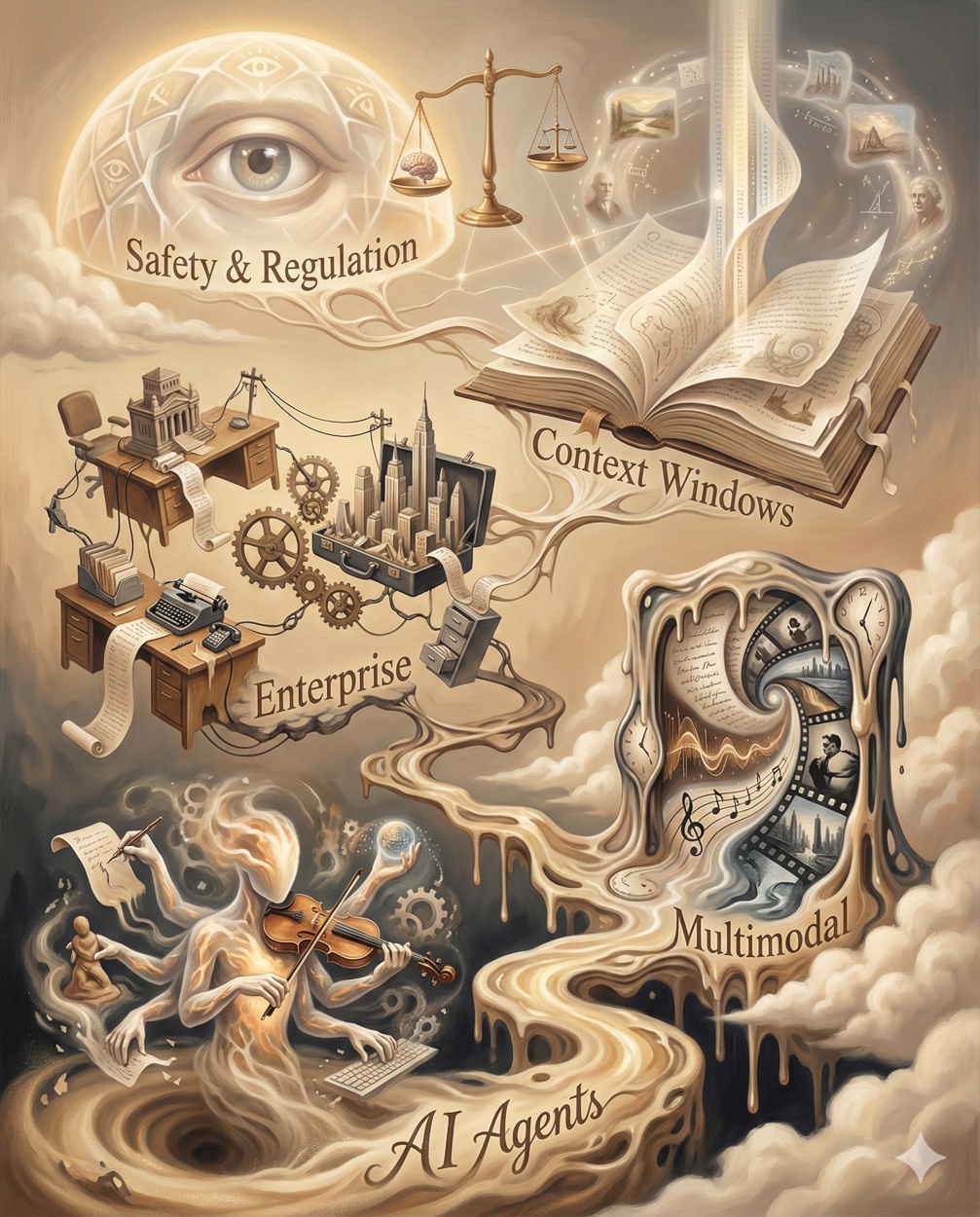
AI Platform Trends to Watch in 2026
The most popular AI platforms continue to evolve rapidly, with new capabilities reshaping what's possible. According to Sam Altman, CEO of OpenAI, "I think it's good that we and others are being held to a high standard. We can draw on lessons from the past about how technology has been made to be safe and how different stakeholders have handled negotiations about what safe means."
Key Trends Shaping 2026
1. AI Agents: Autonomous multi-step task execution is moving from concept to production. Expect AI platforms to handle complex workflows with minimal human supervision.
2. Multimodal Evolution: The line between text, image, audio, and video AI continues to blur. Platforms that seamlessly handle all input types will gain competitive advantage.
3. Enterprise Integration: Deeper workflow automation as AI moves from experimental to core business infrastructure. According to McKinsey, AI marketing automation represents one of the fastest-growing enterprise AI applications.
4. Context Window Expansion: Movement toward effectively unlimited memory, enabling AI to maintain context across entire projects rather than single conversations.
5. Safety and Regulation: Increased focus on responsible AI as governments worldwide implement AI governance frameworks. Satya Nadella emphasized this at Davos 2024: "I don't think the world will put up anymore with any of us coming up with something where we haven't thought through safety, equity and trust—these are big issues for the world."
The AI digital marketing transformation continues to accelerate, with AI platforms becoming essential infrastructure for competitive marketing teams.
Conclusion & Recommendations
The most popular AI platforms in 2026 offer distinct value propositions:
- ChatGPT leads in overall popularity and versatility
- Claude excels with context length and nuanced reasoning
- Gemini provides the best Google ecosystem integration
- Microsoft Copilot delivers seamless Microsoft 365 AI assistance
For most users starting their AI journey, ChatGPT provides the broadest capability with the most established ecosystem. Organizations already invested in Google or Microsoft should leverage Gemini or Copilot respectively for deeper integration benefits. Power users handling complex documents or code will find Claude's extended context window invaluable.
The AI platform market's explosive growth—from $18 billion in 2025 to a projected $94 billion by 2030—signals that these tools are becoming essential business infrastructure rather than optional experiments.
Ready to implement AI-powered strategies for your business? Explore more AI insights or connect with our team for digital marketing services that leverage the latest AI capabilities.
FAQ
How many AI platforms are there?
How many AI platforms are there exactly? There are tens of thousands of AI platforms globally. According to Stanford HAI AI Index 2025, approximately 70,000 to 90,000 AI companies operate worldwide, each potentially offering multiple platforms and tools. The exact count of how many AI platforms are there changes constantly as new startups launch and existing tools evolve.
What is the most popular AI platform in 2026?
ChatGPT (OpenAI) remains the most popular AI platform by user base in 2026. However, Claude and Google Gemini have gained significant market share among the most popular AI platforms, especially in enterprise and specialized use cases. Popularity varies by region and industry.
Which AI platform is best for business?
Microsoft Copilot offers the strongest business integration for Microsoft 365 users. ChatGPT Enterprise works well for organizations wanting flexible AI without ecosystem lock-in. Claude provides excellent options for document-heavy industries requiring extended context and enterprise compliance.
Are AI platforms free to use?
Most of the most popular AI platforms offer free tiers with limitations. ChatGPT, Claude, Gemini, and Copilot all provide free access with restricted features or rate limits. Professional plans typically cost $10-30/month, with enterprise tiers available for larger organizations.
What's the difference between ChatGPT and Claude?
ChatGPT offers broader general capabilities and a larger plugin ecosystem. Claude provides a longer context window (200K+ tokens vs 128K) and focuses on nuanced, safety-conscious responses. ChatGPT suits versatile general use; Claude excels with large documents and complex analysis.
Which AI is best for coding?
GitHub Copilot leads for coding with its deep IDE integration and code completion features. Claude performs well for analyzing and working with large codebases due to its extended context window. Many developers use both—Copilot for real-time assistance and Claude for complex problem-solving.
Is Google Gemini better than ChatGPT?
Neither is universally better—it depends on your needs. Gemini integrates more deeply with Google Workspace and offers multimodal capabilities. ChatGPT provides more polished responses and a larger third-party ecosystem. Google users often prefer Gemini; those seeking standalone AI typically choose ChatGPT.
What AI platform should I use for marketing?
Among the most popular AI platforms for marketing, Jasper is purpose-built with brand voice consistency features. ChatGPT offers versatility across marketing tasks from copy to strategy. Claude handles long-form content and research effectively. Many marketing teams use multiple of the most popular AI platforms for different workflow stages.
Sources
- MarketsandMarkets - AI Platform Market Report 2025
- Stanford HAI - AI Index Report 2025
- McKinsey - State of AI 2025
- ABI Research - AI Software Market Size 2025
- Menlo Ventures - State of Generative AI in the Enterprise
- Exploding Topics - AI Statistics 2025
- World Economic Forum - What Leaders Said About AI at Davos 2024