Solo AI Marketing Playbook for Small Business 2026
My real 2026 AI marketing stack for a solo consultancy: which workflows compound, which are hype, and the 3T Filter I use to decide what to automate.

Published Jul 14, 2026.
AI marketing for a small business is the practice of using generative and agentic AI tools (ChatGPT, Claude, Gemini, plus workflow platforms such as Zapier and n8n) to draft content, analyze customer behavior, run research, and automate repetitive marketing tasks so a small team can rival the output of a much larger one. I run Matt Kundo Digital Marketing as a solo consultant and I use AI continuously throughout my working day. This is the actual playbook I use, not the version I would sell you if I did a webinar.

Key takeaways
- 87% of U.S. SMB marketers now use AI somewhere in their workflow (PR Newswire, April 2026); the median SMB uses five AI tools (SBE Council, 2026).
- Marketers using AI report regaining an average of 6.1 hours per week (HubSpot AI Trends Report, 2026); top performers recover 12 to 18 hours (Gartner 2026 AI Marketing Benchmark).
- The trap is not adoption; it is picking the wrong workflows to automate. Only 6% of brands see an AI return on investment within a year (Deloitte, 2025).
- Apply the 3T Filter I built for solo work (Time, Trust, Taste) to decide what to hand to a model and what to keep with you.
- My three highest-leverage AI workflows: research synthesis, ad-copy variant generation, and structured data extraction from client calls. Everything else is theater until proven otherwise.
What is AI marketing for a small business, really?
AI marketing for a small business is the use of large language models, image models, and agentic workflow tools to cut down the time it takes to create and distribute marketing work. The main categories are content creation (blog drafts, ad copy, email subject lines), data analysis (customer segmentation, predictive scoring), automation (routing leads, publishing schedules), and agentic execution (goal-driven tasks like research, outreach, or reporting that run without a human at every step). The U.S. Small Business Administration frames it as a productivity multiplier for owners with limited hours.
For a solo operator or small business owner, the AI marketing promise is not "the AI does my marketing for me." The realistic promise, and the one I have logged on my own book, is that AI cuts 20 to 40 percent off the total time a marketing task takes end to end, assuming I already know what a good version of that task looks like. If you do not know what good looks like, AI produces confident mediocrity at scale.
What is in my current AI marketing stack in 2026?
My current AI stack is eight tools costing about $185 per month in seats plus roughly $200 in variable API usage. I have run my own agency ops on this same core stack for about 18 months. Here is what is in it and what each tool earns its keep by doing:

- Claude (Anthropic), $20 per month: Long-form drafts, code, reasoning about tradeoffs. My default writing model because it holds a longer plan across a document than most.
- ChatGPT (OpenAI), $20 per month: Quick synthesis, image generation with GPT-Image-1, and built-in web research when I want a citation trail. I keep both Claude and ChatGPT because their failure modes are different, and a second model catches a bad first draft roughly one time in five.
- Gemini 2.5 Pro (Google) inside Workspace, $30 per user per month: Anything that needs to reach into my Google Docs, Sheets, or Drive without me pasting content around. Gemini's grounding in my own files is the feature I use most.
- Perplexity Pro, $20 per month: Research with citations. When a client asks a market question, this is faster than opening ten tabs.
- Zapier with its AI features, about $50 per month at my volume: The glue for lead routing, form-fill notifications, and cross-app triggers. AI inside Zapier makes classification steps (is this lead qualified?) simple to build.
- Descript, $30 per month: Transcripts of client calls and video edits by editing text. This one tool alone saves me a half day per week.
- Canva pro with Magic Studio, $15 per month: Social posts, quick banners, and image resizes. Not for hero creative but excellent for iteration speed.
- My own Claude Agent SDK setup (custom, built in-house): Structured extraction from documents, blog production, analytics summaries. This is where the real leverage lives, because I have shaped it to my exact voice and workflows.
Everything else on the market I have tried and dropped. If you are starting fresh in 2026, I would begin with Claude, Gemini in Workspace, and Zapier; that trio covers about 80% of what a solo marketer needs.
The 3T filter: How I decide what to automate and what to keep manual
Most solo operators hit a point around month three of AI adoption where they realize they have automated something that should have stayed manual. I built the 3T Filter (Time, Trust, Taste) to prevent that. Before I hand a marketing task to a model, I ask three questions in order:
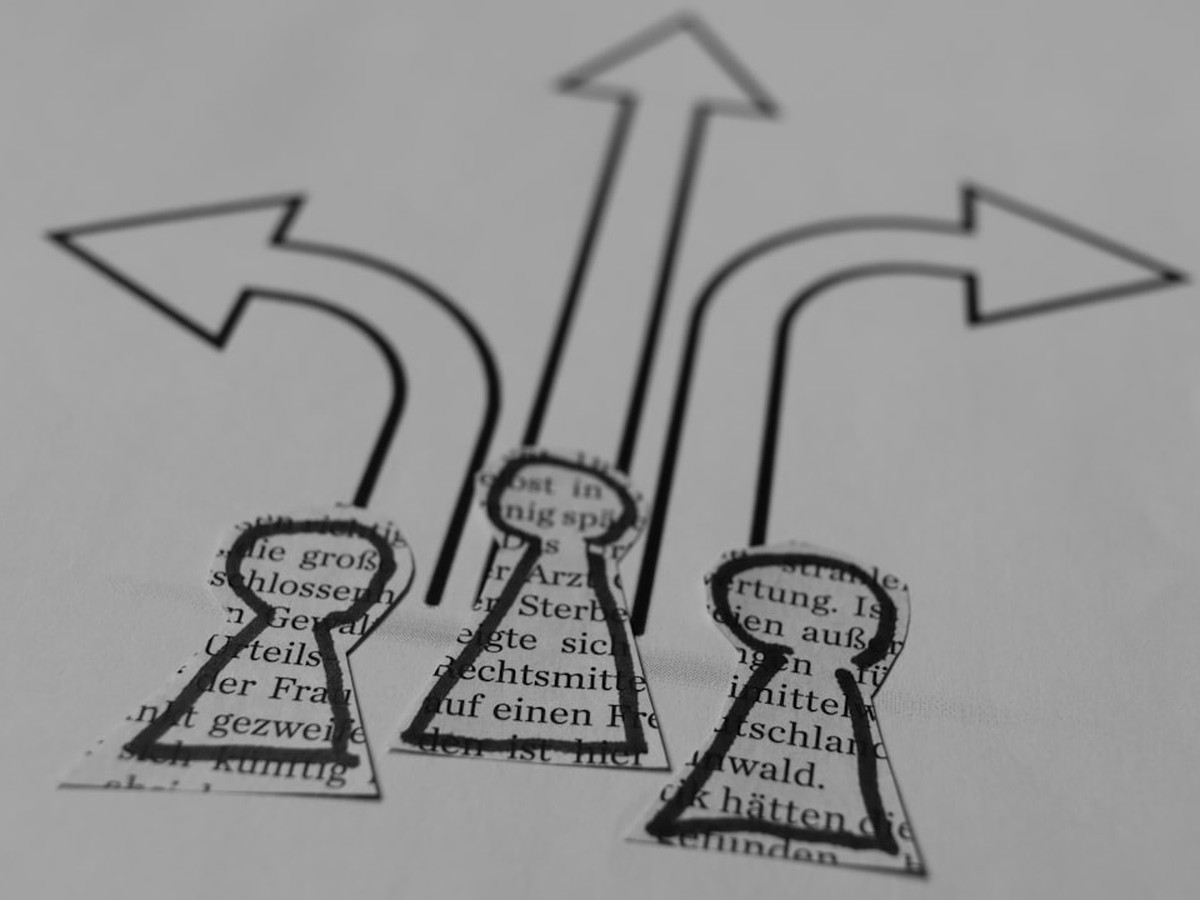
T1: Time. Does AI save more time than the review and cleanup cost me? A model that drafts a blog post in three minutes is not a win if I spend 90 minutes rewriting it. If the ratio is worse than 3 to 1 in AI's favor, I keep the task manual.
T2: Trust. If this output is wrong, how much damage is done? A wrong social caption is easy to delete. A wrong number in a client report costs me the account. High-trust outputs stay under human review with the AI as a drafting partner, never a publisher.
T3: Taste. Does this work require my point of view to be worth doing? My newsletter has a voice. My proposals have a voice. Ad copy for a hardware store's Memorial Day sale does not require my voice; it requires the sale details, a photo, and a deadline. Voice-critical work stays with me; commodity work goes to the model.
Everything that passes the three tests (fast to review, low downside if wrong, no unique voice required) gets automated. Everything that fails any single one stays with me. About 60% of my marketing tasks currently clear all three; 18 months ago it was under 10% because the models were not reliable enough.
How many hours does AI actually save a small business marketer?
AI saves me 14 hours per week across seven recurring marketing tasks. I track hours the same way I bill them, so I know exactly what AI has removed from my workload. The numbers below are averages from the last six months of running one solo consultancy plus my agency book. Adjust for your own workload; this is a working baseline, not a promise.
| Marketing task | Weekly hours (before AI) | Weekly hours (with AI) | Hours saved per week |
|---|---|---|---|
| Blog research and outline | 4.0 | 1.0 | 3.0 |
| First-draft ad copy variants | 3.0 | 0.5 | 2.5 |
| Client call notes and action items | 3.0 | 0.5 | 2.5 |
| Monthly client reporting synthesis | 2.5 | 0.5 | 2.0 |
| Social post drafting and scheduling | 2.0 | 0.5 | 1.5 |
| Competitor and market research | 2.0 | 0.5 | 1.5 |
| Email drafts and reply triage | 2.0 | 1.0 | 1.0 |
| Total | 18.5 | 4.5 | 14.0 |
That is 14 hours a week I did not have 18 months ago. It correlates with Gartner's 2026 AI Marketing Benchmark for high-performing marketing teams (12 to 18 hours per week recovered), and it sits well above the 6.1-hour average HubSpot found in its 2026 AI Trends Report, which reflects the wider marketer population who mostly use AI as a search box rather than a workflow. McKinsey reports 80% of AI initiatives cite efficiency as their primary objective, which mirrors what I hear from small business clients.
I focus the recovered time on two activities: sharper strategy for current clients, and building software that compounds (my own agent stack, ranking dashboards for an energy client, a commercial electricity data product). That reinvestment loop is the real ROI story for me, not the raw hours saved.
What actually changed in AI marketing in 2026?
Three shifts in the first half of 2026 changed how I run my marketing, and they are worth naming so you can spot them in your own work.
Agentic browsers went from demo to production. Browsers like OpenAI's Atlas, Perplexity's Comet, and Anthropic's browser-use tooling now let a model click through a live site, fill a form, and pull a result. I use this for competitor pricing sweeps, lead-list enrichment, and Google Ads UI actions that Google's API does not expose. If you have not tried this yet, start with Perplexity Comet on a research task and you will understand the shift in about ten minutes. My deeper writeup is at Agentic AI browsers.
Google's Ads platform is now AI-first, not AI-optional. With the sunset of DSA and the roll-forward of AI Max for Search, Google Ads has shifted the strategic surface from keywords to signals (asset quality, first-party data, conversion imports). Small businesses that fight this and cling to exact-match, single-campaign structures are losing share fast. My playbook for the shift is in The 2026 Google Ads AI guide.
Answer engines became a real referral channel, not a curiosity. ChatGPT, Perplexity, and Google's AI Mode now drive measurable traffic to sites optimized for citation. This is Generative Engine Optimization (GEO), a distinct discipline from classic SEO. Forbes has covered the pattern for small businesses; if your competitors are being cited by the answer engines and you are not, your organic funnel is quietly shrinking. See AI Search Optimization and The AI Agent-First Web for the mechanics.
The hype list: 5 AI marketing workflows I stopped using
Not every AI use case earns its keep. Here are five I have dropped or downgraded in 2026, and the reasoning behind each.
- Full autonomous blog writing. The model can draft 1,500 words in a minute. The problem is the resulting article is generic, undifferentiated, and does not get cited or ranked because it has no unique framework, data, or point of view. Use AI as a research and structure partner. Do the writing yourself, or use a pipeline like the one I built for MKDM that inserts real data, opinion, and voice at each phase.
- AI social calendars generated from scratch. Every one I have tested produces content that reads like it was written by a marketing intern who does not know your business. Instead, I let AI expand a real idea (a client anecdote, a data point I noticed) into three or four platform-appropriate variants.
- AI-generated stock imagery for ads. In my testing, a human-written prompt plus a real photographer's photo outperforms AI-generated hero images on click-through by a wide margin. AI images work for illustration, spot art, and editorial support, not for the hero unit of a paid campaign.
- AI "SEO tools" that promise to rank you. Most are wrappers over the same three data providers plus a GPT-4 layer. Save the money and use the underlying tools (Ahrefs, DataForSEO, GSC) with a real writer and an editor. The tools that survive my stack are the ones that give me raw data, not the ones that give me "recommendations."
- AI chatbots on small business sites. For most small businesses, the chat volume does not justify the setup, the maintenance, or the risk of a wrong answer to a customer. A visible phone number and a form work better and cost nothing to maintain.
What are the most common mistakes small businesses make with AI marketing?
The most common AI marketing mistakes cluster around five failure modes I see repeatedly when I audit small business setups.
- Buying tools before mapping workflows. The right question is "which of my recurring weekly tasks would I automate if I could?" not "which AI tool should I buy?" Start from the work, not the software. The U.S. Chamber of Commerce guide to AI tools for small business is a fine tool list, but it will not tell you which workflow you should attack first.
- Skipping the review step. According to Deloitte's 2025 analysis, only 6% of brands see AI payback in under a year, and the top cause of failure is unreviewed output shipping to customers. Every generative output needs a human editor before it goes external.
- Over-relying on one model. Different models are good at different things. If you never compare a Claude draft to a ChatGPT draft, you do not know what "good" looks like.
- Ignoring data privacy. Uploading client customer lists to a public model violates most contracts. For anything with PII, use a private workspace, an enterprise plan, or a locally-hosted model. Both the FTC AI endorsement rules and AI marketing compliance rules for 2026 apply here.
- Measuring the wrong thing. Do not measure "AI tools purchased" or "AI features enabled." Measure hours saved per task and revenue attributable to AI-enabled work. If neither number moves, your AI adoption is theater.
How much does an AI marketing stack cost per month for a small business?
An AI marketing stack for a small business runs $75 to $250 per month in seat costs plus a variable API bill for a solo operator, and $400 to $800 per month for a small team. Here is a realistic budget range I would build for a client today.
| Stack tier | Monthly cost | What you get |
|---|---|---|
| Starter (solo, 0-3 clients) | $75 to $100 | One LLM (Claude or ChatGPT Pro), Gemini in Workspace, Canva Pro |
| Working solo (my level) | $185 seats + $150 to $250 API | Two LLMs, Perplexity, Zapier + AI, Descript, custom agent tooling |
| Small team (2-5 marketers) | $400 to $800 | Above plus HubSpot AI Marketing Hub, Sprout Social AI, per-seat Claude or ChatGPT |
I have never seen a small business get significant leverage from spending more than about $1,000 per month on AI marketing tools before hiring a real strategist. The strategist amplifies the tools; the tools without a strategist plateau quickly.
The bottom line for a small business marketer in 2026
Adoption is no longer the question. With 87% of U.S. SMB marketers now using AI in some part of their workflow (PR Newswire, April 2026) and a median stack of five tools per business (SBE Council, 2026), the real question is which workflows compound and which are theater. Use the 3T Filter (Time, Trust, Taste) to sort. Reinvest the hours you save into strategy and durable assets, not into more busywork. For the shorter tools-only version, see my Best AI tools for marketers in 2026 stack; if you are worried about visibility, start with the AI visibility gap for small business; if you are ready to systemize a repeatable workflow, my AI workflow automation starter guide is the next step.
AI marketing for small business FAQs
Is AI marketing worth it for a small business in 2026?
Yes, for most small businesses, if you pick the right workflows. The consistent research point is that adoption alone does not produce ROI; only 6% of brands see payback in under a year (Deloitte, 2025). The businesses that win are the ones who measure hours saved per task and reinvest those hours into work that compounds, not into more low-value output.
Which AI tool should a small business start with?
Start with one general-purpose model (Claude or ChatGPT Pro at $20 per month) and Google Workspace with Gemini if you already use Google for email and docs. Add Zapier once you have identified two repeatable workflows worth automating. Resist the urge to buy a niche AI marketing tool before you have a workflow it will actually plug into.
Can AI replace my marketing agency?
No, but it can shrink the size of the agency you need. A solo operator who knows their craft can now deliver work that would have required a three-to-five person team in 2022. Agencies that add value are the ones bringing strategy, judgment, and accountability; the ones charging for hours on execution work that AI now handles are the ones getting cut from budgets.
What is agentic AI marketing?
Agentic AI marketing is the use of AI systems that can complete multi-step marketing tasks (research a topic, draft a report, run a competitor pricing sweep) without a human at every step. Agentic workflows are where the biggest 2026 productivity gains are showing up because they compound; a well-built agent runs itself every week for months.
How do I write good AI prompts for marketing work?
Give the model three things every time: the audience (who is this for?), the format (blog H2, ad copy variant, email subject line), and a constraint on quality (a real example of good work you want to match). Vague prompts produce vague output; concrete prompts with an example produce work you can actually use. Never accept a first draft without asking the model "what did you leave out?"
Are AI-written blog posts bad for SEO?
Not inherently. Google's guidance has been consistent since March 2024: quality matters, provenance does not. What hurts your rankings is publishing generic content with no unique framework, data, or expert view, which is what happens when you ship an unedited AI draft. AI-assisted content that adds original research, real opinion, and clear expertise ranks fine. See my write-up on Google's 2026 core update recovery for the ranking mechanics.
By Matt Kundo, founder of Matt Kundo Digital Marketing. Austin, Texas. I write about what I actually run, not what sounds good in a keynote. Reach me at [email protected].