B2B Content Marketing and Product Marketing: Positioning, Messaging and Go-to-Market
Positioning first, then messaging, launches and the content engine that carries them, measured by pipeline. With current CMI, Forrester and Google guidance on AI and disclosure.

Published Nov 20, 2026. 16 min read.
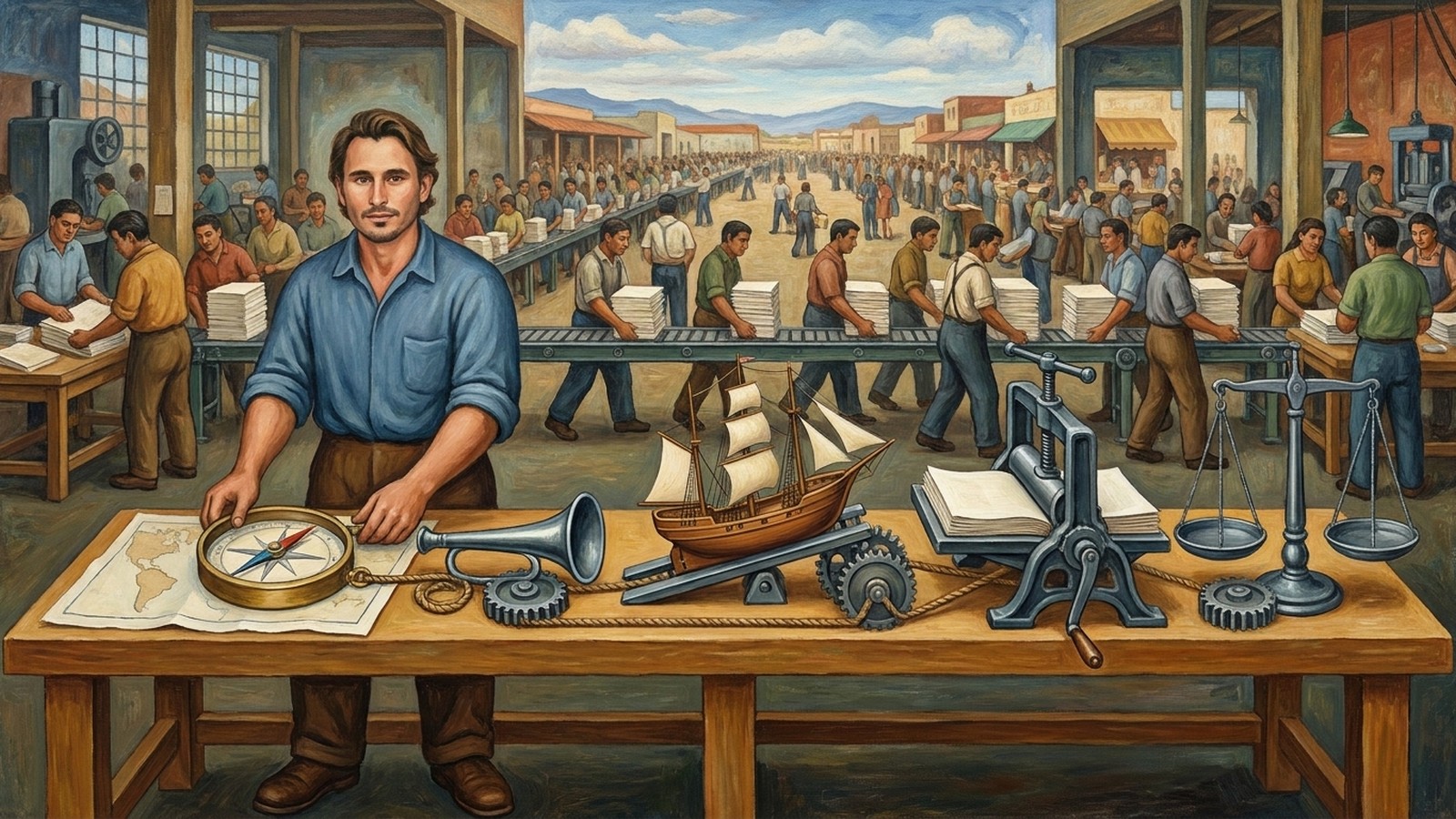
B2B content marketing is the work of publishing material that helps business buyers solve real problems, so your company is the one they remember and trust when a purchase finally starts. Product marketing decides what that content has to prove: who the product is for, what it replaces and why it wins. The way to run them is as one chain. Positioning comes first, then messaging, then launches, then the content engine that carries all three, and the whole chain is measured by pipeline rather than by how much it publishes.
The order matters more now than it did a few years ago. AI made content cheap to produce, and the Content Marketing Institute's B2B Content and Marketing Trends: Insights for 2027 report found that 78% of B2B marketers name speed as AI's biggest contribution to their content, while only 17% name quality. Volume isn't scarce anymore. A clear position, real proof and a buyer who remembers you still are.
This guide walks through each link for marketing and growth leaders who own content and product marketing at a B2B company, usually with a small team and no one whose only job is positioning.
Key takeaways
- Positioning is the input to everything else. April Dunford breaks it into five components: competitive alternatives, differentiated capabilities, value for customers, target customers and market category.
- B2B buying is a group decision. Forrester's State of Business Buying 2024 found that 13 people are involved in the average buying decision and 89% of purchases involve two or more departments.
- Most buyers aren't in the market today. The LinkedIn B2B Institute's 95-5 rule says 95% of potential buyers aren't ready to buy now, so content has to build memory long before it can capture demand.
- Content should be measured by what it does to demand and pipeline: non-brand and branded search, sales use of each asset, deals it touched and how buyers say they found you.
- AI belongs in research, structure, drafting and repurposing, with a person accountable for every claim. Google says all AI-generated content should be fact-checked before publishing, and CMI found that 52% of B2B marketers have no AI disclosure policy.
What is B2B content marketing, and how is it different from product marketing?
B2B content marketing is publishing useful, consistent material for a defined business audience so that, over time, those buyers trust you enough to buy from you. Product marketing is the function that brings a product to market and keeps it winning there. Content earns attention and trust, and product marketing decides what that attention should learn.
The Content Marketing Institute's definition of content marketing describes creating and distributing "valuable, relevant, and consistent content to attract and retain a clearly defined audience," with profitable customer action as the end goal. In B2B, CMI adds, that content helps prospects and customers solve issues in their work instead of pitching products at them.
The Product Marketing Alliance defines product marketing as "the process of bringing a product to market and overseeing its ongoing success," sitting at the intersection of product, sales and marketing. Its core responsibilities are market intelligence, positioning and messaging, sales enablement and product launches.
In a small B2B company the two jobs often sit with the same person. The clearest way to separate them is by the question each one answers.
| Product marketing | B2B content marketing | |
|---|---|---|
| The question it answers | Who is this for, what does it replace, and why does it win? | What does our buyer need to know, and will they remember who taught them? |
| Main artifacts | Positioning doc, messaging framework, launch plan, sales enablement | Articles, research, guides, newsletters, webinars, case studies |
| Primary audience | Buyers in an active evaluation, and the sales team | The whole market, most of which isn't buying yet |
| Measured by | Win rate, deal velocity, launch adoption | Search demand, influenced pipeline, sales use of content |
| What breaks without the other | Sharp positioning nobody hears | Popular content that sells nothing |
The last row is why the two belong in one program. Content without positioning attracts an audience that never turns into pipeline, and positioning without a content engine stays in a slide deck.
Why do content marketing and product marketing need to run as one program?
Content marketing and product marketing need to run as one program because a B2B purchase is a long group decision, and most people in that group meet your company through content before they ever meet your sales team. If the content doesn't carry the positioning, each of them forms a different idea of what you do.
Forrester's State of Business Buying 2024 put numbers on the crowd. On average, 13 people are involved in a buying decision, and 89% of purchases involve two or more departments. Forrester also found that 86% of B2B purchases stall during the buying process and that 81% of buyers are dissatisfied with the provider they chose.
"A broken B2B buying process is creating mayhem for buyers and providers."
Amy Hayes, VP and research director at Forrester, in the State of Business Buying 2024 release

CMI's 2027 research points the same way from the marketer's side. Among B2B marketers who rated their marketing effective, the most common reasons were content relevance and quality (47%), team skills (43%), alignment with sales (26%) and channel selection (26%), with competitive positioning at 23%. Content quality, sales alignment and positioning are three links of the same chain, named by the people getting results.
The positioning-to-pipeline chain
The positioning-to-pipeline chain is a framework for running the two functions as one. It has five links, and each link produces one artifact the next link depends on. When a link is missing, everything downstream improvises.
| Link | The artifact it produces | It's done when | The usual failure |
|---|---|---|---|
| 1. Position | A one-page positioning doc | Sales and product can both name the target customer and the main alternative without looking | Positioning against every competitor at once |
| 2. Message | A messaging framework with proof under each claim | Every claim on the website has a proof point behind it | Adjectives instead of evidence |
| 3. Launch | A tiered launch plan | Each release has a tier, an owner and a date before it ships | Treating every release as a big launch, or none of them |
| 4. Content engine | A content map by buyer situation | Each core message has assets for buyers who aren't in market and buyers who are | Publishing to a calendar instead of a map |
| 5. Measure | A monthly pipeline read | Content is reported in pipeline terms next to output | Reporting traffic and calling it demand |
AI cuts across all five links as a production tool, and it gets its own section below. It changes the cost of links 4 and 5, but it doesn't change what links 1 to 3 have to decide.
How do you write a B2B positioning statement?
Write the positioning statement last, as a summary of five decisions you've already made: who the best-fit customer is, what they'd use if you didn't exist, what you can do that those alternatives can't, what that's worth to the customer, and which market category makes the value obvious. The statement is the output of positioning work, not the method for doing it.
April Dunford, author of Obviously Awesome, describes the definition in a single sentence as:
"Positioning defines how your product is a leader at delivering something that a well-defined set of customers cares a lot about."
April Dunford, An Introduction to Positioning
In the same article, she provides the five essential components of positioning. They are the blank spaces any statement has to fill.
- Competitive alternatives: What the customer would use if your product didn't exist, including a spreadsheet, an agency or doing nothing.
- Differentiated capabilities: What you can do that those alternatives can't.
- Value for customers: What those capabilities are worth, in the customer's terms.
- Target customer segmentation: The customers who care most about that value.
- Market category: The frame that makes the value obvious to those customers.
Dunford is skeptical of the fill-in-the-blanks statement itself, because it assumes each blank has one obvious answer when most products could be positioned in several categories, against different competitors, for different customers. I agree, which is why the components come first here and the statement comes last.
What goes into an ideal customer profile?
An ideal customer profile (ICP) describes the companies that get the most value from your product the fastest and stay the longest. For positioning work, it needs four things you can observe from outside the company: firmographics (industry, size, region), the trigger that puts them in market, the alternative they use today, and the roles in their buying group.
Build it from your best current customers, not from the market you hope to win. Pull the accounts with the shortest sales cycles, the fastest time to value and the best retention, and write down what they have in common before you write a word about the product. A useful ICP rules out companies you'd still accept as customers. If it doesn't rule anyone out, it's a market description, not a profile.
What does a positioning statement template look like?
The template most marketers learn traces back to Geoffrey Moore's book Crossing the Chasm (3rd edition, HarperBusiness, 2014). A common version reads: for (target customer) who (need or problem), (product) is a (market category) that (key benefit). Unlike (primary alternative), (product) (primary differentiator).
Here's that template filled in for a hypothetical product called Acme Reconcile, so you can see where each component lands:
For finance teams at mid-market SaaS companies who close the books with spreadsheets and a week of late nights, Acme Reconcile is a reconciliation platform that turns month-end close into a one-day job. Unlike accounting add-ons that only import data, Acme Reconcile matches billing, payment and bank records automatically and shows the team only the exceptions.
The test of a positioning statement isn't whether it sounds good in a deck. It's whether sales uses the same target customer and alternative in a discovery call, and whether product makes the same tradeoffs on the roadmap.
How do you turn positioning into a messaging framework?
A messaging framework transforms positioning into the words that the sales team, the website and all content assets will use: the core message, three value pillars, a proof point for each pillar and an angle for each member of the buying group. Positioning is the strategy. Messaging is how you convey that strategy to an individual.
Dunford draws the same line in her introduction to positioning. Positioning is not messaging, a tagline or a brand story, and those come later, using positioning as their starting point.
| Layer | What it holds | The test |
|---|---|---|
| Core message | One sentence that states the value for the target customer | A buyer could repeat it after one call |
| Value pillars | Three benefits, each tied to a differentiated capability | Each pillar traces back to a positioning component, not a feature list |
| Proof points | A customer result, a demo, a number or a third-party source under each pillar | A skeptic in the buying group would accept it |
| Persona angles | The same pillars framed for each role in the buying group | Finance, the daily user and IT each see their own risk addressed |
| Objection answers | Short answers to the three objections sales hears most | Sales actually uses them |
Persona angles matter because of the buying group. With 13 people in the average decision, the champion who likes your product has to sell it to a finance lead who cares about cost and an IT lead who cares about risk. The framework gives each of them a reason in their own terms, so the champion isn't improvising.
Proof is the layer that separates a framework from a list of adjectives. "Fast, easy, powerful" isn't a message, it's three adjectives. When CMI asked B2B marketers what builds trust and credibility with an audience, the top answers were consistently providing useful, practical information (64%), demonstrating industry expertise (59%) and showcasing customer stories and testimonials (50%). Claims didn't make the list. Evidence did.
A framework only works if every writer, human or AI, uses it the same way. I cover the controls for that in three layers of brand voice governance for AI writing tools.
What does a B2B go-to-market launch plan include?
A go-to-market launch plan names the release, its tier, the customer it's for, the message it carries, the assets each team needs and the date each asset is due, with one owner accountable for all of it. The tier decides how much of that you build. Product marketing owns the plan, and content carries most of it to the market.
Sales has to be part of the plan from the start. In the Product Marketing Alliance's 2025 State of Product Marketing report, the share of product marketers who count sales enablement as a core responsibility rose to 78.7%, as PMA notes in its guide to product marketing. A launch that briefs marketing but not sales hasn't really launched.
How should you tier product launches?
Launch tiers stop a small team from treating every release the same way. Here's the three-tier split I'd recommend for a B2B company with one or two people doing product marketing:
| Tier | What qualifies | What it gets |
|---|---|---|
| Tier 1 | A new product, a new market or a change to positioning | Updated positioning and messaging, sales training, new website pages, a launch article backed by research or a demo, customer email, paid support and a 30-day pipeline read |
| Tier 2 | A significant feature that strengthens an existing value pillar | A feature page, a how-to article, a sales one-pager, customer email and an in-app note |
| Tier 3 | Improvements and fixes | Release notes and an in-app note |
Watch the middle tier. A feature that strengthens a value pillar and ships with release notes alone is a proof point nobody hears about, including your own sales team.
What belongs on a launch checklist?
A launch checklist is an order of work for one release, and this seven-step version is ready to use on one page:
- Confirm the tier and the single owner.
- Write down the target customer, the alternative and the value for this release, taken from the positioning doc.
- Draft the message and its proof point, and get sales and product to agree on both.
- Brief sales with a one-pager, a demo path and the likely objections before anything goes public.
- Publish the website and content assets in the order buyers will meet them.
- Tell existing customers before you tell the market.
- Read the results at 30 and 90 days: pipeline created, deals where the release came up and adoption among existing customers.
Which B2B content formats work at each stage of the buying journey?
Match the format to the buyer's situation, and in B2B, the most important split is between those buyers who are not in market and those who are. Content for the former group builds memory and trust. Content for the latter group helps a buying group compare alternatives, justify the spend and make a decision.
The LinkedIn B2B Institute's 95-5 rule is the clearest statement of that split: 95% of your potential buyers aren't ready to buy today, and they'll come into the market at some point in the future. Its joint research with the Ehrenberg-Bass Institute found that 75% of companies buy computers once every four years and 80% change banking services once every five years. Most of your content will be read by people who won't buy for months or years, and that's fine, as long as they remember you when they do.

| Buyer situation | The job of the content | Formats that fit | Proof it needs |
|---|---|---|---|
| Not in market (most of your audience) | Be remembered for one problem | Original research, point-of-view articles, newsletters, podcasts, LinkedIn posts from a named person | A clear opinion and real expertise |
| Aware of the problem, starting to look | Help them define the problem and the options | Guides, comparison frameworks, calculators, webinars | Useful, practical detail |
| In evaluation, buying group forming | Give the champion what they need for an internal sale | Case studies, ROI models, security and integration docs, demo videos | Customer evidence and specifics |
| Deciding | Remove the last risk | Implementation plans, pricing explainers, reference calls | Named commitments and timelines |
| Customer | Drive adoption and expansion | Onboarding guides, release content, customer stories | Results the customer is willing to share |
You can align this with top, middle and bottom of the funnel, but there's one difference worth noting when it comes to planning. Buyers are not going to move from one row to the next on your schedule. Buyers come into the market when they have a need, and before then your content needs to be the brand they already know.
The same CMI trust data favors formats a machine can't produce on its own: featuring subject matter experts (42%) and publishing original research (27%) both ranked among the things B2B marketers say build credibility.
How should a B2B team distribute content?
Distribute on the channels you control first, then borrow reach from the channels you don't. Owned channels such as your website, your newsletter and your sales team's follow-up emails compound over time. Rented channels such as social feeds, search results and AI answers change their rules without notice, so use them to bring people back to the channels you own.
B2B marketers are moving in that direction. In CMI's 2027 research, 42% named owned media as one of the areas where they expect to invest the most or increase investment in 2027, up 10 percentage points from 2026. The traffic numbers explain why: over the previous 12 months, 31% of B2B marketers saw website traffic rise, 31% saw it fall, 24% saw it hold steady and 14% weren't tracking it. Among those whose traffic fell, 79% blamed AI-powered search.
These are the channels I'd prioritize for a small B2B team:
- Website and newsletter: The assets you own, where a returning reader becomes a known contact.
- Sales follow-up: Every core article and case study belongs in the sales team's follow-up library, because a rep sending the right piece after a call is distribution with intent attached.
- LinkedIn from named people: Posts from a founder or subject matter expert carry a point of view a company page can't, and paid formats can extend them, which I compare in how LinkedIn Thought Leader Event Ads compare with Sponsored Content.
- Search and AI answers: Structure each page so its sections answer real buyer questions, which is what both Google and AI assistants retrieve. My guide to AI search and SEO covers how.
How do you measure B2B content marketing?
Measure B2B content marketing by its effect on demand and pipeline, not by its output. The four signals I'd report every month are non-brand and branded search, how often sales uses each asset, the pipeline from deals that touched content, and what buyers say when you ask how they found you. Output, such as posts published and words written, is a cost line, not a result.
- Search demand: Non-brand clicks show whether content reaches people who don't know you yet, and branded searches show whether they remember you afterward. Both come from Google Search Console.
- Sales usage: If reps don't send a piece, it isn't sales content, whatever it was planned as.
- Influenced pipeline: Tie content touches to deals in the CRM, then send deal stages back to your ad platforms so paid distribution optimizes for pipeline. I walk through the setup for sending HubSpot deals to Google Ads as offline conversions.
- Self-reported attribution: A required "How did you hear about us?" field on the demo form catches the podcast, the newsletter and the AI assistant that click tracking misses.
Here's the one content result I publish. For a Texas residential energy sales organization whose content program I run, non-brand Google clicks grew 79% from Q3 2025 to Q3 2026, from 979 to 1,749, measured in Google Search Console with brand-name searches removed. Articles published since October 2025, which didn't exist a year earlier, brought in 695 of those clicks. It's a consumer business, not a B2B one, but the measurement is the same: count the non-brand demand the new content created.
CMI found that B2B marketers most often measure audience trust by customer retention or referral rates (50%) and website engagement (45%). Both move slower than a campaign report. The LinkedIn B2B Institute found that 96% of B2B marketers expected to see the main effect of their ad campaigns within two weeks, and it calls that belief a myth. Content compounds over a longer window, so review it by quarter. For the harder question of whether marketing caused the pipeline at all, see incrementality testing for B2B SaaS.
How should AI fit into the B2B content workflow?
AI should speed up the parts of content work that don't need judgment, such as research synthesis, structure, first drafts of known material and repurposing, while a person stays accountable for positioning, original insight and every factual claim. Google's guidance says the same thing in its own terms, and CMI's 2027 data shows what happens when teams optimize for speed alone.
Adoption isn't the open question anymore. CMI found that 88% of B2B marketers say their organization uses AI-powered content creation tools, and 59% are experimenting with or using AI agents, up from 28% a year earlier. Quality is the open question. Marketers named speed (78%), efficiency (59%) and volume (44%) as AI's top contributions to content creation, with quality at 17%. Their most common challenges were ensuring accuracy (54%), maintaining quality control (54%) and maintaining brand voice and authenticity (52%).
The speed also has a cost inside the team. In the last 12 months, 65% of B2B marketers faced more pressure to produce content faster. Among individual contributors under that pressure, 48% reported burnout or creative fatigue, compared with 27% of leaders. And 38% of leaders said the pressure improved efficiency, against 22% of individual contributors.

"When everyone can create more content faster, speed stops being a competitive advantage. The actual advantage is knowing when to take the shortcut and when to take the long road."
Ann Handley, Chief Content Officer at MarketingProfs, in the CMI 2027 research release
Google's guidance on generative AI content says AI can be particularly useful for researching a topic and adding structure to original content, but that using it to generate many pages without adding value for users may violate Google's spam policy on scaled content abuse. It also says: "It is critical to manually factcheck and review all AI-generated content for accuracy and trustworthiness before publishing." That review covers titles, meta descriptions, structured data and image alt text, not only the body. Google's helpful content guidance, in its notes on how quality raters judge effort, describes using generative AI to produce large amounts of text without manual oversight or curation as little to no effort.
Here's how I'd split the work:
| Task | Where AI helps | What a person owns |
|---|---|---|
| Research | Summarizing sources, finding studies, pulling figures | Opening every source and confirming the figure is on the page |
| Positioning and messaging | Drafting options from interview notes and win-loss calls | Choosing the position and the proof |
| Outline | Proposing a structure from the questions buyers ask | Deciding the angle and what the piece will argue |
| First draft | Drafting known material to a detailed brief | Adding the original insight, examples and opinion |
| Editing | Checking consistency, voice and missing sources | Approving every claim, quote and number |
| Repurposing | Turning an article into posts, emails and scripts | Checking that nothing changed meaning along the way |
| Metadata | Drafting titles, descriptions and alt text | Reviewing them like body copy, as Google asks |
Do you need to disclose AI-generated content?
Disclose AI use wherever a reader would reasonably wonder how a piece was made, and never disguise who wrote it. That's Google's standard, and it's a practical one for a B2B team to adopt as written.
Google's helpful content guidance says AI or automation disclosures "are useful for content where someone might think 'How was this created?'" and suggests adding them "when it would be reasonably expected." It's firmer on authorship: fabricating creator profiles, such as AI-generated headshots, made-up names or false credentials, is a form of deception that makes a page untrustworthy.
Most B2B teams haven't settled the question. CMI found that 75% of B2B marketers are concerned AI is making audiences more skeptical of online content, yet 52% say their organization has no policy on disclosing AI use, and only 8% disclose it on every piece. Among those without a policy, 41% said AI plays too small a role to warrant disclosure, and another 41% said they're unsure what level of involvement requires it. And 37% have no guidelines for when AI shouldn't be used at all.
A five-rule policy covers most of it, and you can adapt it in an afternoon:
- Disclose AI use when it substantially generated a piece's text, images or data, or when a reader could reasonably ask how the piece was made.
- Put a named author or editor on every piece, someone who reviewed it and answers for every claim in it.
- Never publish AI-generated quotes, customer stories, headshots or credentials.
- Use AI for research, outlines, drafts and repurposing, and link every figure to a source a person has opened.
- Review titles, meta descriptions, structured data and alt text with the same care as the body.
For the legal side of AI in advertising and testimonials, which is a separate question from editorial disclosure, see my notes on the FTC's AI endorsement rules.
How was this guide produced?
I applied that policy to this guide. An AI agent system I designed researched and drafted it to my brief, every figure links to the page it came from, and it went live only after I approved it. The rules that system works under, including a link for every quote, are on my automated systems page.
Where should a B2B team start?
Start with positioning, because every other link in the chain inherits its mistakes. Write the five components on one page, test them with sales and product, and only then rewrite your messaging and plan the next quarter's content against it. If your content program is already running, audit the last 20 pieces against the positioning: anything that doesn't support a value pillar or answer a real buyer question is volume, not marketing.
If you'd rather have one person own the program that carries it, from the plan and the budget to the channels and the pipeline report, that's how I work as a growth marketing manager.
Frequently asked questions
What's the difference between content marketing and product marketing?
Product marketing decides who a product is for, what it replaces and why it wins, then turns that into messaging, launches and sales enablement. Content marketing publishes useful material that builds an audience's trust over time. Product marketing sets what the content has to prove, and content carries that proof to the market.
Who should own positioning at a small B2B company?
One person should own the positioning document, usually the head of marketing or the first product marketer, but it isn't finished until sales, product and the CEO agree with it. Positioning that only marketing believes won't show up in sales calls or on the roadmap.
How long does B2B content marketing take to show results?
Plan in quarters, not weeks. The LinkedIn B2B Institute estimates that 95% of potential buyers aren't in market at any given time, so content builds memory well before it shows up as pipeline. In the first quarter, watch non-brand search clicks and how often sales sends each piece.
What is a launch tier?
A launch tier is a label that sets how much go-to-market work a release gets. A three-tier model covers most B2B teams: Tier 1 for new products or positioning changes, Tier 2 for features that strengthen a value pillar, and Tier 3 for improvements that only need release notes.
Does Google penalize AI-generated content?
Not for using AI as such. Google's guidance says generative AI can be particularly useful for research and for adding structure to original content. The risk is scale without value: using it to generate many pages without adding value for users may violate Google's spam policy on scaled content abuse, and Google asks that all AI-generated content be fact-checked and reviewed before it's published.
How much content should a B2B company publish?
Publish as much as you can keep accurate, sourced and on-position, and no more. Google's helpful content guidance lists producing lots of content on many different topics in the hope that some of it performs as a warning sign, and it says Google has no preferred word count. For a small team, a few pieces that each answer a real buyer question well beat a calendar filled to hit a number.