
There are over 15,000 digital marketing tools on the market right now. I track this space closely, and every year the number grows. Most businesses I work with don't lack tools. They picked the wrong ones, stacked them poorly, and now spend more time managing software than running campaigns. The difference between a stack that drives results and one that drains budget comes down to knowing which tools for marketing actually move the needle.
The best digital marketing tools in 2026 combine SEO, analytics, email, social media, and PPC capabilities into a cohesive stack. This guide breaks down each category with specific tool recommendations, ROI data, and a step-by-step approach to building a marketing technology stack that delivers measurable results.
Why the Right Digital Marketing Tools Matter in 2026
Fortune Business Insights puts the global martech market at $222.53 billion in 2026. It could nearly triple by 2034. Scott Brinker's annual martech report now lists 15,384 tools. That's up from just 150 in 2011. A 100X jump.
That volume creates a real problem for marketing teams evaluating their options. About 77% of new tools are built around AI capabilities. The temptation to chase shiny features is constant. But the best marketing tools aren't always the newest. They're the ones that fit your needs, work well together, and show clear ROI. Picking the right content optimization tools early saves months of headaches down the road.
Best Marketing Tools by Category
Not every business needs every type of digital marketing tools. But knowing what each group offers helps you build a stack that works. Below, I break down the five core categories every marketer should evaluate, with specific tool picks and the data behind each one.
SEO and Content Tools
SEO is one of the highest-ROI channels out there. Research shows it brings an 825% return over three years. That makes solid digital marketing tools for SEO a must-have.
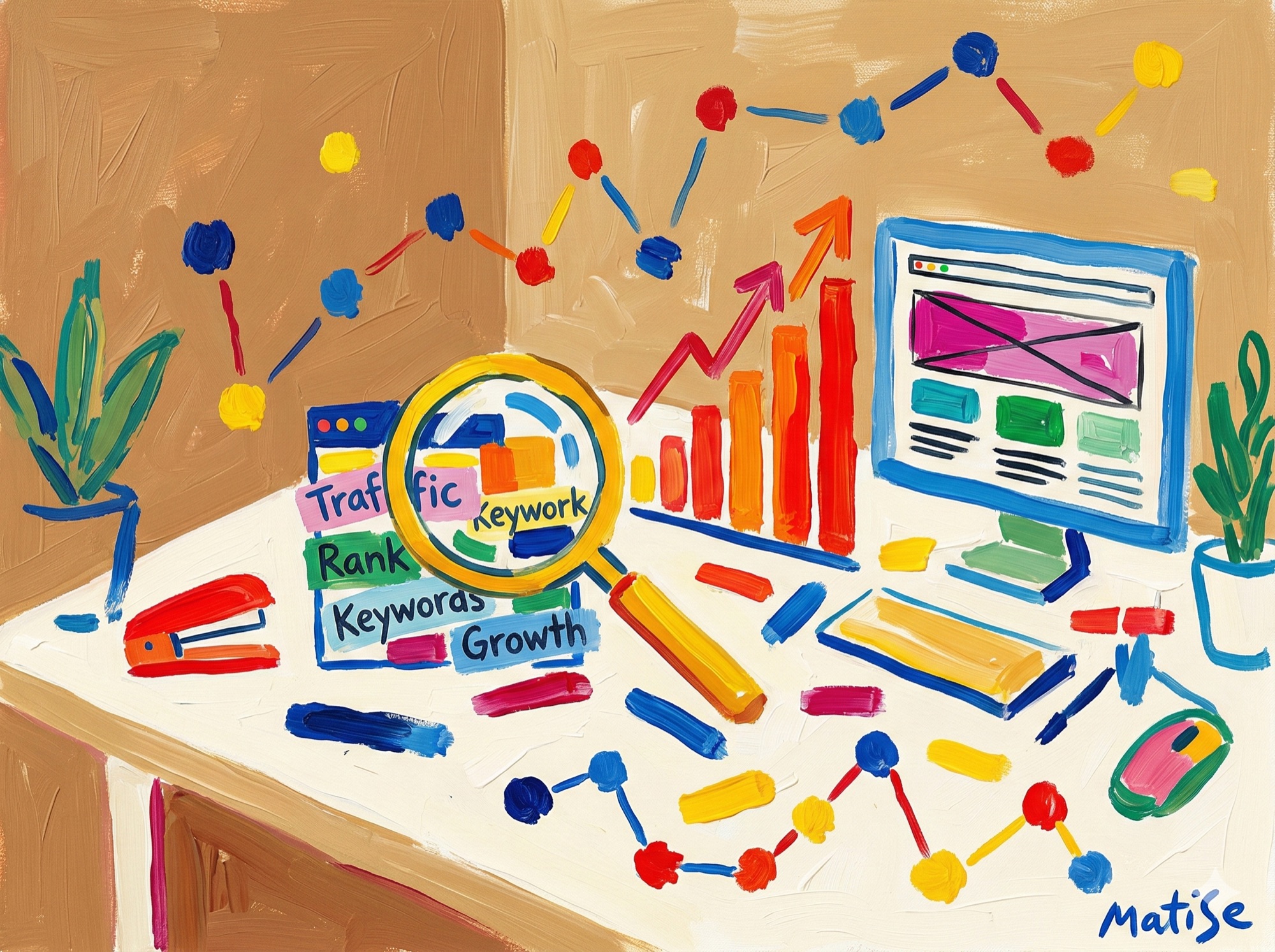
I most often suggest Semrush for keyword tracking, Ahrefs for backlink checks, and Surfer SEO for on-page scoring. Each one fills a different need. For teams making lots of content, Clearscope and Frase offer AI-driven briefs that boost rankings. If you want to know where rivals beat you, a strong SEO analysis tool is a must.
Analytics and Data Tools
You can't fix what you don't measure. HubSpot's marketing report shows that CRM users are 128% more likely to have a working strategy. Teams with one data source are 56% more likely to stay aligned.
Google Analytics 4 is the starting point. Every business should set it up right. My GA4 guide walks through the full setup. Beyond GA4, add Looker Studio for charts, HubSpot for CRM reports, and Hotjar for user behavior. Together, these great marketing tools give you a strong base for smart choices. Good data leads to good results.
Email and Automation Tools
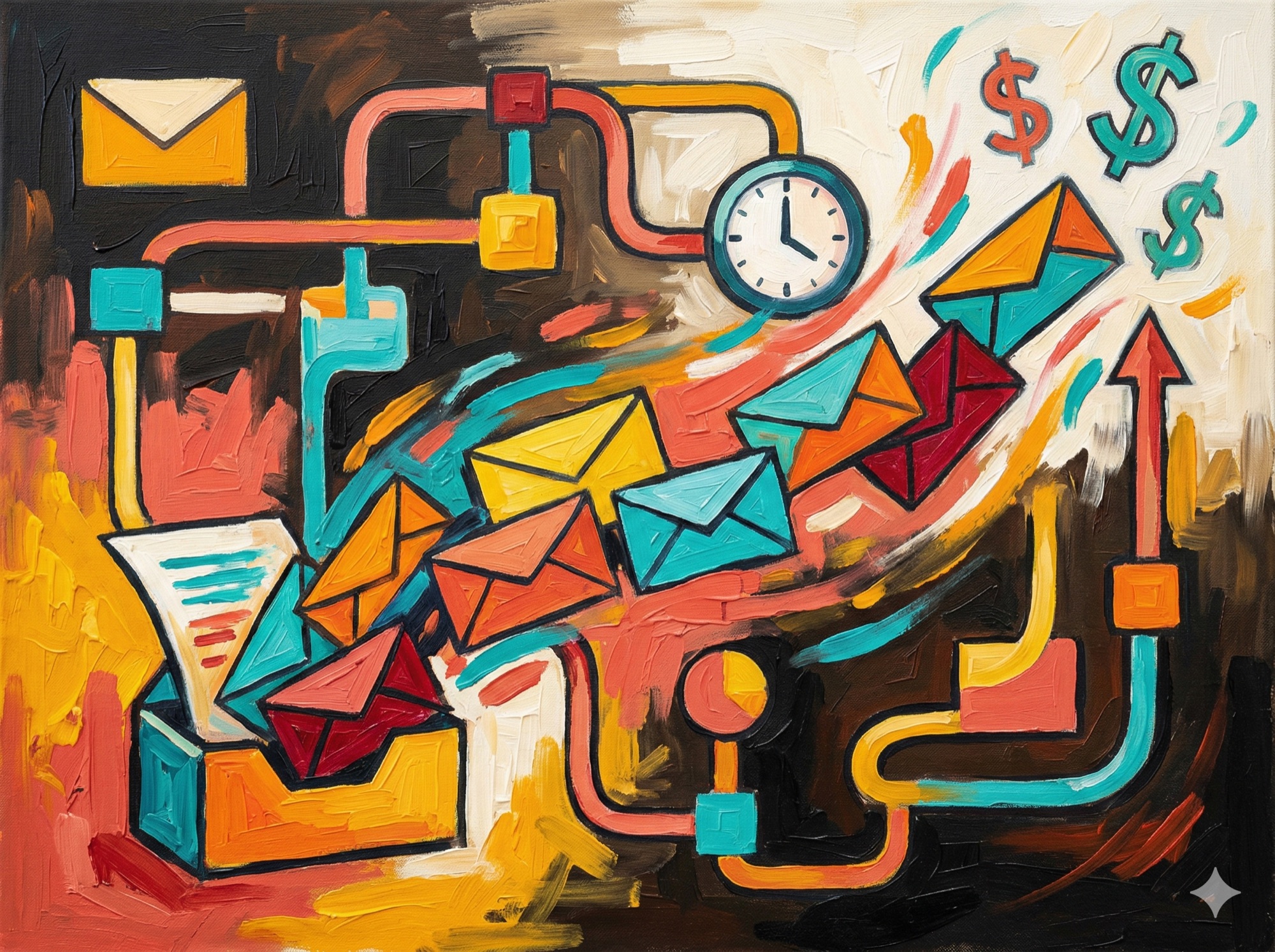
Email still has the best ROI of any channel. Current data shows $36 to $45 back for every $1 spent. Top sellers can reach $72 per dollar. That's a 3,600% to 4,500% return.
About 75% of firms now use some form of marketing automation. And 69% plan to spend more on it soon. The best marketing tools here include ActiveCampaign for advanced flows, Klaviyo for online stores, Mailchimp for simple needs, and HubSpot for all-in-one power. Per HubSpot, 63% of marketers now use AI for email. It drives 41% more revenue. That's a clear signal to invest.
Social Media Tools
Running many social channels without a tool leads to missed posts, mixed messages, and wasted time. With 68.6% of organizations now using generative AI tools, social media management platforms have evolved well beyond simple scheduling.
Hootsuite and Sprout Social are top picks for larger teams. They offer posting, tracking, and engagement in one place. Buffer works well for smaller groups that need clean, simple scheduling. Later is the best choice for visual platforms like Instagram and TikTok. The key is picking tools for marketing on social that match your channel mix. Don't pay for features you won't use.
PPC and Ad Tools
Paid ads need sharp focus. The right digital marketing tools for ads can turn a losing campaign into a winner. Google says its users earn about $8 for every $1 spent on Google Ads.
Google Ads and Meta Ads Manager are the base. On top of those, Semrush's PPC toolkit shows what rivals spend. Optmyzr handles bid changes for you. SpyFu reveals what ads your rivals run. These tools help squeeze more from every ad dollar you spend. For more on how AI is changing ad management, see my AI marketing tools breakdown.
How to Build Your Marketing Tool Stack
The biggest mistake I see is buying digital marketing tools before setting clear goals. Too many teams buy first and plan later. The State of Martech 2025 report shows 47% of firms now put 20-40% of their marketing budget toward tech. That's a lot of money. It needs a clear plan behind it.
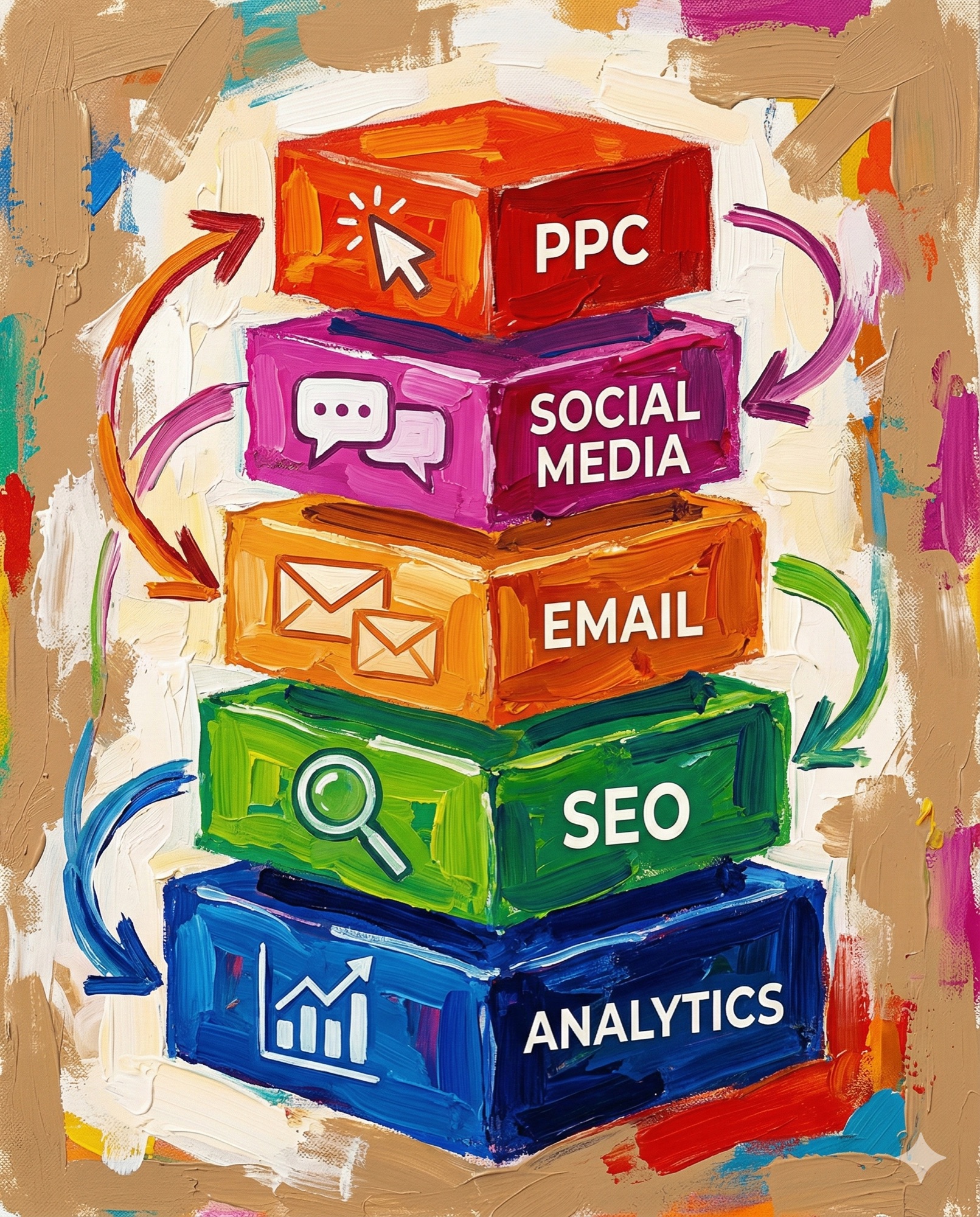
Start with your data base. GA4 and a CRM should come first. Add SEO tools once you have data flowing and know which keywords matter. Then bring in email, since that $36 return per dollar is too good to skip. Social and PPC tools come last. They work best when you have a solid data layer under them. Each layer builds on the one below it.
AI speeds up all of this. HubSpot says AI saves 2.5 hours each day on manual tasks and 3 hours per piece of content. That adds up fast. Scott Brinker notes that mature teams grew their stacks by just 2.2% last year. The trend is clear. The focus is shifting to fewer, better digital marketing tools with tighter links between them. Quality beats quantity every time.
Ready to Build a Better Marketing Stack?
Picking the right tools for marketing is only half the job. The other half is setting them up well and tuning them for your goals. Many teams buy the right tools but never set them up right. That's where value gets lost. At Matt Kundo Digital Marketing, I help firms cut through the noise and build stacks that drive real, measurable results.
Whether you need help picking the best marketing tools for your field, linking your platforms, or building a data-driven plan that ties it all together, I can help.
- Tool picks aligned with your business goals
- Full-stack setup and linking
- Performance tracking and ROI checks
- Ongoing support and digital marketing services
Ready to optimize your marketing stack? Schedule a free consultation to talk about building great marketing tools into a stack that drives growth.
Frequently Asked Questions
What are the most important digital marketing tools for small businesses?
Start with three basics: Google Analytics 4 for web data, a CRM like HubSpot (free tier works well) for contact tracking, and an email tool like Mailchimp for reaching your audience. These great marketing tools cover the core needs: tracking, people, and outreach. Add SEO and social tools as your team and budget grow. Keep it simple at first and build from there.
How much should I budget for marketing tools?
Data shows 47% of firms spend 20-40% of their marketing budget on tech. For small firms, plan for $200-$500 per month for key digital marketing tools. Mid-size firms often spend $1,000-$5,000 per month. Always look at ROI before you buy. Email's $36 return per dollar makes it one of the first tools for marketing worth paying for.
Do I need AI marketing tools?
AI use in marketing is growing fast. About 68.6% of firms have added AI tools already. Great marketing tools with AI save 2.5 hours each day on busy work and lift content quality. Start with AI features in tools you already own. Smart send times in email and AI ad copy are good first steps. You don't need a whole new platform to get started.